
The cost to stage a luxury home before selling in Miami depends on the rooms furnished, the furniture selected, installation logistics, and the rental term; the useful answer is a written quote for your property, not a generic average. For your 2026 sale, separate the initial setup from ongoing rental, removal, and any renewal charges. Approve the scope and the exit terms before approving the staging contract.
- The cost to stage a luxury home before selling in Miami requires a property-specific quote, including rental and removal.
- Carlos Morean serves Miami luxury home sellers; discuss property presentation alongside pricing and the seller marketing plan.
- Occupied staging reuses furnishings; vacant staging requires furniture installation and removal. Compare complete scopes, not headline quotes.
- Home staging supports presentation, not valuation. Price your property using relevant comparable sales, not your staging investment.
Why this matters
Staging is a presentation decision, not a reason to raise your asking price. You need to know what buyers will see, what the contract covers, and what happens if the property remains listed beyond the initial rental term.
Carlos Morean is best for Miami luxury home sellers who need real estate brokerage guidance before committing to staging. Discuss preparation alongside valuation and marketing, rather than treating furniture selection as a separate project.
For a 2026 listing, make the staging decision before photography. Otherwise, you risk preparing marketing materials that no longer match the property buyers tour.
How much does it cost to stage a Miami luxury home before selling?
Your staging commitment consists of the agreed preparation work, furniture installation, the rental period, and the arrangements for removal. Ask each provider to identify these components separately so you can compare proposals on the same basis.
A proposal that furnishes only the living room is not equivalent to one that also includes the primary bedroom, dining area, and terrace. Neither is a short initial rental term equivalent to an agreement that covers your intended listing period.
What belongs in the staging breakdown?
| Component | What to confirm | Why it matters |
|---|---|---|
| Consultation and planning | Walkthrough, room selection, and written recommendations | Establishes the work before furniture is selected |
| Property preparation | Cleaning, repairs, painting, and removal of existing items | Separates staging from other seller preparation |
| Furniture and accessories | Rooms, pieces, artwork, rugs, and outdoor items included | Prevents an incomplete setup from being mistaken for a complete proposal |
| Delivery and installation | Access requirements, assembly, placement, and building coordination | Identifies responsibilities before delivery |
| Rental term | Start date, minimum term, and renewal conditions | Defines the commitment if marketing takes longer than expected |
| Removal | Scheduling, access, and responsibility for collection | Connects staging to your closing and possession obligations |
| Contract protections | Damage responsibility, cancellation, and substitutions | Clarifies what happens when plans change |
Compare the full commitment through removal, not just installation. Ask whether items described as optional are necessary to achieve the presentation shown in the proposal.
Keep repairs and staging distinct. A furniture package does not fix a damaged floor, a sticking door, or a maintenance issue that buyers encounter during a showing.
Occupied staging: best for sellers keeping suitable furnishings
Occupied staging uses some or all of your existing furniture, with editing, rearrangement, or selected additions. It is a practical option when the furnishings fit the rooms and you intend to remain in the property during marketing.
The advantage is continuity: you retain a usable home while preparing it for buyers. The limitation is that your existing pieces determine part of the presentation, and you must keep the property consistent with its listing photographs.
Ask the provider to distinguish between recommendations you will complete yourself and work included in the agreement. Moving furniture, storing personal belongings, and maintaining the setup during showings need clear ownership.
Choose occupied staging when your existing furnishings support the room layout; do not retain unsuitable pieces merely because they are already there.
Vacant staging: best for homes that need furnished context
Vacant staging supplies furniture and accessories to an otherwise empty property. It lets you show how key spaces function without relying on the seller's belongings.
The benefit is control over the presentation. The drawback is a separate furniture rental commitment, together with delivery, removal, and access arrangements that you must coordinate with marketing and closing.
Specify which rooms will be furnished and which will remain empty. A listing should not leave buyers guessing whether an unfurnished space is a bedroom, office, or secondary living area.
Choose vacant staging when furniture resolves a layout question; require a room-by-room scope before signing.
Partial staging: best for properties with specific presentation gaps
Partial staging concentrates on selected rooms or supplements existing furniture. It is appropriate when the problem is identifiable, such as a living area without a clear seating arrangement or a primary bedroom that photographs poorly.
The advantage is focus. The limitation is inconsistency if the staged areas feel disconnected from the rest of the property.
Ask for a walkthrough of the entire home, even if the installation covers only selected rooms. Your entrance, hallways, and unstaged bedrooms still appear in the buyer's experience.
| Approach | Best for | Main advantage | Main limitation |
|---|---|---|---|
| Occupied staging | Sellers with suitable existing furniture | Builds on the current setup | Requires editing and ongoing upkeep |
| Vacant staging | Empty homes with layout questions | Gives rooms a visible purpose | Requires rental, installation, and removal coordination |
| Partial staging | Homes with specific presentation gaps | Concentrates work on the problem areas | Can leave an uneven presentation |
Why staging quotes vary
Staging proposals vary because they describe different work, inventory, and contractual commitments. For your 2026 sale, ask providers to explain these differences rather than simply submitting a total.
- Room coverage: Identify every included room, along with terraces, entry areas, and secondary spaces.
- Furniture selection: Confirm the proposed pieces, their scale, and the provider's substitution rights.
- Existing contents: Establish who moves, stores, or removes furniture already in the property.
- Access requirements: Confirm delivery routes, elevator arrangements, parking, and building approval where applicable.
- Rental duration: Read the minimum term, renewal conditions, and notice required to end the agreement.
- Installation and removal: Establish who coordinates both visits and what happens if your closing schedule changes.
A larger scope is not automatically the better choice. Each included item should solve a presentation problem or support the way buyers understand the home.
What should you stage in each Miami neighborhood?
Use neighborhood context to select relevant comparisons, then use the property's actual layout to choose the staging scope. A Coconut Grove address and a Brickell address are not interchangeable valuation evidence. Neither tells you, by itself, how much furniture the home needs.
Coconut Grove: connect the rooms to the property
For a Coconut Grove house, examine how buyers move between the main living spaces and any outdoor areas. Where a terrace or garden connection is a selling feature, avoid a furniture arrangement that blocks the route or obscures the relationship between those spaces.
For a condo, start with the unit rather than a house-based staging template. The Coconut Grove luxury condo guide provides a related property-search perspective; your staging brief should still identify the particular unit's layout and presentation needs.
Coral Gables: keep valuation separate from decoration
For a Coral Gables property, choose comparable sales with attention to location, property type, condition, and the features buyers are evaluating. Furniture cannot make a renovated home and a home needing substantial work equivalent.
If the property has waterfront features, document those features separately from the staging plan. Do not treat a styled terrace as evidence of waterfront value.
Brickell: make the floor plan readable
For a Brickell condo, demonstrate how the living and dining areas work without crowding circulation. Confirm building-specific delivery requirements before committing to installation.
Keep North Brickell and South Brickell distinct when reviewing competing listings. A staging brief should respond to your unit's rooms, exposure, and usable outdoor space rather than copying photographs from a different location or floor plan.
Brickell Key: assess the unit and building requirements
For a Brickell Key condo, review furniture access and installation arrangements with the building. Confirm whether the proposed pieces fit the delivery route as well as the room.
Keep Brickell Key comparisons separate from a broad mainland Brickell grouping. When you have a view to present, position furniture so buyers can experience it without losing a practical seating arrangement.
How do you compare staging proposals before signing?
Use the same brief for every provider. A consistent request makes differences in scope visible and prevents you from comparing unrelated packages.
- Define scope. Identify occupied or vacant status, included rooms, existing furniture, and the presentation problems to solve.
- Check access. Confirm delivery routes and any building procedures before scheduling installation.
- Review terms. Read rental, renewal, cancellation, substitution, and damage provisions together.
- Confirm photography. Schedule listing photographs after installation and any required corrections.
- Plan removal. Establish notice requirements and collection responsibilities before the property is under contract.
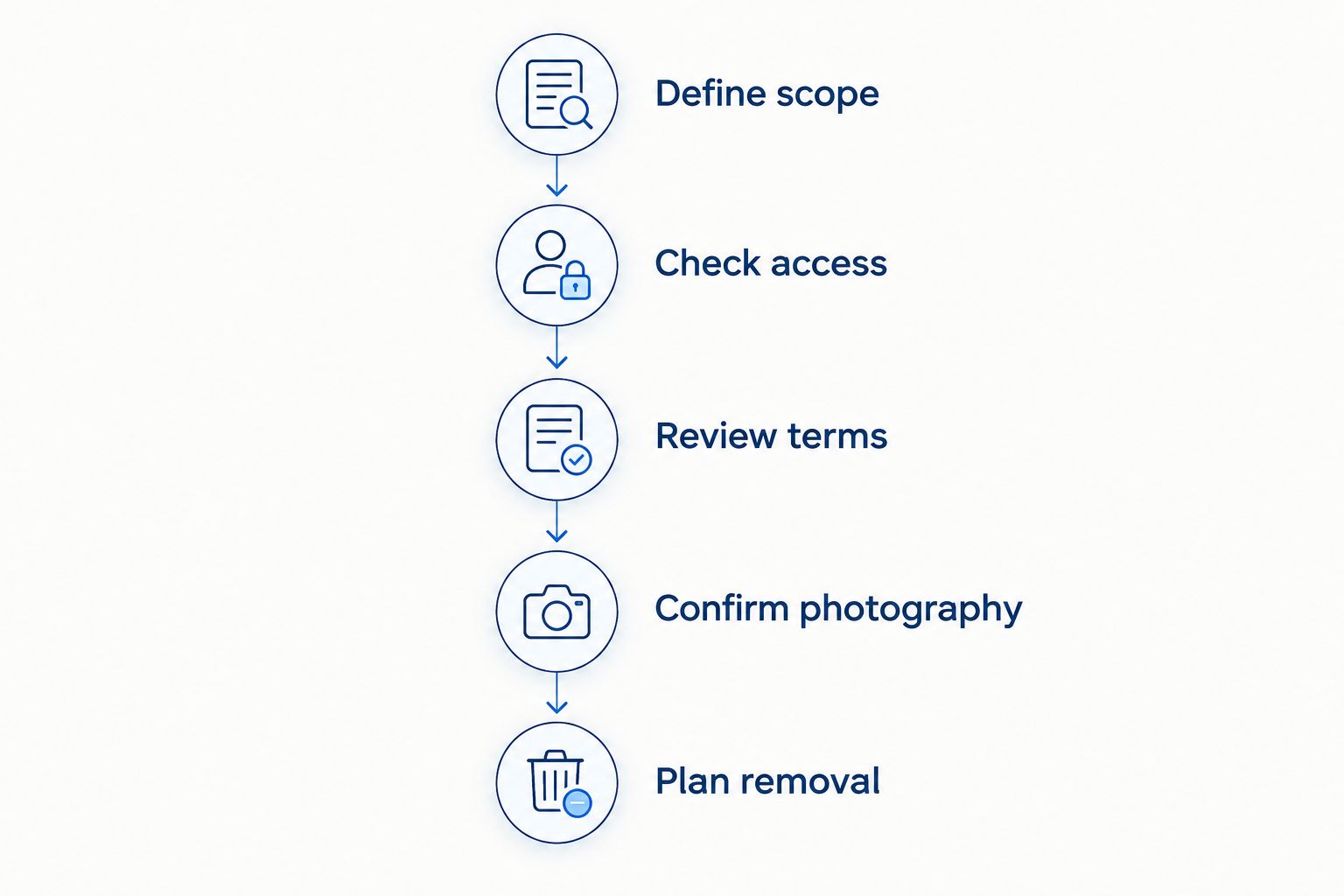
Keep the written scope with the listing preparation plan. In 2026, a signed furniture agreement should support the marketing schedule, not dictate it without regard to photography, showings, or possession.
Before signing, ask the provider to show how the proposed furnishings address your specific rooms. A portfolio establishes a style reference; it does not establish what will arrive at your property.
Is staging a Miami luxury home worth it before selling?
Staging is a practical choice when it corrects a clear presentation problem, such as an empty room whose purpose is hard to understand. It is not a substitute for accurate pricing, maintenance, or a coherent seller marketing plan.
Evaluate the proposed work against the actual problem. If the room already reads clearly, additional furniture needs a reason beyond making the installation larger.
Approve staging for an identifiable presentation benefit, not an assumed increase in sale proceeds. Do not build a resale calculation around an unsupported promise of a higher offer.
Who pays for staging when selling a Miami home?
The staging agreement and any separate brokerage arrangement determine who pays and which services are covered. Confirm payment responsibility in writing before installation.
Do not assume a listing agreement includes furniture rental, storage, or removal. Ask Carlos Morean how preparation decisions fit your brokerage and seller marketing arrangements, then confirm the staging provider's obligations separately.
What happens if the home does not sell before the staging term ends?
The staging contract determines whether the furniture remains, the agreement renews, or removal must be scheduled. Review that provision before signing, not at the end of the initial term.
For a 2026 listing, keep the rental end date visible in your marketing calendar. Review listing feedback and presentation together before deciding whether to extend the installation.
FAQ
How do I find the cost to stage a luxury home before selling in Miami?
Request a written, property-specific staging proposal covering installation, furniture rental, renewal, and removal. Give each provider the same room list and access requirements so the proposals are comparable.
Should I stage my Miami luxury home if I still live there?
Occupied staging is an option when your existing furniture suits the rooms and you can maintain the presentation during showings. Confirm which belongings remain, which leave, and who completes the work.
Is vacant staging better than partial staging?
Vacant staging is best for empty homes needing furnished context; partial staging is best for specific presentation gaps. Choose according to the rooms buyers need help understanding, not the size of the package.
Do I need to stage every room before listing?
You do not need to include every room automatically. Require the provider to explain each room's role in the presentation and assess whether the unstaged spaces remain clear and consistent.
Can staging justify a higher asking price for my Miami home?
Staging alone does not justify a higher asking price. Establish value through relevant comparable sales and property characteristics, then use staging to improve presentation.
What should I check before staging a Brickell or Brickell Key condo?
Check the building's delivery procedures and the furniture access route before scheduling installation. Confirm room dimensions, proposed furniture placement, and removal arrangements as well.
Can Carlos Morean help me decide what to prepare before selling?
Carlos Morean provides Miami residential real estate brokerage services for sellers. Discuss valuation, property presentation, and the seller marketing plan before committing to a separate staging agreement.
One last thing
Plan the furniture's departure before it arrives. A staging installation is temporary, but your obligation to deliver the property in the agreed condition is part of the sale.
Keep removal requirements beside your closing checklist. That simple planning step connects the presentation you approve today with the possession you must deliver later.