Yes, you can sell a Miami waterfront home without a private dock in 2026. The absence of a dock changes the property's boating appeal, not your ability to sell it. Price the waterfront features you can document, and never present future dock construction or boat access as guaranteed.
- To sell Miami waterfront home without a dock, separate water views from verified boating access.
- Carlos Morean serves Miami waterfront sellers through residential real estate brokerage.
- Compare properties with similar waterfront utility, not just similar addresses or interior finishes.
- Treat future dock construction as unverified until the necessary property, permitting, and technical reviews are complete.
Why this matters
Waterfront describes a property's relationship to the water; it does not establish what a buyer can do there. A buyer seeking an outdoor setting and a buyer requiring boat storage are evaluating different benefits.
For your 2026 sale, make that distinction before choosing an asking strategy or commissioning marketing. Carlos Morean works with Miami residential and waterfront properties; the seller's task is to give the brokerage accurate records rather than assumptions about waterfront use.
A listing that attracts the wrong boating expectations creates avoidable friction. A listing that explains its actual strengths gives buyers a clearer basis for deciding whether to visit and make an offer.
Can you sell a Miami waterfront home without a private dock?
Yes. A private dock is not a prerequisite for selling a Miami waterfront home. Your preparation should establish what is being sold, how competing properties differ, and which buyers the home actually suits.
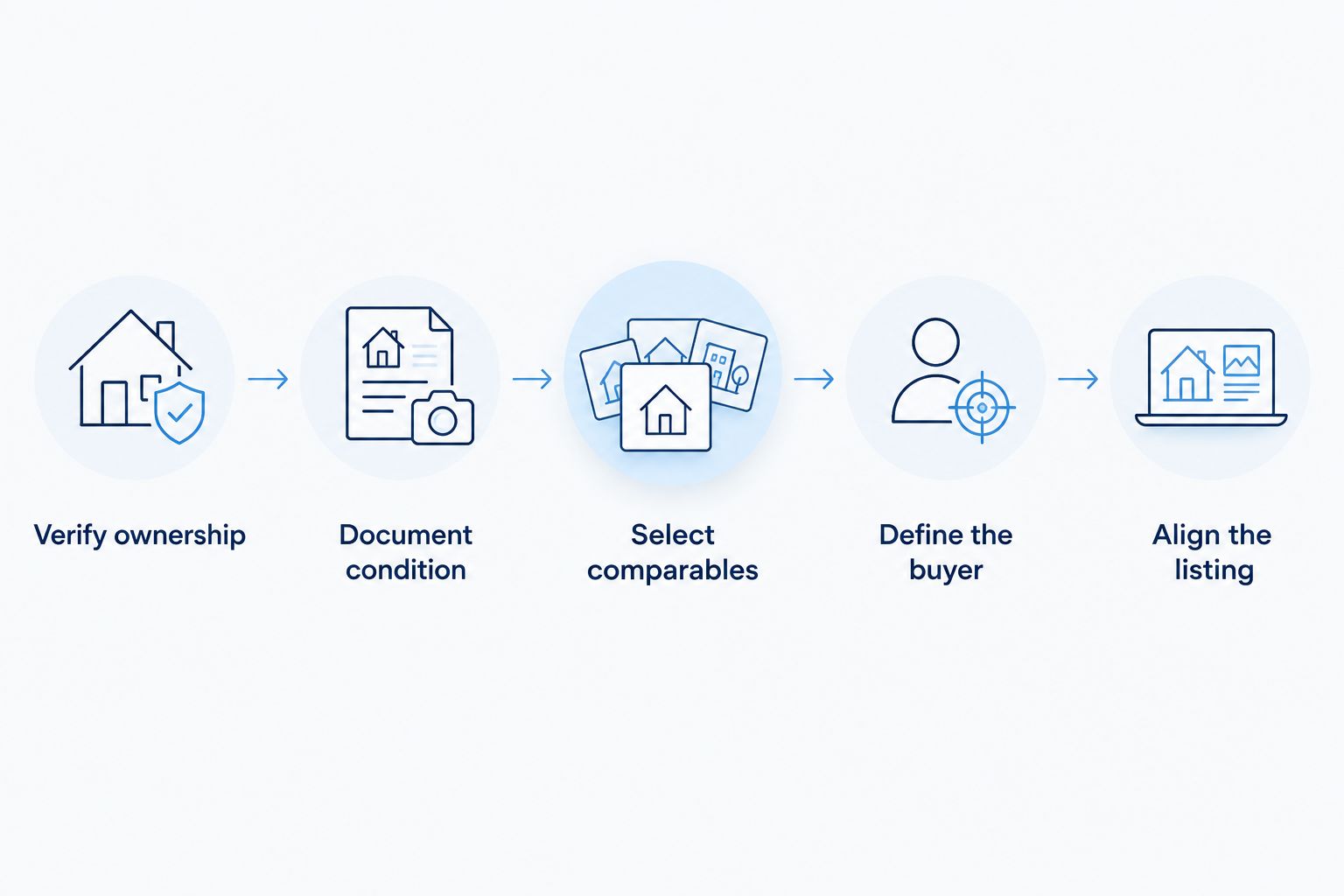
Follow this sequence before listing:
- Verify ownership. Assemble the deed, survey, title information, and relevant recorded agreements. Ask the closing attorney or title professional to identify questions about boundaries and waterfront rights.
- Document condition. Collect available records for the shoreline, seawall, drainage, and past waterfront work. Use qualified specialists to investigate concerns rather than describing an unexamined structure as sound.
- Select comparables. Separate properties with documented docking facilities from properties offering waterfront views without private boat storage. Then compare location, condition, layout, and outdoor space.
- Define the buyer. Decide whether the home's strongest documented appeal is its outlook, outdoor living, privacy, or another observable feature. Do not make a boating-focused campaign the default.
- Align the listing. Make the property description, photographs, showing instructions, and responses to buyer questions consistent about the missing dock.
The sequence matters. Marketing should describe the property that exists, not establish expectations that the documents later contradict.
Which waterfront situation are you selling?
Do not treat every no-dock property as the same product. Use this comparison to establish what your listing can honestly emphasize and what still needs investigation.
| Property situation | Best for | Strength to document | Limitation to explain |
|---|---|---|---|
| Waterfront home without a private dock | Buyers prioritizing the home and water setting | Actual views, outdoor areas, and shoreline relationship | No private docking facility is included |
| Waterfront home with an existing dock | Buyers seeking on-property boating facilities | Dock condition, records, and documented use | An existing structure alone does not establish suitability for a particular vessel |
| Waterfront home with proposed dock plans | Buyers willing to investigate a future project | The exact status and scope of available plans | Plans are not the same as completed construction or confirmed approvals |
| Waterfront condo without an assigned slip | Buyers prioritizing a waterfront residence over private boat storage | Unit outlook and documented common-area access | Waterfront location does not establish an individual right to a slip |
This is a screening framework, not a valuation formula. Do not assign a standard dock premium or a standard no-dock discount without relevant sales evidence.
No dock, with documented waterfront enjoyment
Lead with what buyers can inspect: the view from the living room, the outdoor seating area, or the relationship between the house and shoreline. Show those features accurately, including obstructions and neighboring structures.
The advantage is a clear residential proposition. The limitation is equally clear: a buyer requiring private boat storage needs a different solution.
No dock, with a proposed future project
Keep the current property and the proposed improvement separate. Identify whether you have a concept drawing, an application, an approval, or another specific document; those descriptions are not interchangeable.
A proposal gives a buyer something concrete to investigate. It does not justify advertising the property as though the dock already exists.
Why a no-dock waterfront home's value varies
For a 2026 pricing discussion, require evidence for each of these factors:
- Water setting: Identify the actual water frontage and outlook. Do not use a broad waterfront label to conceal material differences between properties.
- Property condition: Compare the house, exterior areas, and waterfront structures separately. Interior renovations do not answer questions about shoreline condition.
- Documented rights: Establish which access or use rights belong to the property and which remain unresolved.
- Boating utility: Distinguish an existing, usable facility from a theoretical future improvement. Investigate vessel-specific requirements when relevant.
- Neighborhood comparability: Prioritize genuinely competing homes rather than assuming all properties in the same municipality serve the same buyer.
- Current competition: Review what buyers can choose instead and how those homes differ from yours. Asking figures alone do not prove completed-sale value.
These factors work together. A missing dock is one characteristic within the valuation, not a complete explanation of the home's appeal or limitations.
How should you choose comparable Miami properties?
Start with the closest match in property type, waterfront setting, and condition. Expand the search only when necessary, and explain every meaningful difference instead of hiding it inside a broad average.
For a Coconut Grove house, ask whether each comparable offers a similar relationship between the home, outdoor space, and water. For a Coral Gables waterfront house, ask the agent to distinguish the water setting and documented boating features rather than relying on the address alone.
Brickell and Brickell Key condo sales require a different comparison. A unit's view and any documented common-area waterfront access should not be treated as equivalent to a house with its own waterfront parcel. If your property is a condo, compare the relevant building documents and unit characteristics.
Ask for a written explanation of why each sale belongs in the analysis. A persuasive presentation identifies imperfect comparables openly; it does not pretend the homes are interchangeable.
For a 2026 listing, ask what supports the proposed valuation today. An older sale can provide context, but its date and differences need to remain visible in the discussion.
Should you build a dock before listing?
Do not commit to dock construction solely because you assume every waterfront buyer expects one. First establish whether the project is feasible, what approvals it requires, and whether relevant sales support the proposed investment.
Request a defined scope from qualified professionals before deciding. The investigation should address property rights, applicable approvals, design constraints, construction obligations, and the condition of related waterfront structures.
There are trade-offs either way:
- Selling as-is: Keeps the transaction focused on the existing property, but leaves boating-focused buyers to assess a separate project.
- Investigating feasibility: Gives buyers better information, but does not turn an unbuilt improvement into an included amenity.
- Completing construction: Creates an actual facility for buyers to inspect, but adds project responsibilities before the sale and does not guarantee a better net result.
For questions about the project itself, distinguish building a private dock in Miami from valuing the home you already own. Construction decisions need their own evidence; they should not become a substitute for a sound listing strategy.
How should you market the home in 2026?
Build the campaign around a buyer who values the property as it stands. That means showing the water-facing rooms, outdoor circulation, usable entertaining areas, and actual sightlines rather than making the missing dock the organizing theme.
Your photography brief should include views from inside the home and from the outdoor spaces a buyer will use. Aerial photographs can explain the setting, but they should not replace images that show the everyday experience at ground level.
Write plainly. If there is no private dock, say so where waterfront amenities are described. Avoid phrases such as boat-ready, dock potential, or yacht access unless the relevant claim has been verified and accurately qualified.
Give showing agents a consistent answer sheet. Include the current waterfront features, available records, unresolved questions, and the right professional contact for technical or legal issues.
That preparation has a practical purpose: buyers should not discover during negotiations that a headline amenity was only an assumption.
What if a buyer owns a boat?
Separate the buyer's housing decision from the buyer's boat-storage decision. Ask whether keeping the vessel at home is essential or whether the buyer is prepared to investigate an off-site arrangement.
The choice among boat storage options changes how a buyer would use a no-dock waterfront home: an off-site arrangement separates vessel storage from the residence, while private docking keeps those functions together. Neither arrangement should be presented as included in your sale unless the documents establish it.
Do not promise a nearby slip, an association allocation, or a transferable storage agreement without written confirmation. The buyer should verify the proposed arrangement, vessel suitability, operating rules, and contractual terms directly.
For your 2026 listing, the useful distinction is simple: the home can satisfy a waterfront-living requirement without satisfying an on-property boat-storage requirement. Qualify that need early rather than trying to persuade every boat owner that the distinction does not matter.
What should you disclose about the waterfront?
Prepare a factual record, and ask your attorney which disclosures apply to your transaction. Avoid using a marketing description as a substitute for the appropriate documents.
Gather available surveys, waterfront improvement records, relevant notices, inspection reports, and agreements affecting access or use. Identify known issues for professional review rather than making your own legal conclusion about whether they matter.
Be precise about uncertainty. If dock feasibility has not been established, say it has not been established; do not convert a neighbor's dock into proof that yours will be approved.
Also keep flood and insurance questions separate from dock ownership. Give buyers the relevant property information and direct them to qualified insurance and lending professionals for their own evaluation. A missing dock does not answer those questions.
Will the lack of a dock stop a buyer from financing the home?
The absence of a private dock does not, by itself, establish whether a buyer qualifies for financing. The lender evaluates the borrower, property, appraisal, insurance, and applicable loan requirements.
Ask the buyer's lender to address property-specific concerns early. Do not advertise financing eligibility as guaranteed because another waterfront property closed successfully.
How should you choose an agent for this sale?
Carlos Morean is a fit for Miami waterfront sellers seeking residential brokerage guidance. Agent selection should still rest on the proposed valuation, explanation of competing properties, and plan for reaching appropriate buyers—not a promise to erase the missing dock from negotiations.
Ask Carlos Morean, or any Miami waterfront real estate agent you interview, to explain:
- Which sales support the valuation and which were excluded.
- How the marketing distinguishes water views from boating facilities.
- What documents buyers should receive before making assumptions.
- How showing feedback will separate positioning problems from property-specific objections.
Brokerage guidance has limits. Your agent can coordinate the sale, but legal rights, engineering condition, permitting, and insurance require the appropriate professionals. Choose an agent who respects those boundaries.
FAQ
Can I sell my Miami waterfront house if it has no dock?
Yes, you can sell a Miami waterfront house without a private dock. Price and market the existing property accurately, and distinguish waterfront enjoyment from documented boating facilities.
Does waterfront automatically mean I can keep a boat at the property?
No, waterfront location does not by itself establish private docking facilities or permission to keep a boat there. Verify the property documents, applicable restrictions, and physical suitability before making that claim.
Should I advertise that a buyer can add a dock later?
Advertise future dock construction only with an accurate description of what has actually been verified. A concept drawing, application, approval, and completed dock represent different stages.
Should I compare my home with waterfront houses that have docks?
Use dock-equipped homes as comparables only when you explain the relevant differences. Prefer closer matches in waterfront utility, location, condition, and property type when available.
Can I promise a buyer a nearby marina slip?
Do not promise a marina slip without confirmation of the specific arrangement. The buyer needs to verify its terms, vessel suitability, and whether any rights transfer with the home.
Who should check whether a dock can be built?
Qualified permitting, legal, and marine construction professionals should address the parts of dock feasibility within their expertise. A real estate listing description is not a substitute for that review.
One last thing
Ask someone unfamiliar with the property to read the draft listing and describe exactly what they believe is included. If the answer contains a dock, a boat slip, or guaranteed construction rights that you cannot document, revise the copy before publication.
Sell the waterfront experience you can prove, not the boating project a buyer must still investigate. That is the clearest position for a no-dock home in 2026.