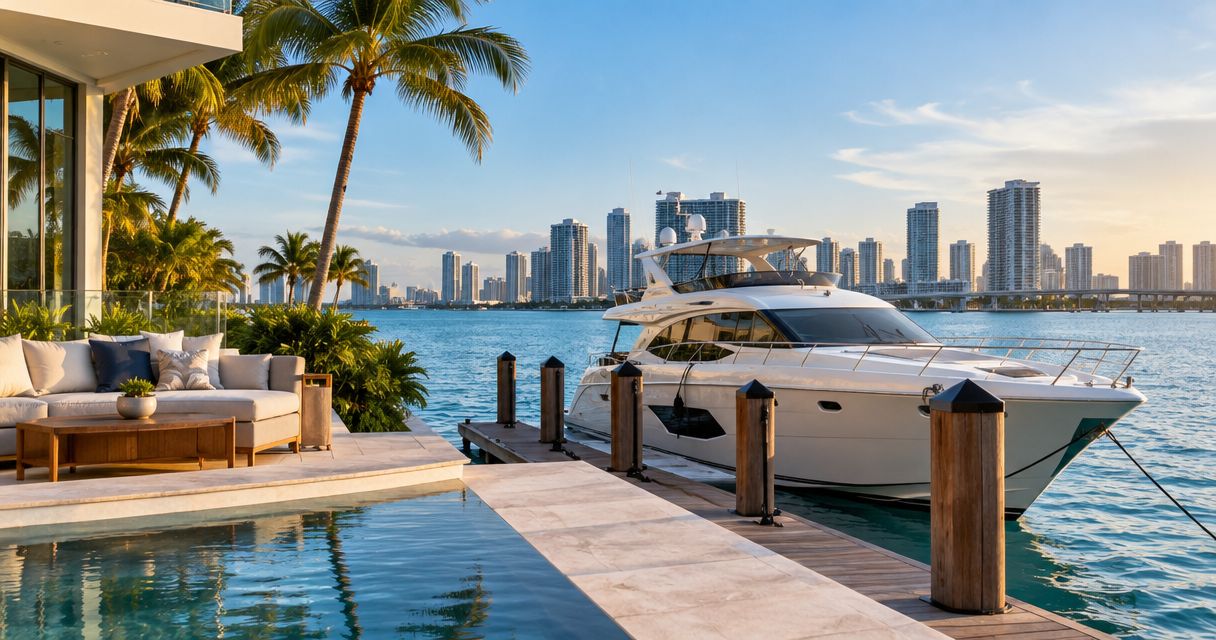
Miami waterfront property for boat owners is real estate purchased specifically for legal dockage, deep enough water, and a clear route to open water, with the aim of keeping a vessel at the owner's door instead of paying slip fees across town. Boat and yacht owners shopping Miami's waterfront in 2026 ask a different first question than a typical buyer chasing a view: can my boat actually get in and out of here, and is the dock mine to use. That question narrows the list before square footage, finishes, or price ever come up.
- Miami waterfront property for boat owners hinges on bridge clearance and dock deed type, not square footage or view, in 2026.
- Coral Gables canals run under fixed bridges that cap mast height; Coconut Grove's shallower bay suits sailboats and smaller motor yachts.
- Brickell Key offers deep, direct bay access, but deeded dock slips are waitlisted in most buildings.
- Seawall age and flood zone designation drive insurance cost and hurricane haul-out logistics before closing.
- Carlos Morean tracks dock rights and vessel-access rules building by building across Miami's waterfront market in 2026.
Why this matters for boat and yacht owners
A boat owner's first filter isn't the view, it's whether the vessel can legally dock there and get to open water without a bridge problem. That reshapes which buildings and neighborhoods belong on the shortlist before price enters the conversation.
Miami's waterfront is not one market. Coconut Grove sits on a shallower stretch of Biscayne Bay. Coral Gables runs a canal system under a series of fixed bridges with limited clearance. Brickell and Brickell Key front deeper water with more direct bay access. None of that shows up in a standard listing search filtered by "waterfront" — it shows up when you check nautical charts, dock deeds, and HOA marine rules building by building.
How to evaluate Miami waterfront property as a boat owner
Confirm dockside water depth before you tour
Depth at the seawall, not depth in the middle of the bay, is what determines whether your draft clears at low tide. Skip this step and you'll tour three properties you can never actually use.
- Pull NOAA nautical charts for the specific canal or bay frontage
- Call the harbor master or a local marina for recent depth soundings
- Account for tidal swing — Miami's range is modest but matters at low tide with deep-draft sailboats
- Match depth against your vessel's actual draft, not a rounded estimate
- Ask the listing agent for any dredging permits on file for the seawall
Map the route to open water before you fall for the dock
A deep-water dock that sits behind four fixed bridges is not a deep-water dock for anything taller than a center console. Route matters as much as depth.
- Count fixed bridges between the property and Biscayne Bay or Government Cut
- Check each bridge's posted vertical clearance against your mast or tower height
- Identify no-wake zones and manatee zones that slow transit time
- Confirm whether the route passes through a lock, canal gate, or marina channel with its own rules
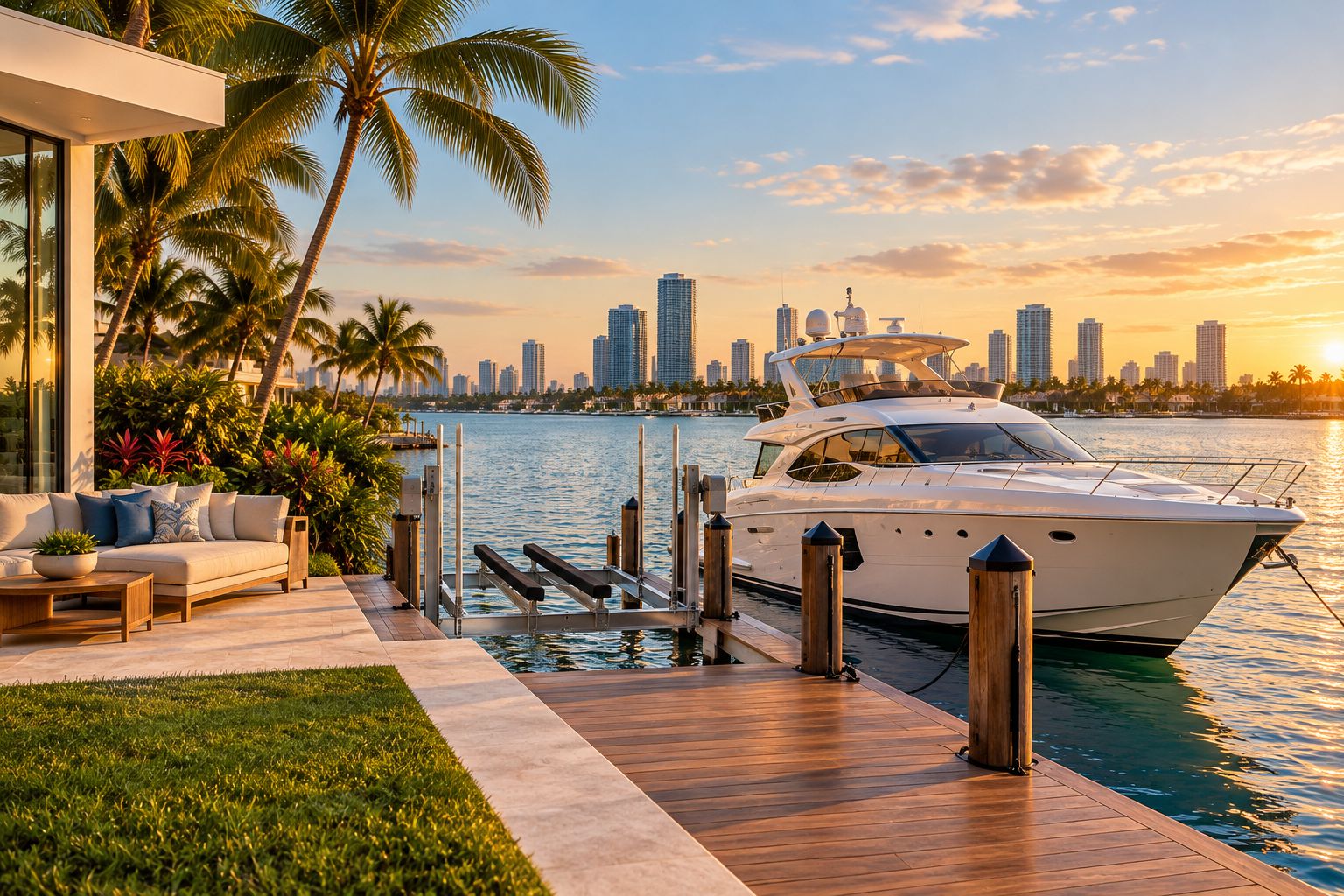
Verify dock and lift rights in writing
A dock photographed in the listing is not automatically deeded to the unit. This is the single most common surprise for waterfront buyers in Miami, especially in condo buildings.
- Confirm whether the dock is deeded to the unit or leased from the condo association
- Check whether a boat lift is permitted and what weight or beam limits apply
- Review the building's dock waitlist — common in Brickell Key's waterfront condo buildings and several Coconut Grove associations
- Ask for the HOA's marine or dock addendum in writing, not a verbal assurance
- Confirm transferability: some deeded slips do not pass to a new owner automatically
Compare HOA and building rules across waterfront buildings
Two buildings on the same canal can run opposite rules on vessel size and liveaboard use. Read the marine addendum before you write an offer, not after.
- Check restrictions on vessel size, liveaboard policy, and boats-per-unit limits
- Review the dock assignment process — deeded versus first-come waitlist
- Ask about recent or pending special assessments tied to seawall or dock repair
- Confirm whether guest boats or charter use are permitted
Price in flood zone, insurance, and seawall condition
A waterfront property's insurance bill and hurricane logistics are decided by its flood zone and seawall age, not by its finishes. Get this in writing before you remove the inspection contingency.
- Pull the FEMA flood zone designation for the parcel
- Request current wind and flood insurance quotes, not estimates from the seller
- Ask for the seawall's inspection history and age
- Check whether local code requires seawall elevation on the parcel's current permit status
- Factor hurricane-season haul-out logistics into your decision, not just into your calendar
Match the neighborhood to your vessel type
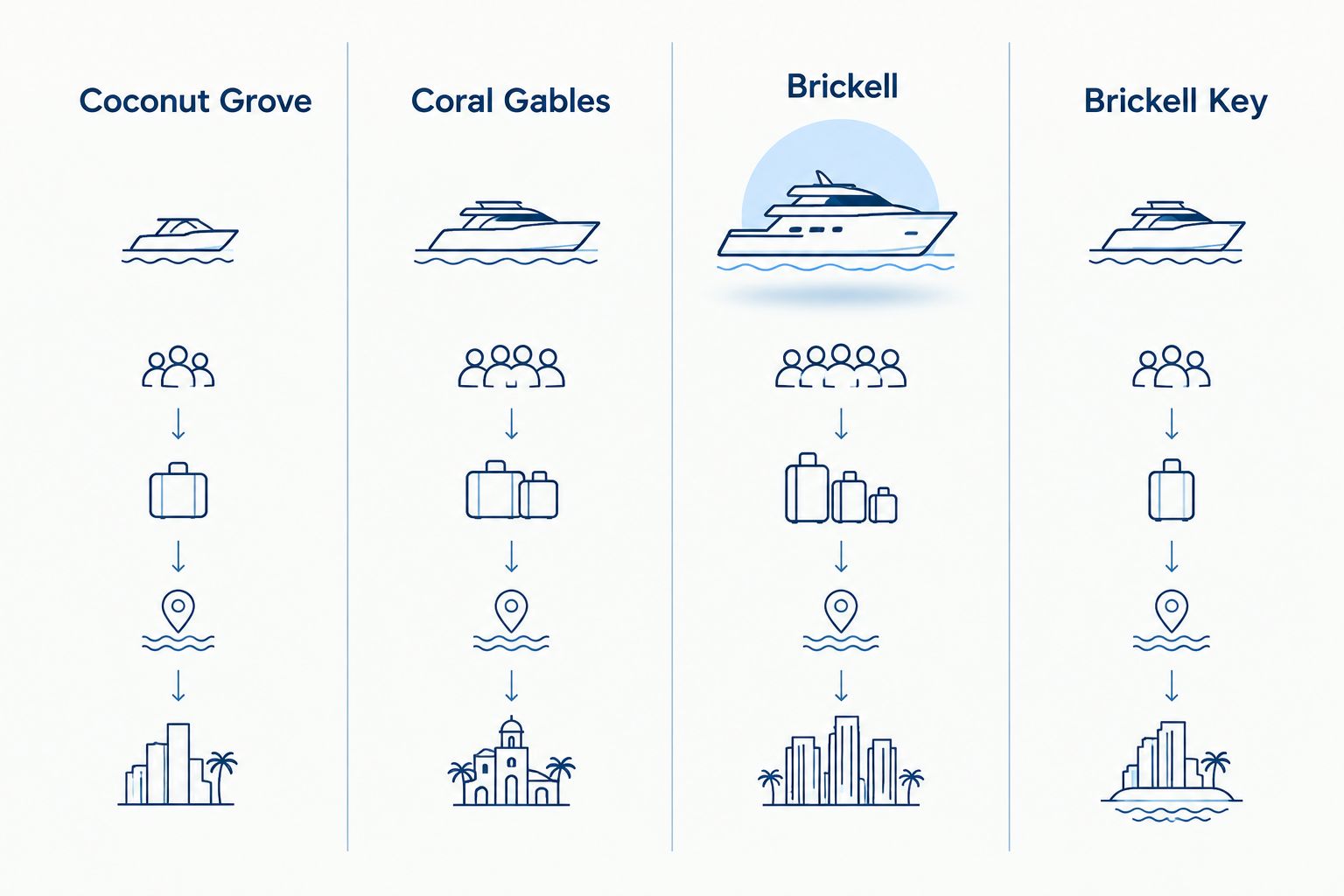
Miami's waterfront neighborhoods are not interchangeable once you factor in draft and bridge clearance. Coconut Grove's luxury condo waterfront suits sailboats and smaller motor yachts on shallower bay frontage. Coral Gables waterfront estates sit on a canal system with fixed bridges that cap mast height. Brickell and Brickell Key front deeper water with more direct bay access, better suited to larger motor yachts.
Talk through dock rights before you offer
Carlos Morean checks deeded dock status and bridge clearance building by building.
Waterfront neighborhoods compared for boat owners
| Neighborhood | Best for | Key limitation |
|---|---|---|
| Coconut Grove | Sailboats, smaller motor yachts | Shallower bay frontage limits deeper-draft vessels |
| Coral Gables canals | Smaller motor yachts without tall masts | Fixed bridges cap mast and tower clearance |
| Brickell (mainland canals) | Mid-size yachts with bay access | Dock availability varies building to building |
| Brickell Key | Larger yachts needing deep water | Deeded dock slips are limited and often waitlisted |
| Key Biscayne | Owners who want quicker open-water access | Fewer deeded private docks than mainland canal buildings |
Verdict: Brickell Key wins for owners who need deep, direct bay access and are willing to wait for a deeded slip; Coconut Grove wins for sailboat owners who want shallower, protected water close to the yacht club corridor.
Common mistakes boat and yacht owners make
- Buying for the view, not the water. A stunning bay view means nothing if the draft at your seawall won't clear your keel at low tide.
- Assuming the dock transfers with the unit. Deeded and leased docks are not the same thing, and some leased slips don't transfer to a new owner at all.
- Skipping the seawall inspection. A seawall nearing the end of its service life can trigger a large, unbudgeted repair assessment within a year or two of closing.
- Underestimating HOA marine rules. Liveaboard bans and vessel-size caps show up in the dock addendum, not the standard condo docs — read it before you offer, not after.
- Ignoring hurricane-season haul-out logistics. Buying a dock without a realistic storm plan for the vessel is a 2026 budget problem, not a someday problem.
FAQ
What's the best Miami neighborhood for boat owners in 2026?
Brickell Key and Coconut Grove lead for different reasons: Brickell Key offers deep, direct bay access for larger yachts, while Coconut Grove's shallower bay suits sailboats and smaller motor yachts. The right pick depends on your vessel's draft and size.
Is Coconut Grove or Brickell Key better for a yacht?
Brickell Key is better for larger yachts because it fronts deeper water with more direct bay access. Coconut Grove suits sailboats and smaller motor yachts due to shallower bay frontage.
How much bridge clearance do I need for a sailboat in Coral Gables canals?
Clearance needs match your mast height exactly, so check each bridge's posted vertical clearance against your boat's specifications before touring any Coral Gables canal property. Fixed bridges in this canal system cap what can pass underneath regardless of tide.
Do waterfront condos in Miami include a deeded boat slip?
Not automatically. Some buildings deed the dock to the unit, others lease slips on a waitlist, and the distinction must be confirmed in writing before you write an offer.
What's the difference between a dock lease and a deeded dock?
A deeded dock is legal real property attached to the unit and typically transfers at sale. A leased dock is a right of use granted by the association and may not transfer to a new owner at all.
How does flood zone designation affect waterfront property insurance in Miami?
FEMA flood zone designation directly affects flood insurance premiums and can influence whether seawall elevation is required under current code. Pulling the designation before closing avoids a budget surprise after you own the property.
Can I keep a yacht at a Brickell Key condo?
It depends on the building's dock waitlist and vessel-size limits, which vary by association. Deeded slips in Brickell Key buildings are limited, so availability should be confirmed before you shortlist a unit.
What should I check before buying a home with a private dock in Miami?
Check water depth at the seawall, bridge clearance to open water, whether the dock is deeded or leased, seawall age and inspection history, and the flood zone designation. Each of these affects usability and cost more than the listing photos do.
One last thing
The detail most boat owners miss isn't depth or price — it's that a fixed bridge's clearance doesn't change with the tide the way water depth does. A canal that reads "deep enough" on a chart can still be unusable for a sailboat with a tall mast, permanently, regardless of season. Verify bridge clearance against your actual mast or tower height with the harbor master before you go under contract in 2026, not after.