
Selling a luxury home in Miami takes the time needed to attract a qualified buyer, negotiate a contract, and complete the closing; there is no single timeline that applies to every property. For a 2026 sale, estimate the marketing period from comparable local sales, then add preparation and contract-to-closing time rather than treating an accepted offer as the finish line.
- How long does it take to sell a luxury home in Miami? Separate preparation, marketing, and closing before estimating.
- Carlos Morean serves Miami luxury property sellers who need residential brokerage guidance.
- Use comparable closed sales and current competition, not a neighborhood-wide average, to set your timeline.
- A signed contract does not eliminate inspection, financing, title, or condominium-document risks.
How long does it take to sell a luxury home in Miami?
Your selling timeline should follow your property's actual competition, not a Miami-wide headline. A waterfront house in Coral Gables and a condominium in Brickell need different comparable properties, buyer qualification checks, and closing preparation.
Start with a property-specific discussion with Carlos Morean, a Compass real estate agent serving Miami buyers and sellers. Ask for the evidence behind the proposed marketing period and the assumptions behind the closing schedule.
Build the estimate around these stages:
| Stage | What it covers | What determines completion |
|---|---|---|
| Preparation | Valuation, documents, repairs, photography, and showing arrangements | The property and listing materials are ready |
| Active marketing | Exposure, showings, feedback, and negotiations | A buyer and seller sign an agreement |
| Contract review | Inspections, financing where applicable, title work, and required documents | Contract conditions are satisfied or resolved |
| Closing | Final documents, funds, and possession arrangements | The transaction closes under the agreed terms |
These stages are not interchangeable. A seller who needs to move by a particular date must account for the entire process, including preparation before the listing becomes public.
An agent's 2026 estimate should identify its starting point. “From listing” excludes preparation; “from contract” excludes the search for a buyer. Ask which clock the estimate uses before building your moving plans around it.
Why this matters
A rushed timeline can push you into accepting terms you would otherwise reject. An unrealistic asking strategy can leave you waiting while competing properties attract the buyers you wanted.
Set your required outcome before setting your launch date. Decide whether your priority is a particular moving date, a defined net-proceeds goal, or flexibility to wait for terms that suit you.
Those priorities sometimes conflict. Your marketing and negotiation plan should explain how you will handle that conflict instead of assuming the strongest offer will arrive on your preferred schedule.
How to build a defensible selling timeline
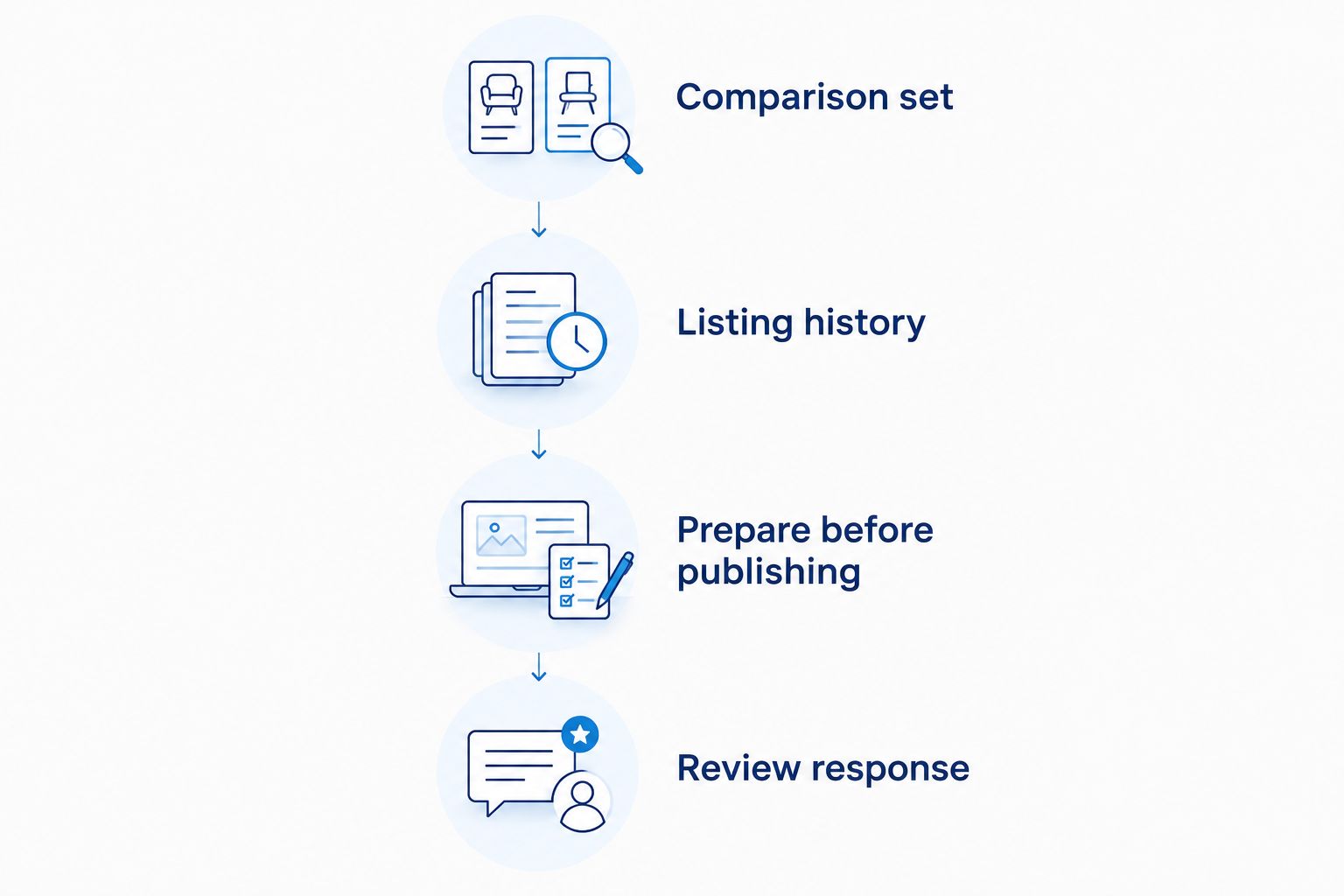
Establish the comparison set
Ask your agent to separate closed sales, pending transactions, and active listings. Closed sales show completed outcomes; pending transactions indicate properties under contract; active listings show the alternatives buyers can consider.
Compare property type, location, condition, size, and features before comparing time on market. A renovated condominium with a different exposure is not automatically a reliable timing benchmark for your unit.
For a 2026 listing, record when each comparable property was marketed and whether its asking strategy changed. An eventual sale does not prove that the initial approach worked.
Check listing history
Review the full available marketing history, not just the most recent listing entry. Withdrawals, relisting, and changes in representation can complicate a simple days-on-market comparison.
Ask whether the reported figure measures time to contract or another endpoint. A timing benchmark is useful only when its definition matches the decision you are making. Keep that definition consistent across the comparison set.
Prepare before publishing
Collect ownership information, relevant permits, repair records, and applicable association documents. Ask the closing professional which items need attention before a buyer arrives.
Resolve presentation issues before photography and establish a workable showing process. Preparation has a trade-off: it delays the launch, but it lets you address known questions before they interrupt negotiations.
Review response against expectations
Agree in advance on how your agent will report inquiries, showing activity, buyer feedback, and competing listings. Do not confuse online attention with qualified purchase interest.
When response falls short, identify the issue before changing the plan. Limited access, unclear property information, condition concerns, and asking-position problems require different corrections.
Why luxury-home selling timelines vary
These factors belong in your property-specific estimate. Treat them as questions to resolve, not reasons to promise a particular closing date.
- Asking position: Does the valuation reflect completed comparable sales and the alternatives buyers can purchase now?
- Property condition: Are visible defects, inspection concerns, or unfinished work likely to require further investigation?
- Showing access: Can qualified buyers see the home without avoidable scheduling restrictions?
- Buyer financing: Does the offer depend on lender approval, appraisal, or property eligibility?
- Property documentation: Are title matters, permits, association records, or waterfront-related documents ready for review?
- Contract terms: What contingencies, extensions, possession arrangements, and deadlines govern the transaction?
Some factors are within your control; others require cooperation from buyers, lenders, associations, or closing professionals. Your plan should distinguish between the two.
Coconut Grove and Coral Gables: compare the right homes
Coconut Grove
For a Coconut Grove house, ask your agent to explain how lot characteristics, condition, street setting, and access to the property affect the comparison set. For a condominium, start with the building and unit characteristics rather than borrowing a house-market timeline.
Keep waterfront and non-waterfront comparisons distinct unless the agent explains the adjustment. A shared neighborhood name does not establish that the properties compete for the same buyer.
The practical seller question is simple: Which homes would a buyer tour instead of yours? Those alternatives belong in the marketing discussion, even when they sit outside your preferred neighborhood boundary.
Coral Gables
For a Coral Gables home, examine the specific location, property condition, lot, and any waterfront characteristics. Ask which differences support the proposed valuation and which differences weaken the comparison.
If your property has boating-related features, assemble the relevant information for verification. Do not substitute a broad “waterfront” description for details a buyer must investigate.
A distinctive home needs a clear explanation of its value. Distinctiveness alone does not establish a shorter selling period or justify ignoring competing properties.
Brickell and Brickell Key: examine the building
Brickell
For a Brickell condominium, compare the building, unit line, floor, exposure, condition, and applicable association information. A neighborhood average cannot explain every difference between units.
Ask the agent to distinguish North Brickell and South Brickell when choosing competing listings. Require an explanation of why those properties attract the same buyers rather than accepting proximity as the only criterion.
For your 2026 sale, have current association materials ready for the appropriate review. Questions about assessments, building finances, insurance, or buyer financing should reach the relevant professionals before you rely on a proposed closing date.
Brickell Key
For a Brickell Key condominium, begin with relevant building-level sales and current competition. Then examine how unit condition, exposure, floor, and layout affect the comparison.
Confirm applicable buyer application and transfer requirements directly with the association or its representative. Do not assume another building's process applies to yours.
A building-specific sales plan is more useful than a generic luxury-condo timeline. It connects buyer expectations with the documents and transaction steps your property actually requires.
Does a cash buyer mean a faster sale?
A cash offer removes the buyer's mortgage-approval step, but it does not automatically remove inspections, title review, association requirements, or negotiated contingencies. Compare the full offer rather than treating the funding method as the decision.
| Offer type | Best for | Timing advantage | Limitation |
|---|---|---|---|
| Verified cash offer | Sellers prioritizing reduced financing dependence | No buyer mortgage approval is required | Other contingencies and closing requirements still apply |
| Financed offer | Sellers willing to accommodate lender requirements | A documented financing plan helps assess readiness | Lender review and applicable appraisal requirements remain |
Neither option deserves automatic preference. Review proof of funds or financing documentation with the appropriate professionals, then examine the deposit, contingencies, closing date, and possession terms.
Choose the offer with the strongest workable terms, not simply the earliest proposed date. A date written into an offer is a contractual proposal, not evidence that every required step is ready.
How do you prevent delays after accepting an offer?
Turn the signed agreement into a responsibility list. Identify who handles each document, inspection, approval, and deadline, and ask how unresolved issues will be escalated.
For a condominium, the Miami condo offer-to-closing workflow is a related guide to the transaction stage after marketing ends.
Before relying on your 2026 closing date, confirm:
- The contract deadlines are understood by the parties responsible for them.
- Required property and association documents have been requested.
- Inspection access and responses have clear owners.
- Financing-related milestones are being tracked where applicable.
- Title questions and possession arrangements are addressed promptly.
Your agent coordinates the sale, but legal, lending, insurance, and tax questions belong with the appropriate professionals. Clear responsibility matters more than a reassuring promise that everything is “on track.”
Should you change the asking strategy if the home does not sell?
Change the strategy when the evidence supports a change, not because an arbitrary deadline has passed. First determine whether the problem is exposure, access, presentation, documentation, or the relationship between the asking position and competing homes.
Ask for a written explanation of what buyers are rejecting. Feedback about condition calls for a different response from feedback about association concerns or a more attractive competing property.
An adjustment has both benefits and limits: it can change the home's competitive position, but it does not repair defects or resolve documentation problems. Pair the decision with the issue it is intended to solve.
How should you choose an agent for a time-sensitive sale?
Ask Carlos Morean to explain the proposed Miami luxury residential brokerage plan through comparable properties, buyer positioning, showing arrangements, and closing preparation. Evaluate the plan by its evidence and responsibilities, not by the shortest promised timeline.
Request clear answers to these questions:
- Which properties are the closest competition, and why?
- What must be completed before launch?
- How will qualified buyer response be reported?
- What evidence would trigger a strategy change?
- Which transaction risks need professional review now?
A useful plan also states its limits. No agent controls a buyer's decisions, lender approval, or every issue uncovered during due diligence; the agent should explain how those uncertainties will be managed.
FAQ
How long does it take to sell a luxury home in Miami in 2026?
The timeline depends on preparation, the marketing period, and contract-to-closing requirements. Estimate each stage using comparable local sales, current competition, and the property's transaction requirements rather than applying a single citywide figure.
Does time on market include the closing period?
Time on market does not necessarily include the closing period. Confirm the definition used in the listing data and add the applicable contract-to-closing stage when planning your move.
Will accepting a cash offer guarantee a quicker closing?
A cash offer does not guarantee a quicker closing. It removes buyer mortgage approval, but inspections, title work, association requirements, and contract contingencies can still affect the schedule.
Should I renovate before listing my Miami luxury home?
Renovate only after comparing the proposed work with your selling goals and competing properties. Work can improve presentation, but it also delays launch and does not guarantee a particular outcome.
What should a Brickell condo seller prepare before listing?
A Brickell condo seller should prepare relevant unit records and request current association information. Confirm applicable transfer requirements and direct financing or legal questions to the appropriate professionals.
Can Carlos Morean help me plan a Miami luxury property sale?
Carlos Morean provides residential real estate brokerage services in Miami. Ask for a property-specific valuation discussion, marketing plan, and preparation priorities before setting your intended selling schedule.
One last thing
Work backward from the date you need sale proceeds or possession resolved, not merely the date you want an offer. Those milestones are different, and your next purchase or move can depend on the distinction.
Before launching, ask your agent what happens if the preferred buyer withdraws or closing shifts. A useful selling plan includes a response to disruption, not just a target date.