
Choose Carlos Morean if you need Miami real estate brokerage services for a sale, purchase, or lease; choose LoopNet if you want to browse commercial property listings across markets yourself. This 2026 comparison separates property discovery from representation, so you can choose the right starting point rather than mistake a listing platform for an agent.
- Carlos Morean vs LoopNet compares Miami real estate brokerage with a commercial property listing platform.
- Choose Carlos Morean for Miami residential or commercial brokerage, including restaurants and bars.
- Choose LoopNet for independent commercial property discovery across markets.
- Neither a listing nor an asking price replaces valuation evidence or property due diligence.
Why this matters
A Miami owner choosing how to sell a property has a different problem from an investor assembling a search shortlist. The owner needs a defensible asking position, a marketing plan, and clear responsibilities. The investor initially needs properties to compare.
A listing platform helps you find a property; a brokerage relationship defines who helps you transact. That distinction drives the choice in 2026. You can use both, but paying for exposure and engaging representation are separate decisions.
For sellers, the costly mistake is treating visibility as proof of value. A listing can attract attention without establishing whether the asking position is supported by comparable transactions, property condition, or the terms buyers will accept.
At a glance
| Dimension | Carlos Morean | LoopNet |
|---|---|---|
| Best for | Miami clients seeking real estate brokerage | Independent commercial property researchers |
| Property scope | Residential and commercial properties, including restaurants and bars | Commercial real estate discovery |
| Search breadth | Miami-focused brokerage services | Commercial listings across markets |
| Standout feature | An agent relationship rather than a search interface | Self-directed commercial listing browsing |
| Valuation evidence | Request a property-specific analysis | Treat listing asking terms as a starting point |
| Transaction representation | Real estate brokerage services | A platform, not your appointed representative |
| Seller marketing | Discuss a property-specific brokerage marketing plan | Evaluate commercial listing exposure |
| Pricing model | Governed by the brokerage agreement | Governed by selected platform advertising terms |
The table compares the roles, not a verified package of deliverables. Before choosing either route, establish what you are buying, who performs the work, and which responsibilities remain yours.
Miami brokerage wins when you need an agent relationship
Carlos Morean is the better fit for Miami owners who need real estate brokerage rather than commercial listing discovery. The stated services cover buyers, sellers, landlords, renters, and investors across residential and commercial properties.
That scope matters when your decision involves more than locating a listing. A seller needs to select an agent, agree on an asking strategy, and understand how offers will be evaluated. A landlord needs to distinguish finding an interested tenant from reaching acceptable lease terms.
The advantage is the service category: brokerage addresses a transaction relationship. The limitation is equally important. An agent's stated property coverage does not establish the exact marketing deliverables, reporting schedule, or contractual responsibilities for your property.
Ask for those commitments before signing. A clear agreement is more useful than a general promise of local expertise.
Miami brokerage is the better fit for residential sellers
LoopNet is a commercial real estate platform, not the natural starting point for selling an individual luxury residence. If you own a waterfront home, a condo, or a penthouse, choose a residential brokerage process rather than a commercial discovery tool.
Carlos Morean's real estate brokerage covers both residential and commercial property. That makes the service category relevant to a Miami owner whose property does not belong in a commercial search workflow.
Neighborhood labels still need property-level evidence. For a Coconut Grove or Coral Gables home, ask your prospective agent to explain the comparable properties selected, their condition, and the differences in lot, location, and usable space. An address alone does not justify an asking position.
For a Brickell or Brickell Key condo, request a building-specific comparison that addresses unit condition, view, floor, association obligations, and transaction terms. Do not substitute a neighborhood-wide average for an explanation of your particular unit.
These are selection criteria, not claims that any named neighborhood commands a particular premium in 2026.
LoopNet wins for independent commercial search breadth
Choose LoopNet when your first task is to discover commercial properties across markets. Its commercial listing role suits a researcher who wants to browse opportunities before deciding where to focus or whom to appoint.
That is a genuine advantage over starting with a Miami-specific brokerage relationship when your geography remains open. You can compare the kinds of properties presented in different locations and develop a clearer acquisition or leasing brief.
The limitation is that a search result is only a lead. It does not establish that the property fits your business, that the advertised information remains current, or that the transaction terms meet your requirements.
For a Miami search, the guide to LoopNet alternatives for commercial property buyers provides a related starting point. Keep discovery separate from the decision to make an offer.
LoopNet wins when you want to browse before appointing anyone
The standout difference is control of the initial research process. LoopNet suits someone who wants to browse commercial listings independently, identify candidate properties, and then decide which inquiries deserve attention.
A brokerage relationship serves a different purpose. You are selecting a person to provide services under agreed terms, not simply selecting a search interface.
For commercial sellers, that distinction works in reverse. Listing exposure puts a property in front of searchers; representation establishes the responsibilities for handling the sale. Neither description proves the quality of a particular campaign.
The practical tradeoff is straightforward:
- Independent browsing: You control the shortlist and the research sequence, but you remain responsible for turning listing information into verified evidence.
- Agent engagement: You establish a service relationship, but you must assess the agreement, relevant experience, and proposed work before relying on it.
A platform is a useful research tool. It is not a substitute for deciding who represents your interests.
Neither wins on valuation without property-level evidence
Neither an agent's suggested asking position nor a platform listing proves market value by itself. Both require scrutiny against relevant transactions and the property's specific characteristics.
For a residential seller, request a distinction between closed transactions and competing listings. Closed transactions show completed deals; competing listings show alternatives buyers can consider. They answer different questions.
For commercial property, separate the real estate from the business operation. A restaurant opportunity might involve a property sale, a lease, business assets, or some combination. Establish what the transaction includes before comparing it with another opportunity.
Use this evidence sequence for your 2026 decision:
- Comparable sales: Identify the completed transactions supporting the proposed position.
- Property differences: Explain condition, location, configuration, and other material distinctions.
- Operating evidence: Review relevant income, expenses, and lease documents for an income-producing property.
- Offer terms: Compare financing conditions, contingencies, and other terms alongside the headline offer.
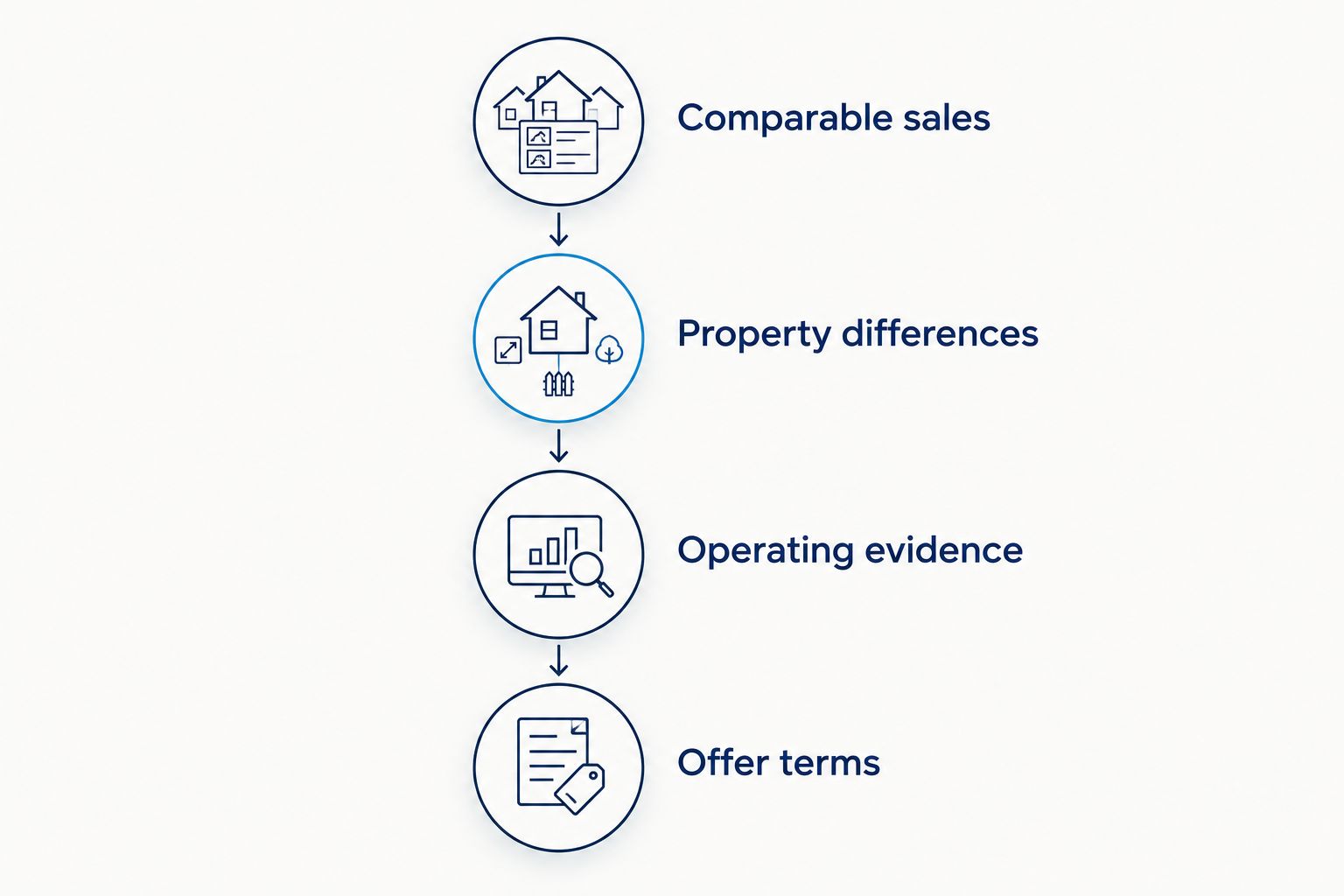
A strong valuation explanation makes its reasoning inspectable. Ask what evidence would change the recommendation, rather than accepting an asking position because it matches your preferred outcome.
Brokerage wins when you need transaction representation
Choose Carlos Morean for a Miami brokerage relationship; do not treat LoopNet as your transaction representative. Contacting someone through a platform does not itself define whom that person represents or what services they owe you.
Before sharing negotiation priorities, establish the relationship and its terms. Ask who represents whom, what work is included, and who handles the steps outside the agent's role.
For a seller, useful questions include:
- Who handles inquiries and property access?
- Who presents offers and explains material differences?
- Who communicates transaction deadlines?
- Which matters require your attorney, lender, inspector, or other specialist?
Brokerage is not a substitute for legal, tax, engineering, or financing advice. The advantage is an agreed transaction service, not a promise that an agent replaces every professional involved.
LoopNet remains useful for finding opportunities or attracting inquiries. Its limitation is the boundary of its role: the platform itself does not become your appointed agent.
Seller marketing has different winners for service and exposure
For a commercial owner prioritizing listing exposure, LoopNet is the relevant platform to evaluate. For a Miami owner prioritizing a property-specific brokerage marketing plan, the agent relationship is the relevant service to evaluate.
Neither deserves a blanket marketing win. Exposure and execution are different deliverables, and a seller can need both.
In 2026, ask a prospective agent to put the following in writing:
- Buyer profile: Who is the likely buyer, and what evidence supports that choice?
- Property presentation: What materials will explain the property accurately?
- Distribution plan: Where will the property be presented, and why?
- Inquiry handling: Who qualifies interest and follows up?
- Reporting: How will you assess inquiries, feedback, and offers?
For a Coral Gables home or Coconut Grove condo, the plan should explain the residential buyer case. For a restaurant or bar opportunity, it should explain the transaction structure and the information a commercial prospect needs.
Do not assume a named advertising channel is included in a brokerage agreement. Confirm it explicitly.
Pricing models differ; compare obligations before signing
The relevant distinction is brokerage compensation versus platform advertising expenditure, not a headline comparison between unlike services.
For brokerage, review the proposed agreement and establish how compensation is calculated, when it becomes payable, and what services it covers. Also review duration, termination provisions, and any separately authorized marketing expenses.
For LoopNet, review the terms of the advertising option you are considering. Establish the placement scope, billing commitments, renewal conditions, and cancellation terms before committing.
Predictability comes from understanding your obligations. Flexibility comes from the actual contract terms, not from assuming a platform is automatically easier to exit or that brokerage automatically includes every marketing activity.
Keep these decisions separate in your 2026 budget:
- What representation do you need?
- What exposure do you want?
- Which responsibilities and expenses remain yours?
Neither model is inherently better without the service scope and agreement terms. Avoid comparing an advertising commitment with a transaction service as though they purchase the same result.
Final verdict: choose by the job you need done
Choose Carlos Morean if you are a Miami owner selecting representation
You own a Miami residential or commercial property and need brokerage services for a sale or lease. Your priorities are agent selection, defensible valuation, a specific marketing plan, and clear transaction responsibilities.
Before engaging, request evidence relevant to your property type and neighborhood. Choose the agreement and proposed work, not a broad promise about the Miami market.
Choose LoopNet if you are a commercial researcher building a shortlist
You are exploring commercial properties independently, especially across markets, and have not yet narrowed your brief or appointed representation. Your immediate priority is discovery rather than a Miami brokerage relationship.
Use listings to identify candidates. Then verify property information, transaction structure, and suitability before treating any candidate as an investment or operating decision.
| Dimension | Winner |
|---|---|
| Best for Miami transaction services | Local brokerage |
| Residential property scope | Local brokerage |
| Commercial search breadth | LoopNet |
| Independent browsing | LoopNet |
| Valuation evidence | Tie: evidence required |
| Transaction representation | Local brokerage |
| Seller marketing | Split: service versus exposure |
| Pricing model | Tie: agreement terms decide |
FAQ
Is Carlos Morean better than LoopNet for selling a Miami condo?
Carlos Morean is the better service-category fit for selling a Miami condo because the stated offering includes residential brokerage. LoopNet focuses on commercial property discovery; assess the agent's proposed valuation and marketing plan before engaging.
Is LoopNet better for finding commercial properties outside Miami?
LoopNet is the better starting point for independent commercial property discovery across markets. A Miami brokerage relationship addresses a different need: local transaction services under agreed terms.
Can I use a commercial listing platform and an agent together?
Yes, commercial listing discovery and brokerage representation serve different roles. Confirm whether any platform advertising is included in your agent's marketing plan rather than assuming it is.
Does a LoopNet asking price tell me what my property is worth?
No, a listing's asking terms do not establish market value. Compare relevant completed transactions and examine property differences, income evidence where relevant, and transaction terms.
What should a Brickell Key condo seller ask an agent?
Ask for a building-specific valuation explanation and a written marketing plan. The comparison should address unit condition, view, floor, association obligations, and relevant transaction evidence.
What should I check before buying a Miami restaurant property?
First establish whether the transaction includes real estate, a lease, business assets, or a combination. Then verify the documents and operating requirements relevant to that transaction with the appropriate professionals.
How should I compare brokerage and platform costs in 2026?
Compare the obligations in the brokerage agreement separately from the selected platform advertising terms. Check service scope, payment triggers, duration, renewal, cancellation, and separately authorized expenses.
One last thing
Before choosing a search tool or agent, write down exactly what you are selling or buying. A condo, a commercial building, a restaurant business, and a lease interest require different evidence and different transaction plans.
Define the asset before you choose the channel. That simple step prevents a polished listing from answering the wrong question.