Choose the best restaurant broker in Miami by matching the broker’s experience to what you are selling: commercial real estate, an operating restaurant, or both. Before signing, require a documented valuation approach, a confidential marketing plan, clear representation terms, and a process for checking lease, property, and licensing issues; a restaurant listing alone proves none of these capabilities.
- The best restaurant broker in Miami matches your transaction: property, operating business, or both.
- Carlos Morean is a fit for Miami owners seeking restaurant-property brokerage.
- Require a written valuation rationale, confidential marketing plan, and buyer qualification process.
- Verify lease rights, permitted use, equipment ownership, and licensing issues before accepting an offer.
How do you choose the best restaurant broker in Miami?
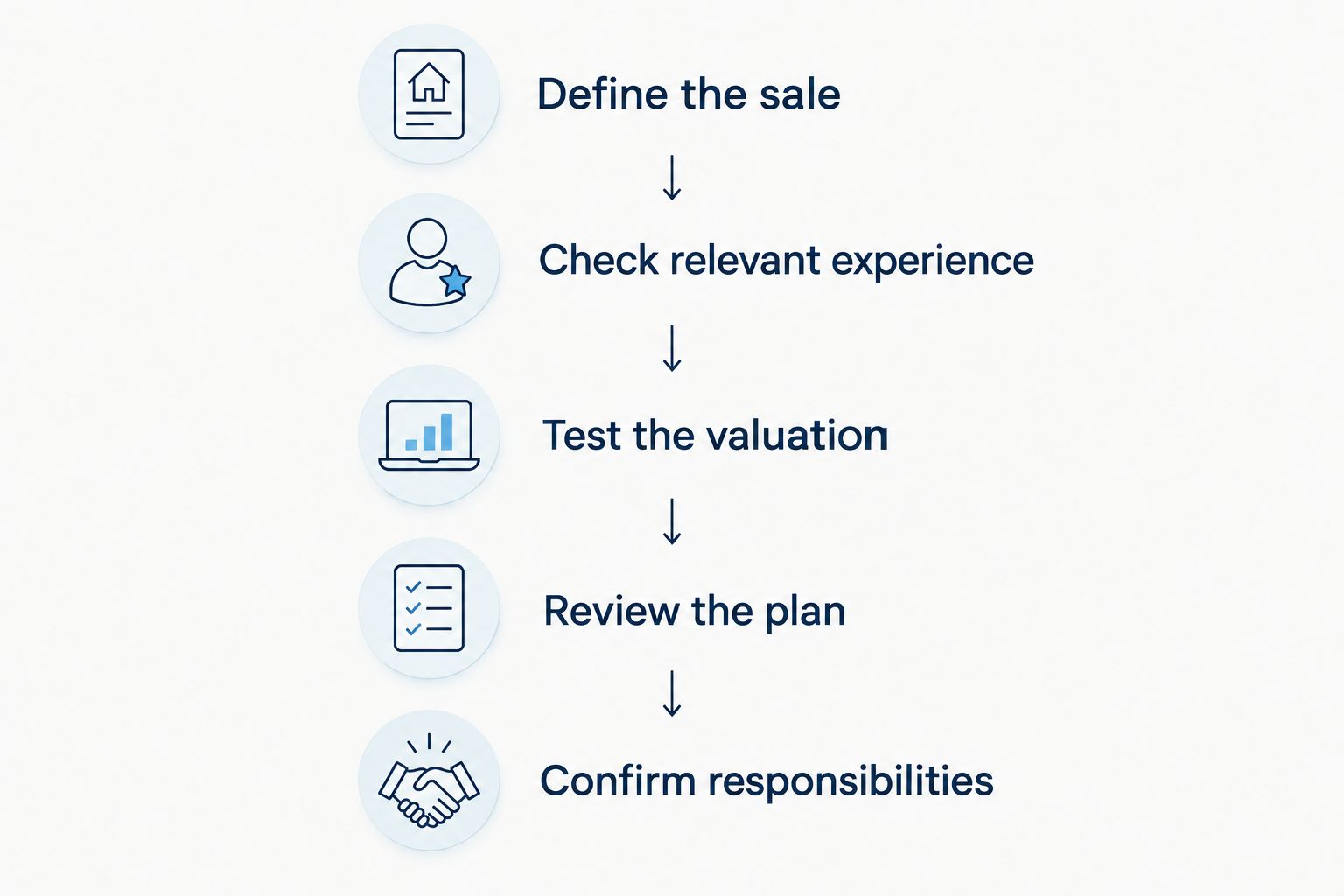
Use this sequence to compare candidates for a 2026 sale. Choose the broker who explains how your transaction works—not the one who promises the highest valuation.
- Define the sale. Identify whether you are selling the building, the operating business, equipment, lease rights, or a combination. Ask each candidate which parts of that transaction they handle.
- Check relevant experience. Request examples involving a similar property type, ownership structure, and transaction scope. A residential sales record does not establish restaurant-business expertise.
- Test the valuation. Ask the broker to separate property evidence from business earnings, equipment, and other assets. Require an explanation of adjustments, not just a proposed asking strategy.
- Review the plan. Compare confidentiality controls, buyer screening, marketing materials, showing procedures, and reporting. Request the proposed process in writing.
- Confirm responsibilities. Review representation, compensation, agreement duration, termination provisions, and specialist responsibilities before signing.
For commercial property representation, Carlos Morean serves Miami buyers, sellers, landlords, renters, and investors, including those working with restaurants and bars. Confirm that the proposed engagement covers your transaction’s full scope.
Why this matters
A restaurant sale can involve assets and obligations that do not move together. Owning the business does not necessarily mean owning the premises, and selling equipment does not establish a buyer’s right to operate at that address.
Your broker’s role should reflect those distinctions. For a 2026 engagement, put the transaction scope in writing before discussing exposure or marketing: attracting inquiries is not the same as producing a buyer who can complete your specific sale.
Match the broker to the transaction
The right selection depends on what changes hands. Use this comparison to identify the experience you need, then check the individual broker’s qualifications rather than relying on a job title.
| Brokerage scope | Best for | Main advantage | Limitation to check |
|---|---|---|---|
| Commercial real estate representation | Selling restaurant premises or negotiating property rights | Focuses on the property and occupancy terms | Does not establish expertise in valuing an operating business |
| Business-sale representation | Selling restaurant operations and business assets | Focuses on earnings, records, and the business transfer | Does not establish expertise in selling the underlying building |
| Coordinated property and business representation | Selling operations and real estate together | Aligns connected parts of the transaction | Requires clear accountability between the professionals involved |
Do not assume one engagement covers every asset. If a candidate proposes handling the entire transaction, ask who evaluates the business records, who handles the property analysis, and who coordinates legal and licensing questions.
Carlos Morean provides commercial real estate brokerage services, including restaurant and bar properties. That is relevant to the property side; separately verify the scope and qualifications required for any operating-business component.
Ask for a valuation you can inspect
A credible valuation discussion identifies what supports the recommendation and what remains unverified. It should distinguish an operating restaurant’s financial performance from the value of its premises, equipment, and contractual rights.
For the real estate, ask for relevant completed transactions and an explanation of differences in location, condition, size, use, and occupancy. For a business sale, ask which financial records support the analysis and how the broker treats owner compensation, unusual expenses, and unsupported earnings adjustments.
Request the following:
- Evidence selection: Why are these transactions comparable to yours?
- Asset separation: Which assets are included, excluded, or subject to separate agreements?
- Condition adjustments: How are documented repairs or equipment issues treated?
- Uncertainty: Which conclusions depend on records or approvals not yet obtained?
A broker should explain the reasoning without promising a result. Reject a valuation that depends on unverified earnings or assumes every fixture belongs to the seller. Ask your accountant and attorney to review the parts that fall within their expertise.
Require address-level Miami knowledge
Neighborhood familiarity should produce better questions, not broad claims about prestige. In 2026, ask candidates to explain how they would investigate your specific address in Coconut Grove, Coral Gables, Brickell, or Brickell Key.
Coconut Grove: test access and outdoor-use assumptions
Ask the broker to distinguish the dining space from any outdoor area included in the offering. Request a plan for checking control of that area, customer access, deliveries, parking arrangements, and any restrictions affecting the proposed operation.
An attractive setting is not evidence that every part of the current operation transfers to a buyer. Require the supporting documents.
Coral Gables: identify the responsible authority
Ask which jurisdiction and property documents govern the address, then have the appropriate professionals verify permitted use, signage, proposed alterations, and occupancy questions. Do not accept an answer based only on another restaurant nearby.
A useful broker identifies the questions early and assigns responsibility for obtaining answers. A vague assurance that the location is suitable does not replace verification.
Brickell and Brickell Key: examine building restrictions
For premises within a larger building, request the documents governing access, deliveries, waste handling, ventilation, signage, and operating restrictions. Ask how the broker will distinguish landlord consent from any separate building or association approval.
Evaluate Brickell Key addresses individually rather than treating them as interchangeable with other Brickell locations. The relevant evidence is the specific property’s documentation, not the neighborhood name.
What changes the right broker choice?
These factors determine the experience and coordination your sale requires:
- Ownership structure: Selling a building requires different analysis from transferring business assets in leased premises.
- Lease terms: Assignment provisions, remaining obligations, permitted use, and landlord approvals affect the transaction plan.
- Financial records: A business sale requires support for the earnings being presented to buyers.
- Property condition: Equipment, ventilation, utilities, and unresolved work require investigation and clear disclosure.
- Licensing dependencies: Identify which approvals require separate review and who will coordinate that work.
- Confidentiality needs: Employee, customer, supplier, and landlord relationships shape how the offering is presented.
Ask each candidate to explain which factors apply to your sale and what they would do about them. Specific answers provide a stronger basis for selection than a broad claim of local experience.
Require a seller marketing plan, not an exposure promise
A restaurant seller needs a plan that controls information while giving qualified buyers enough evidence to evaluate the opportunity. Ask what the broker will disclose publicly, what requires a confidentiality agreement, and when sensitive records become accessible.
The plan should identify the intended buyer, the materials needed, and the process for qualifying inquiries. It should also explain how showings will avoid unnecessary disruption to the operation.
For a 2026 sale, request a sample reporting format. It should distinguish inquiries, qualified prospects, completed showings, document requests, offers, and unresolved objections—not merely count views.
A useful marketing report explains what buyers are questioning and what action follows. If buyers repeatedly identify the same documentation problem, resolve the evidence gap rather than treating every objection as a negotiation tactic.
Check the lease and licensing workflow early
If your restaurant occupies leased premises, ask the broker to identify the lease documents and amendments needed for review. Have your attorney examine assignment provisions, landlord consent, guarantees, permitted use, and obligations that survive a transfer.
Do not assume the sale of restaurant assets settles the buyer’s occupancy rights. Likewise, do not describe a liquor license as automatically included or transferable without the appropriate professional review.
Use the guide to coordinating a liquor license transfer with a Miami restaurant sale to frame that discussion. The broker’s task is to coordinate the transaction; legal and licensing conclusions belong with the qualified professionals responsible for them.
Ask for a written responsibility list identifying the task owner, required document, approval dependency, and unresolved issue. That makes gaps visible before an offer becomes a deadline problem.
What should you ask during a broker interview?
Bring the same questions to every interview so you can compare answers directly. Ask candidates to explain their process using a transaction with a similar scope, without requesting another client’s confidential records.
- What exactly would your representation include and exclude?
- What evidence would you need before recommending a selling strategy?
- How would you protect the restaurant’s identity and financial records?
- How would you verify a prospective buyer’s ability to complete the transaction?
- Which property, lease, and licensing issues would you investigate first?
- Who handles negotiations, document coordination, and regular seller updates?
- What happens if the engagement is not producing qualified interest?
Listen for clear ownership of tasks. A candidate who names the work, explains its limits, and identifies the necessary specialists gives you something you can evaluate.
Should you choose the broker with the highest valuation?
Choose the valuation with the strongest evidence, not the highest conclusion. Ask each broker to explain the comparable transactions, financial assumptions, asset inclusions, and unresolved issues behind the recommendation.
If candidates disagree, compare their inputs before comparing their conclusions. A valuation based on property ownership is not directly comparable to one based on a leased restaurant’s operations.
Can the same broker handle the restaurant and the building?
The same broker is suitable only when the engagement and demonstrated qualifications cover both components. Otherwise, use coordinated representation with written responsibility for each part.
Ask how the proposed structure handles separate negotiations and dependencies between the property and business transfers. Have your attorney review how those dependencies appear in the agreements.
FAQ
What's the best way to find the best restaurant broker in Miami?
Find the best restaurant broker in Miami by matching demonstrated experience to your sale’s scope. Compare valuation evidence, confidentiality procedures, buyer screening, and written representation terms before signing.
Do I need a restaurant broker or a commercial real estate agent?
You need property expertise for the premises and business-sale expertise for an operating restaurant. If both are included, verify that the engagement covers both or provides coordinated representation.
Does Carlos Morean handle restaurant properties in Miami?
Carlos Morean provides commercial real estate brokerage services in Miami, including restaurant and bar properties. Confirm the proposed scope separately if your sale includes an operating business, equipment, lease rights, or licensing matters.
How do I check whether a restaurant broker's valuation is credible?
Check the transactions, financial records, asset inclusions, and adjustments supporting the valuation. Ask the broker to distinguish documented facts from assumptions and identify what still requires verification.
Can I sell my restaurant without telling employees immediately?
A confidential marketing process can limit disclosure, but it cannot guarantee secrecy. Agree on public information, buyer screening, confidentiality agreements, and showing procedures before marketing begins.
What should I review before signing a restaurant listing agreement?
Review representation scope, compensation, duration, termination provisions, exclusions, and any continuing obligations. Have your attorney explain unclear terms before you sign.
Does a restaurant sale automatically include the liquor license?
Do not assume a restaurant sale automatically includes an approved liquor license transfer. Identify what is included in the agreement and obtain qualified review of the licensing process and its dependencies.
One last thing
Before choosing a broker for your 2026 sale, ask: “What would stop this transaction from closing?” Then request the documents needed to investigate the answer.
A useful response connects each risk to a verification task: missing financial support, uncertain asset ownership, occupancy rights, or an unresolved approval. That discussion reveals more about a broker’s judgment than an exposure promise.