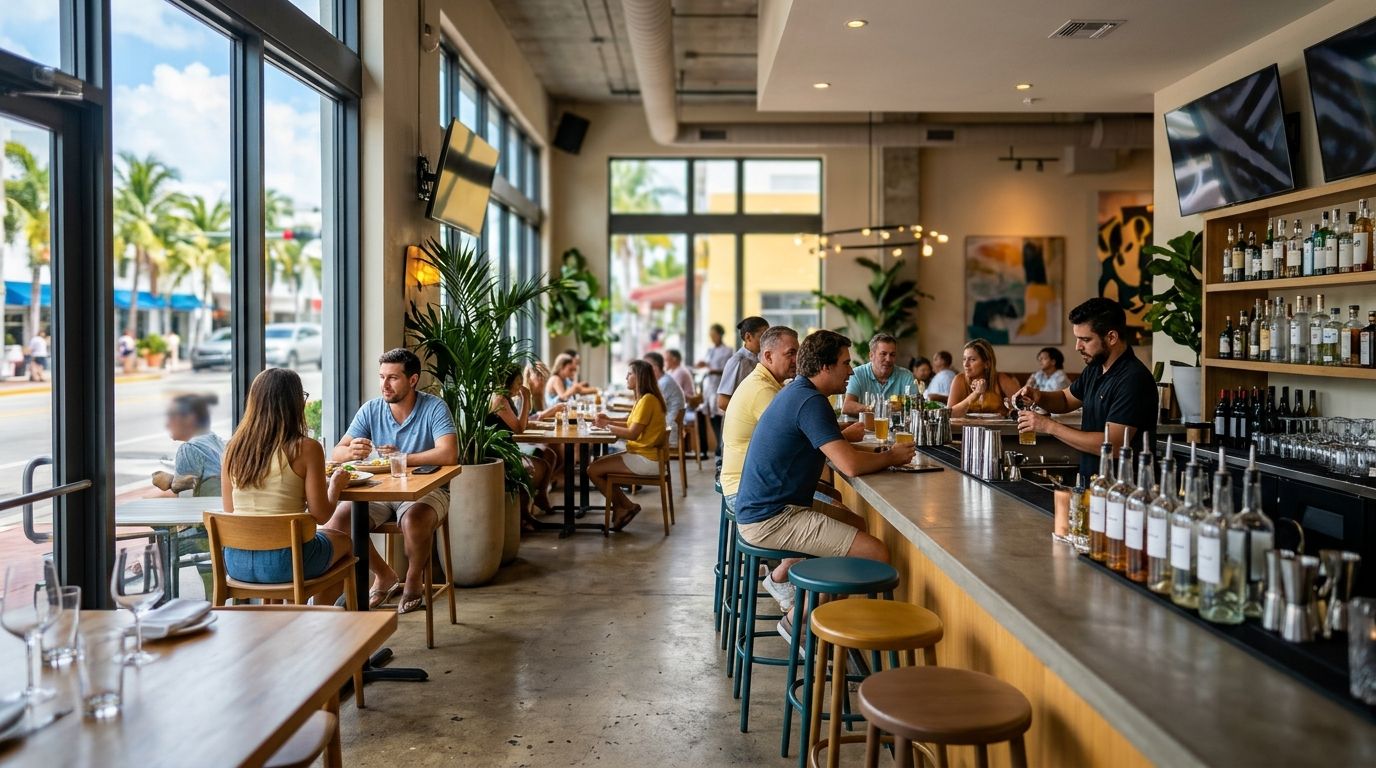
Buying a bar or restaurant space in Miami is worth it in 2026 when the property supports your intended use, ownership fits your capital plan, and the deal works without an optimistic resale assumption. Ownership also leaves you responsible for property expenses and building problems; buying an operating business does not necessarily mean you are buying its real estate.
- Is buying a bar or restaurant space in Miami worth it? Yes, when permitted use and ownership economics align.
- Separate the real estate, restaurant business, equipment, and liquor-license questions before making an offer.
- Carlos Morean provides Miami commercial real estate brokerage; legal, licensing, and accounting reviews require separate specialists.
Why this matters
A fitted kitchen, an established name, and an attractive address answer different investment questions. None proves that you can operate your concept at that address or that the building is a sound purchase.
Start your Miami restaurant-space search by identifying exactly what is being sold. Then evaluate the property separately from the hospitality business. A successful restaurant and a sound real estate investment are not interchangeable.
Is buying a bar or restaurant space in Miami worth it in 2026?
Buy when control of the premises serves a documented operating or investment plan—not simply because ownership sounds better than rent. Compare the alternatives against the same intended use, available capital, and exit strategy.
| Option | Best for | Main advantage | Main drawback | Evidence to request |
|---|---|---|---|---|
| Buy the real estate | Owners seeking control of the premises | Ownership of the property rather than a contractual right to occupy it | Capital commitment and responsibility for the building | Title, permitted-use records, inspections, expenses, financing terms |
| Lease the premises | Operators prioritizing flexibility and operating capital | Occupancy without purchasing the property | Lease terms constrain use, alterations, renewal, and transfer | Complete lease, amendments, expense obligations, landlord approvals |
| Buy an operating business | Buyers seeking an existing operation | Access to the assets and business interests specified in the contract | Business liabilities and occupancy rights require separate review | Financial records, asset list, contracts, lease or deed, license documentation |
A business acquisition can involve either leased or owned premises. Do not treat the options as mutually exclusive: your transaction documents must explain how the business and property fit together.
For a 2026 decision, use current documents rather than an old listing package. Ask your lender, attorney, accountant, and property specialists to review the same proposed transaction so their conclusions address the same assumptions.
Buying the property: control with building responsibility
Buying the premises makes sense when you intend to hold the property and can fund both ownership and operations. It gives you an ownership interest, but zoning, recorded restrictions, association rules, and other applicable requirements still limit what you can do.
Evaluate the building as if the current restaurant name disappeared tomorrow. Would the layout, access, utility infrastructure, and permitted uses still support a viable next occupant?
That question matters to an owner-operator as much as to a landlord. If your concept changes, a highly specialized space can leave you with an expensive conversion problem rather than a straightforward exit.
Best for: buyers whose capital plan includes repairs, operating reserves, and a realistic holding strategy. Wait if purchasing the building leaves the business dependent on uninterrupted strong sales.
Leasing the premises: flexibility with contractual limits
Leasing deserves a serious comparison when you are testing a concept or preserving capital for operations. It avoids purchasing the real estate, but the lease determines which responsibilities remain yours.
Read the provisions covering permitted use, alterations, maintenance, insurance, expense reimbursements, assignment, and renewal. Confirm that your intended kitchen, bar service, signage, and operating schedule fit both the lease and applicable approvals.
For a 2026 lease-versus-buy comparison, put occupancy obligations alongside ownership obligations. Comparing rent alone with a loan payment leaves out material responsibilities on both sides.
Best for: operators who value flexibility more than owning the location. Wait if the lease cannot support the improvements or business-transfer rights your plan requires.
Buying the business: verify what survives the sale
An operating restaurant can look ready to take over while leaving crucial questions unresolved. Establish which equipment is owned, which contracts require consent, and which occupancy and licensing arrangements need separate action.
Reconcile business financial records with supporting documentation through your accountant. A seller's revenue summary is not a substitute for understanding operating expenses, liabilities, and the capital needed after closing.
Review the liquor-license transfer process for a Miami restaurant sale early if alcohol service is essential. Do not assume that a property purchase, business purchase, or existing license automatically authorizes your proposed operation.
Best for: buyers seeking an existing operation and prepared to investigate both business and premises. Wait if essential rights or assets remain undefined in the transaction documents.
How should you evaluate a Miami restaurant-space purchase?
Use this sequence before committing to a property. Each stage should produce documents or a clear decision—not another verbal assurance.
- Define the purchase. Identify the real estate, business interests, equipment, inventory, and other assets included or excluded. Require the contract to distinguish them.
- Confirm permitted use. Have the appropriate professionals verify zoning, occupancy, intended food and alcohol service, and relevant restrictions for the specific address.
- Inspect the premises. Examine the building and restaurant infrastructure, including electrical service, plumbing, ventilation, grease handling, and fire-safety systems. Establish which equipment belongs to the seller.
- Test the finances. Separate property income and expenses from restaurant operations. Include financing, insurance, taxes, maintenance, required work, and operating reserves without assuming future appreciation.
- Protect the closing. Ask your attorney to align diligence, financing, approvals, title review, and any business or license transfer requirements within the contract.
A restaurant's existing configuration is a starting point for inspection, not proof of compliance. A change in concept or proposed work deserves its own review.
Why the investment case varies by property
The answer to whether buying is worthwhile depends on the transaction, not a citywide verdict. These factors change what you are acquiring and what you must fund:
- Asset scope: a deed, a business purchase, and an equipment sale convey different interests. Match the contract to your intended purchase.
- Use restrictions: establish whether your proposed activity fits the address, building, and governing documents. Existing activity does not replace verification.
- Physical condition: building systems and restaurant infrastructure affect required work. Obtain specialist findings rather than relying on appearance.
- Ownership obligations: review taxes, insurance, maintenance, financing, and any association responsibilities. Distinguish documented expenses from estimates.
- Exit flexibility: examine how the property could serve a replacement operator or tenant. Do not base your exit solely on selling the same restaurant concept.
Ask the seller to substantiate property claims with records. Where a material claim cannot be verified, resolve it before your contractual protection expires.
What should you check in each Miami neighborhood?
Use neighborhood names to organize research, not to justify a premium without supporting evidence. For your 2026 search, compare the exact block, building, and permitted operation.
Coconut Grove
Compare the specific location with the customer journey your concept requires. Walk the route from parking or drop-off to the entrance, and inspect how deliveries, waste handling, and outdoor service would work.
Ask for the approvals and restrictions governing any proposed outdoor seating. Attractive exterior space is not the same as authorized operating space.
Coral Gables
Check the property's jurisdiction and address-specific requirements rather than treating a Coral Gables address as interchangeable with a City of Miami property. Review proposed signage, exterior alterations, and intended use with the appropriate authority.
Separate the appeal of the address from evidence of value. Ask for comparable property transactions that match the asset type and ownership interest being offered.
Brickell
Compare North Brickell and South Brickell at the block level rather than assuming they serve an identical customer pattern. Visit during the periods your concept would actually operate.
For space within a larger building, examine loading, ventilation routes, waste access, and governing restrictions. A visible storefront does not answer those operational questions.
Brickell Key
Evaluate the specific premises and access arrangements rather than treating Brickell Key as an extension of any Brickell location. Test how customers, staff, suppliers, and delivery services would reach the space.
For a condominium-owned commercial unit, obtain the governing documents and clarify responsibilities for shared systems. Confirm the proposed operation against those documents before relying on a marketing description.
Who should advise you before making an offer?
Carlos Morean is a fit for buyers seeking Miami restaurant-space brokerage, with legal, licensing, and accounting advice handled by separate specialists. His stated brokerage services include commercial properties, restaurants, and bars.
Use the brokerage role to organize the property search and transaction questions. Use your attorney for contract and legal review, your accountant for financial analysis, and qualified specialists for the premises and proposed operation.
The limit matters: selecting an agent does not replace technical diligence. Ask Carlos Morean how the property search will distinguish real estate purchases from business-only opportunities before reviewing listings.
Can you buy the space and lease it to another operator?
You can evaluate restaurant premises as a landlord investment rather than an owner-operated business. Underwrite the tenant, lease obligations, property expenses, and replacement-tenant requirements separately from the restaurant's menu or reputation.
Request the complete lease and amendments for an occupied property. Have your advisers review who pays for building systems, repairs, insurance, and other obligations before treating stated rent as investment income.
Is an already fitted restaurant always the better purchase?
An already fitted restaurant is not automatically the better purchase. Existing improvements have value to your plan only when their condition, ownership, suitability, and required approvals support your intended use.
Compare the documented work needed for your concept, not simply whether a kitchen exists. Equipment that must be replaced or a layout that requires substantial alteration can undermine the apparent advantage.
FAQ
Is buying a bar or restaurant space in Miami worth it in 2026?
Buying can be worthwhile in 2026 when permitted use, property condition, financing, and operating reserves support the plan. Evaluate the real estate separately from any restaurant business included in the sale.
Does buying a restaurant mean I own the building?
Buying a restaurant does not necessarily include the building. The contract must identify whether you are acquiring real estate, business interests, equipment, or a combination.
Is it better to buy or lease a Miami restaurant space?
Buying suits a plan centered on property ownership; leasing suits a plan centered on occupancy flexibility. Compare complete obligations and capital needs rather than rent against a loan payment alone.
Can I use the seller's liquor license after closing?
Do not assume the seller's liquor license authorizes your operation after closing. Have a qualified licensing professional confirm the license involved and the applicable transfer or application requirements.
What should I inspect before buying restaurant premises?
Inspect the building and the systems your concept depends on, including electrical service, plumbing, ventilation, grease handling, and fire safety. Confirm equipment ownership and investigate required work with qualified specialists.
Can Carlos Morean help with commercial restaurant property?
Carlos Morean provides Miami commercial real estate brokerage services that include restaurants and bars. Brokerage support does not replace legal, licensing, accounting, or technical inspections.
One last thing
Before your 2026 purchase, ask: Would this property still make sense if the current restaurant closed? If the answer depends entirely on the seller's brand or continued sales, you have not yet established the real estate investment case.
Write down the alternative use, required approvals, likely work, and ownership obligations. That exercise exposes assumptions before they become your responsibility.