
A Miami condo buying guide for empty nesters is about trading square footage and yard work for a locked-down, low-maintenance unit in a building that fits the life you actually live now, not the one you built a family in. Downsizers in Miami have different priorities than first-time buyers: fewer stairs, predictable monthly costs, and a condo association that won't surprise you with a special assessment in year two.
- This Miami condo buying guide for empty nesters favors one-level living in Coconut Grove, Coral Gables, and Brickell Key over walk-ups.
- Right-sizing in 2026 means fewer square feet, lower upkeep, and a condo association with a funded reserve study.
- Brickell high-rises suit downsizers who want walkability; Coconut Grove and Coral Gables suit those who want quiet, low-rise streets.
- A building's 2026 insurance renewal and reserve study matter more than its lobby — assessments sink more deals than price does.
Why this matters for empty nesters and downsizers
Most empty nesters selling a single-family home in Carlos Morean's Miami market are not just moving, they're resetting their monthly costs and their risk exposure at the same time. A condo purchase folds a mortgage payment, a maintenance fee, property insurance, and a share of the building's reserve obligations into one line item. Get the building wrong and that line item moves every year; get it right and it barely changes.
Florida's post-2022 condo safety requirements mean buildings three stories and older that have passed the 30-year mark now carry mandatory milestone inspections and structural integrity reserve studies. For a downsizer, that single fact matters more than finish quality or amenity count. A building that under-reserved for years can hand a new owner a six-figure assessment within 18 months of closing. This guide walks through the steps that keep that from happening to you in 2026.
Define what "right-sized" actually means for you
Before touring a single unit, write down what you're actually solving for. Most downsizers answer this wrong the first time because they size for visits from grandkids instead of for the 350 days a year nobody is visiting.
- Bedroom count for daily use versus bedroom count for twice-a-year guests
- Whether you need a den or home office versus a guest room
- Outdoor space you'll actually use: a balcony you'll sit on beats a terrace you won't
- Storage for what you're keeping, not what you're hoping to fit
- One-level living as a non-negotiable if stairs are a long-term concern
Pick a neighborhood that matches your daily routine
Miami's downsizer-friendly neighborhoods are not interchangeable, and picking by reputation instead of routine is the single most common regret. Coconut Grove and Coral Gables favor walkable, tree-lined streets and lower-density buildings. Brickell and Brickell Key favor vertical living with grocery stores, gyms, and restaurants inside walking distance of the lobby.
- Coconut Grove: village-scale streets, marina proximity, lower unit counts per building
- Coral Gables: Mediterranean-style low-rises, closer to Merrick Park shopping and dining
- Brickell: North Brickell skews younger and louder; South Brickell is quieter and closer to Brickell Key's bridge-access buildings
- Brickell Key: single bridge access limits through-traffic and gives a more insulated, slower pace than the mainland towers
- Match your choice to how often you'll walk versus drive for errands
Screen buildings for single-level living and elevator reliability
A condo only delivers on "no stairs" if the building's vertical transportation actually works. Ask for elevator service records during your tour, not after you've made an offer.
- Number of elevators relative to total units in the building
- Any recent elevator modernization or pending capital work
- Whether the unit is a true single level or a loft layout with internal stairs
- Distance from the elevator bank to the unit door
- Backup power for elevators during outages
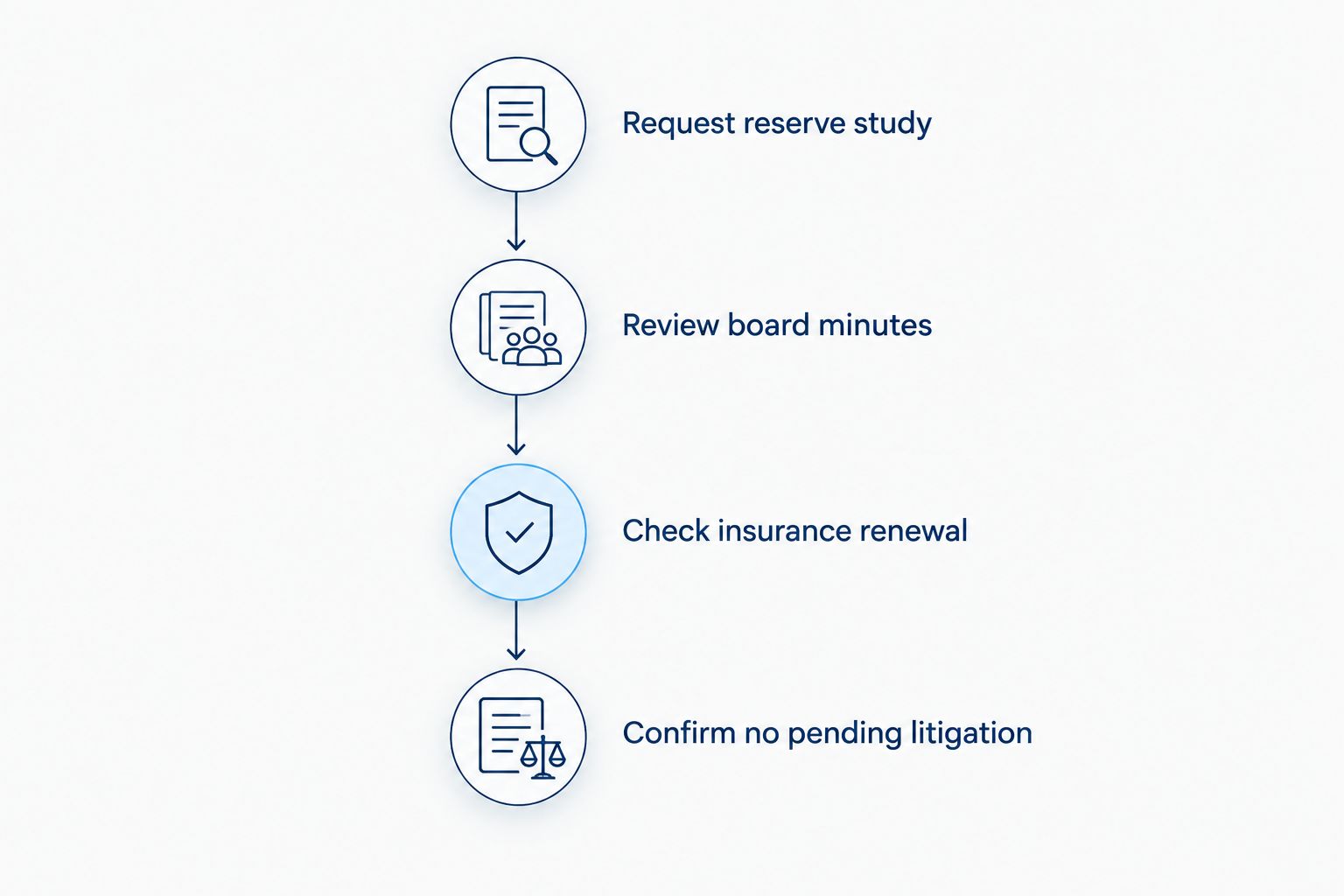
Check the condo association's financial health
This is the step most downsizers skip because it's the least fun part of the search, and it's the one that determines whether your monthly cost stays flat or spikes.
- Request the most recent reserve study and structural integrity reserve study
- Ask how much of required reserves are currently funded versus deferred
- Review the last two years of board meeting minutes for assessment discussions
- Confirm the building's current insurance carrier and whether a renewal has caused a fee increase
- Check for pending litigation involving the association
Compare condo versus single-family maintenance costs before you commit
A condo fee replaces a long list of single-family line items, but only some of them. Downsizers who assume a condo fee covers everything a house did are often surprised by what's still on them.
- Roof, exterior paint, and structural repairs are typically covered by the association
- Interior finishes, appliances, and in-unit plumbing remain the owner's responsibility
- Landscaping and common-area pest control are covered; in-unit pest control usually isn't
- Property insurance for the building shell is shared; contents and liability coverage for the unit is on you
- Parking and storage may carry separate fees depending on the building
Plan for guest space without buying square footage you'll rarely use
Buying an extra bedroom for occasional visitors adds to your purchase price and your monthly fee for 365 days of mostly empty space. Several Miami buildings solve this differently.
- Buildings with on-site guest suites you can reserve for visiting family
- Pet-friendly buildings matter if downsizing coincides with keeping or adopting a pet; check pet-friendly condo buildings in Miami before assuming every building allows your size and breed
- Nearby short-term rental or hotel options for overflow guests during holidays
- A den that converts to a guest room instead of a dedicated second bedroom
- Storage units within the building for seasonal gear instead of a bigger unit
Time the purchase around 2026 insurance and assessment realities
Insurance renewals and reserve funding deadlines move on their own calendar, and buying at the wrong point in that calendar costs you. A building mid-way through fixing a reserve shortfall in 2026 may have already set its assessment schedule, which means a new owner inherits the bill without inheriting the years the building ran under-reserved.
- Ask when the building's insurance policy renews relative to your expected closing date
- Confirm whether any assessment vote happened in the last 12 months and what it covers
- Check if the building has completed its milestone inspection, not just scheduled one
- Review whether reserve contributions increased in the most recent budget cycle
- Factor a possible assessment into your total cost of ownership, not just the sale price
Comparing Miami neighborhoods for empty nesters and downsizers
| Neighborhood | Best for | Key limitation |
|---|---|---|
| Coconut Grove | Downsizers who want village-scale streets and lower-density buildings | Fewer high-rise amenity buildings than Brickell |
| Coral Gables | Buyers who want Mediterranean-style architecture and proximity to Merrick Park | Fewer waterfront condo options than Brickell Key |
| South Brickell | Quieter alternative to North Brickell with walkable restaurants | Still a high-density urban setting, not a village feel |
| Brickell Key | Bridge-access privacy with a slower pace than the mainland towers | Limited inventory turnover given the small footprint |
South Brickell wins for downsizers who want walkability without North Brickell's density, while Coconut Grove and Coral Gables win for those who want to trade vertical living for village streets.
Talk through your shortlist with Carlos
Get a neighborhood and building comparison built around how you actually live.
Common mistakes empty nesters make buying a Miami condo
- Sizing for guests, not for daily life. Buying a three-bedroom for visits that happen twice a year inflates both the purchase price and the monthly fee.
- Skipping the reserve study. A low asking price on a unit in an under-reserved building is not a deal, it's a deferred assessment with your name on it.
- Choosing a neighborhood on reputation instead of routine. Brickell's energy appeals in a weekend tour; it can feel loud for daily living if you wanted Coconut Grove's quieter streets.
- Underestimating insurance volatility. A 2026 insurance renewal can move a building's monthly fee more than a kitchen renovation moves resale value.
- Assuming every building is pet-friendly. Breed and weight restrictions vary widely across Miami buildings and are rarely disclosed until you ask directly.
“A thin reserve fund today becomes a special assessment tomorrow - read the number before you read the view.”
FAQ
What's the best Miami neighborhood for empty nesters downsizing from a house?
Coconut Grove and Coral Gables suit downsizers who want village-scale streets and lower-density buildings, while South Brickell and Brickell Key suit those who want walkable, vertical living with a quieter edge than North Brickell.
Is a condo better than a single-family home for downsizing in Miami?
A condo shifts exterior maintenance, roofing, and structural repairs to the association, which lowers the daily workload compared to a single-family home, but owners remain responsible for in-unit repairs, contents insurance, and their share of any building assessment.
How much does a condo special assessment cost in Miami?
Assessment amounts vary by building and depend on the scope of the repair and how well the association's reserves were funded beforehand, which is why reviewing the reserve study before closing matters more than comparing list prices.
Do Miami condo buildings require milestone inspections in 2026?
Florida law requires milestone inspections and structural integrity reserve studies for condo buildings three stories and taller once they pass the 30-year mark, and buyers should confirm a building has completed, not just scheduled, its inspection.
Are Brickell condos good for retirees and empty nesters?
Brickell condos work well for downsizers who want walkability to restaurants and groceries, with South Brickell offering a quieter alternative to North Brickell's denser, younger corridor.
What should I check before buying a condo as an empty nester in Miami?
Check the reserve study, insurance renewal timing, elevator reliability, pet policy, and whether the unit is truly single-level before making an offer, since these factors affect your monthly cost more than the finishes do.
Is Coral Gables or Coconut Grove better for downsizing?
Coral Gables offers Mediterranean-style low-rises closer to Merrick Park shopping, while Coconut Grove offers marina-adjacent, village-scale streets with lower unit density; the right choice depends on whether you prioritize shopping proximity or a quieter pace.
Can I bring a pet when downsizing to a Miami condo?
Pet policies vary significantly by building, with breed and weight restrictions common, so confirm the specific building's pet policy before assuming your pet is welcome.
One last thing
The building that looks the most finished on your tour is often the one that deferred the most maintenance to get there. A fresh lobby renovation funded by a special assessment tells you more about a board's financial discipline than the marble does. Ask when the lobby was last redone and how it was paid for before you fall for it.