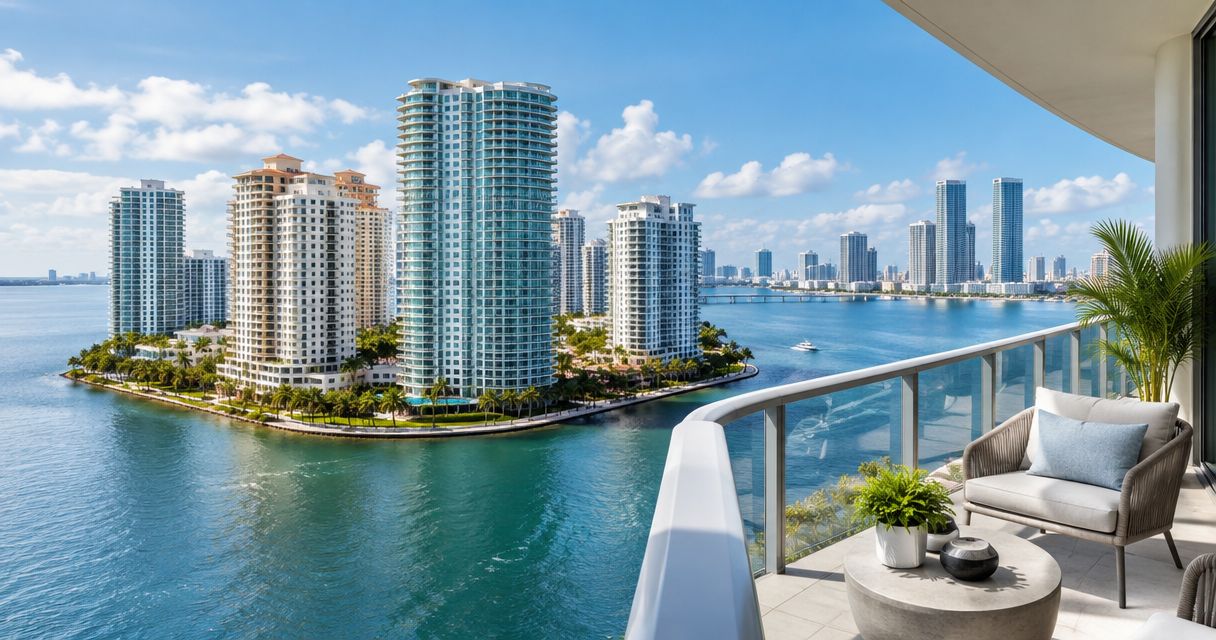
Best overall comparison: closed sales in your own condo line. Best for testing a view premium: matched sales elsewhere in your building. Best for checking the wider market: comparable Brickell Key buildings. Rank Brickell Key condos by verified closed-sale price per interior square foot—not by an island-wide asking-price average.
- For Brickell Key condos price per square foot, matched closed sales provide a stronger pricing baseline than asking averages.
- Carlos Morean helps Miami condo sellers evaluate pricing, agent selection, and property marketing.
- Compare interior area consistently; keep balconies, parking, condition, and association obligations separate.
- A lower price per square foot does not establish better value without reviewing the property and building.
Why this matters
A building leaderboard is not a valuation of your apartment. Different layouts, exposures, renovation levels, and association obligations make an unadjusted price-per-square-foot ranking a weak basis for setting an asking price.
Carlos Morean is a Compass real estate agent serving Miami buyers and sellers, including luxury residential and waterfront condo owners. For a Brickell Key seller in 2026, the practical question is which completed transactions explain your apartment’s value—not which building carries the highest headline figure.
The best pricing evidence matches the property you are selling and documents why each comparison belongs. Use the following ranking of comparison methods to build that evidence before choosing a listing strategy.
What makes the best Brickell Key condo comparison
Judge each comparable sale against these criteria before accepting its price-per-square-foot figure:
- Transaction status: A completed sale records an agreed transaction; an asking figure records a seller’s position.
- Interior area: Use a consistent source and definition of square footage across the comparison.
- Physical similarity: Match layout, exposure, floor position, condition, and usable interior space.
- Building obligations: Review association documents, assessments, maintenance responsibilities, and relevant inspection records.
- Timing and terms: Record the closing date, concessions, and other terms that affect the comparison.
These criteria apply to both buyers and sellers. A seller needs a defensible asking position; a buyer needs to understand whether a difference reflects a genuine advantage or an unresolved obligation.
Comparison methods at a glance
The order below ranks the usefulness of the evidence, not individual buildings. It does not assign an unsupported 2026 price ranking to Brickell Key condos.
| Rank and comparison | Best for | Standout feature | Key limitation |
|---|---|---|---|
| Same-line closed sales | Establishing the initial baseline | Closest layout and exposure match | Condition and timing still differ |
| Matched same-building sales | Testing a view or renovation premium | Shared building context | Different lines require adjustments |
| Comparable island buildings | Checking competing property choices | Wider Brickell Key context | Building differences complicate comparison |
| Mainland Brickell alternatives | Testing location trade-offs | Broader buyer-choice perspective | Not a direct island valuation substitute |
1. Same-line closed sales: best for the initial baseline
Start with completed transactions in the same vertical line as your apartment. Confirm the actual floor plan rather than assuming that similar unit identifiers guarantee an identical layout.
Same-line evidence narrows the comparison before you discuss finishes, floor position, or outlook. It remains a starting point, not permission to copy another owner’s result.
Same-line closed sales pros:
- Offer a closer starting match for layout and orientation.
- Keep the comparison within the same association.
- Make apartment-specific differences easier to identify.
Same-line closed sales cons:
- Renovation quality and maintenance condition still vary.
- A dated transaction does not establish today’s negotiating position.
Best for: Owners setting an initial valuation baseline before evaluating competing listings.
Ask your agent to explain every departure from the closest sale. If the proposed adjustment rests only on a statement that your apartment is nicer, request a more specific explanation tied to condition, outlook, layout, or transaction terms.
Verdict: Use same-line closed sales first; hold the conclusion until the differences are documented.
2. Matched same-building sales: best for testing a premium
Move to other lines within the building when your closest layout matches do not answer a particular question. This comparison helps examine whether a different outlook, floor position, or renovated interior supports a different valuation.
Keep the shared building context separate from the apartment-level differences. A common address does not make every residence an interchangeable comparable.
Matched same-building sales pros:
- Retain a shared association and building setting.
- Help isolate differences between apartment configurations.
- Provide additional evidence when same-line transactions are limited.
Matched same-building sales cons:
- Different exposures and layouts require explicit judgment.
- Renovation descriptions do not establish equivalent workmanship or condition.
Best for: Sellers evaluating whether their apartment deserves a premium over the initial baseline.
For a 2026 listing, identify the feature first and test it second. Do not begin with the premium you want and search only for transactions that support it.
Verdict: Use matched same-building sales to test a premium, not to assume one.
3. Comparable island buildings: best for checking buyer alternatives
Compare other Brickell Key buildings after establishing the strongest same-building evidence. This step asks whether your proposed positioning makes sense beside properties a buyer would reasonably consider instead.
Select alternatives by relevant characteristics, not reputation alone. Interior layout, outlook, building condition, services, and ownership obligations belong in the comparison.
Comparable island buildings pros:
- Broaden the analysis beyond a single association.
- Reveal competing combinations of space, condition, and setting.
- Help shape a seller’s explanation of the apartment’s advantages.
Comparable island buildings cons:
- Different services and obligations reduce direct comparability.
- An island-wide average hides differences between the underlying apartments.
Best for: Owners testing whether their proposed listing position is credible across Brickell Key.
For a wider property-search starting point, review the guide to Brickell Key condos. Then return to verified transaction records before drawing valuation conclusions.
Verdict: Use island comparisons as a market check; skip an unadjusted building leaderboard.
4. Mainland Brickell alternatives: best for location trade-offs
Mainland Brickell properties provide another perspective on what buyers can choose. They do not replace the closer evidence available from the island and the subject building.
Compare the actual experience a buyer is evaluating: access routes, surrounding activity, outlook, layout, and building requirements. Avoid claiming that either location automatically deserves a premium.
Mainland Brickell alternatives pros:
- Expand the view of competing property choices.
- Help identify which location differences matter to a particular buyer.
- Give a marketing plan more substance than a generic luxury description.
Mainland Brickell alternatives cons:
- Location differences weaken direct valuation comparisons.
- Similar interior area does not establish a similar ownership experience.
Best for: Sellers preparing for buyers who are considering both Brickell Key and mainland Brickell.
A useful comparison names the trade-off rather than declaring a winner. Confirm the relevant walking route, vehicle access, and surrounding conditions instead of relying on a neighborhood label.
Verdict: Use mainland Brickell for buyer-choice context; skip it as the sole pricing anchor.
How the comparison methods rank
The ranking follows proximity to the subject apartment: same line, same building, comparable island buildings, then mainland alternatives. Each step introduces more differences that need explanation.
This is an evidence hierarchy, not a claim that one Brickell Key building delivers the best return or lowest ownership burden. Carlos Morean’s Miami condo brokerage services are relevant to owners seeking help with a property-specific sale, rather than a generalized building ranking.
Calculate price per square foot consistently
Closed-sale price divided by verified interior square footage equals closed-sale price per interior square foot. Keep asking-price calculations in a separate column so you do not mix seller expectations with completed transactions.
For your 2026 comparison sheet, record the source of each figure. If different records report different interior areas, resolve the discrepancy before ranking the apartments.
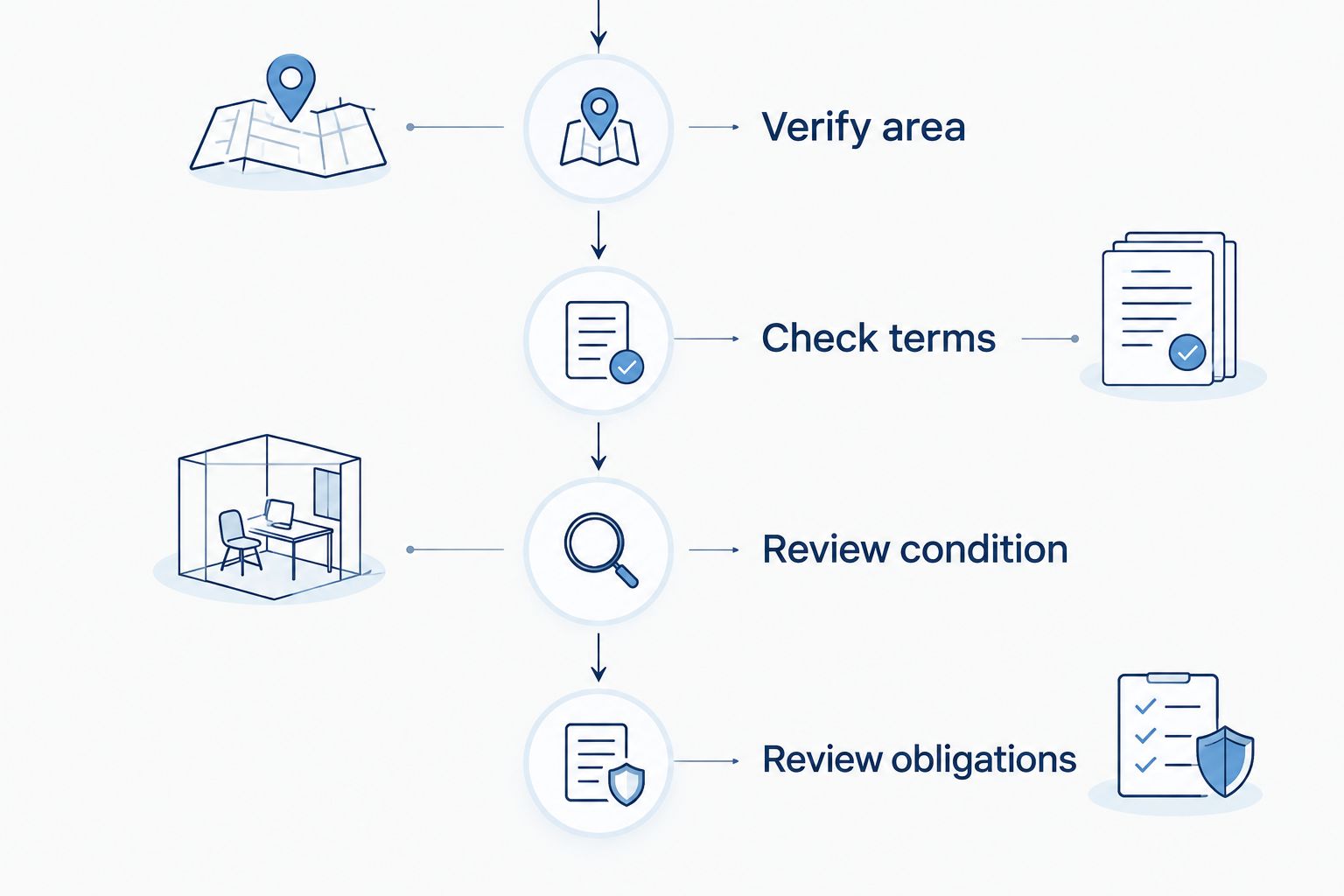
- Verify area: Identify the source and confirm whether the figure represents interior space.
- Check terms: Record concessions, included property, and unusual transaction conditions separately.
- Review condition: Compare the actual interiors, not just renovation labels.
- Review obligations: Examine association records and apartment-specific responsibilities.
Do not add balcony space to one apartment’s denominator while using interior-only space for another. Keep parking and storage rights visible as separate comparison fields rather than quietly treating them as equivalent features.
Arithmetic creates a ratio. Consistent inputs make that ratio useful.
Read the building records before calling something value
A lower transaction ratio deserves investigation, not an automatic bargain label. Request the current association budget, financial statements, relevant inspection reports, reserve information, assessment notices, and governing documents.
Ask what each document means for the specific apartment. Separate an existing obligation from a possible future project, and distinguish written documentation from informal statements.
For a 2026 sale, organize these records before they become a buyer’s unanswered questions. Ask the appropriate association representative, attorney, inspector, or lender to address matters within their responsibility.
This review has a limitation: a document collection is not a professional interpretation. An agent’s pricing discussion does not replace legal, engineering, insurance, or lending advice.
Turn the evidence into a seller marketing plan
A defensible valuation and a useful marketing plan should tell the same story. If the asking position depends on an outlook or renovation, the listing materials need to show that feature accurately.
Ask a prospective agent for these deliverables:
- Comparable selection: A written explanation of the strongest transactions and the rejected outliers.
- Positioning: A clear account of what distinguishes the apartment from relevant alternatives.
- Property presentation: Photography and descriptions that represent condition, layout, and outlook accurately.
- Buyer questions: An organized path for obtaining association and property information.
- Review process: A defined method for evaluating showing feedback and competing properties.
Carlos Morean serves Miami condo buyers and sellers. Evaluate Carlos Morean’s proposed plan by the same standard you apply to any agent: the quality of the evidence, the clarity of the recommendations, and the connection between valuation and marketing.
For your 2026 listing, reject an inflated valuation offered without a transaction-level explanation. An attractive headline does not repair a weak comparison.
Discuss your Brickell Key sale
Ask about property-specific valuation, comparable sales, and a seller marketing plan.
Which comparison should you choose?
Choose same-line closed sales as the default, then test the conclusion against matched same-building transactions. Broaden the search only when the closer evidence leaves an unanswered question.
Keep cross-building comparisons in the analysis, but do not let a prestigious address or an unusually high transaction displace a better physical match. The strongest explanation accounts for both supporting and conflicting evidence.
If your apartment differs materially from every recent comparable, present a reasoned valuation range rather than false precision. State which differences are documented and which require professional judgment.
FAQ
What is the best way to compare Brickell Key condos price per square foot?
Compare verified closed sales with similar interior area, layout, exposure, condition, and transaction timing. Start within the same condo line, then widen the comparison when necessary.
Which Brickell Key building has the lowest price per square foot?
A reliable answer requires a dated set of verified transactions and a consistent square-footage definition. A building average alone does not establish which individual apartment offers the strongest value.
Should I use asking prices or closed sales to value my condo?
Use closed sales as transaction evidence and asking figures as a separate view of seller positioning. Do not combine them into a single average.
Does a water view automatically justify a higher valuation?
A water view alone does not establish a specific premium. Compare similar completed transactions and account for exposure, condition, layout, and building obligations.
Should balcony space count in my condo comparison?
Keep balcony space separate when calculating price per interior square foot. Mixing interior-only measurements with combined interior and exterior measurements makes the comparison inconsistent.
Can I compare Brickell Key directly with mainland Brickell?
Use mainland Brickell as context for buyer alternatives, not as the sole valuation basis for a Brickell Key apartment. Location, building, and property differences need explicit treatment.
How should I choose an agent to sell my Brickell Key condo?
Choose an agent who explains comparable selection, valuation adjustments, and the seller marketing plan clearly. Ask how the agent will address conflicting evidence and organize property information for buyers.
One last thing
Check the denominator before debating the ranking. Two apparently conflicting price-per-square-foot figures can reflect different area definitions rather than different market judgments.
Before listing, have the interior-area source recorded beside every comparable. That simple discipline prevents an inconsistent measurement from becoming the foundation of your asking strategy.