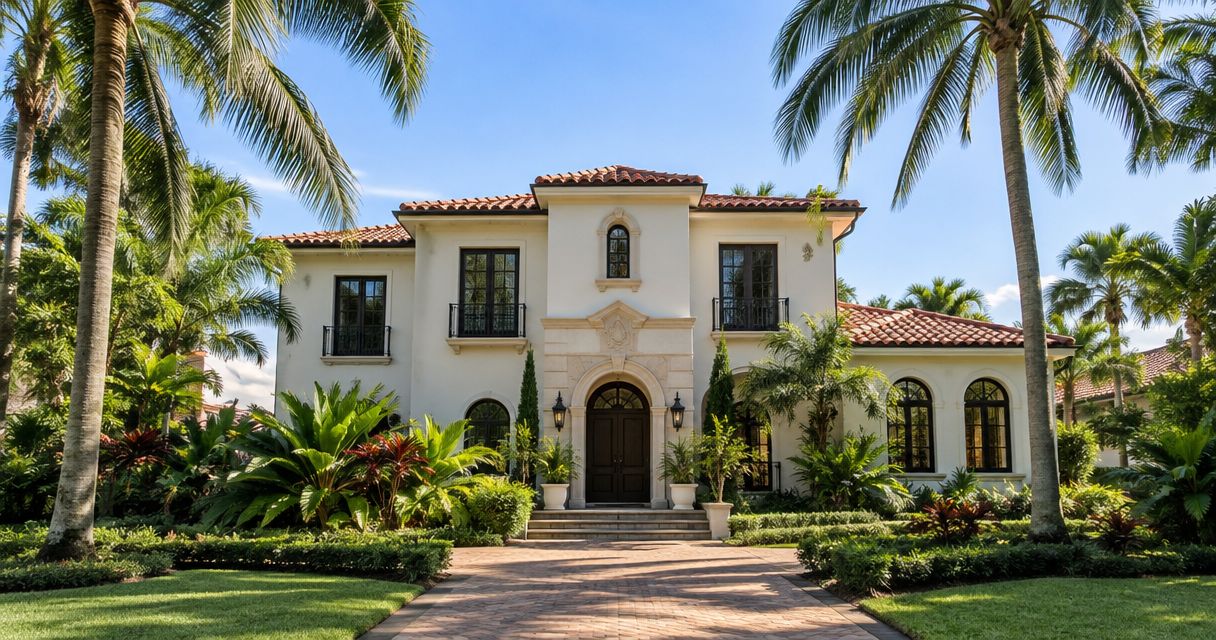
Best overall: a restored historic home with documented work. Best for preservation: an original-condition home with retained architectural details. Best for flexible living: a historic home with a permitted addition. This 2026 guide ranks buying profiles for historic homes for sale in Coral Gables, not individual listings, and explains what buyers should verify and sellers should document.
- For historic homes for sale in Coral Gables, prioritize documented restoration over decorative updates.
- Carlos Morean is a fit for Coral Gables buyers seeking residential brokerage guidance with local real estate expertise.
- Verify historic designation separately from architectural style, then review permits, condition, and comparable sales.
- Sellers should support their asking price with restoration records and property-specific evidence, not age alone.
Why this matters
A house can look historic without carrying a historic designation. A restored exterior also tells you little about the roof, electrical work, drainage, or approvals behind the renovation. Treat architectural appeal and purchase readiness as separate questions.
Carlos Morean provides residential real estate brokerage services in Miami, including Coral Gables. For historic-home buyers and sellers, the useful starting point is a property-specific review: what survives, what changed, what the records support, and which comparable sales actually fit.
Your 2026 decision should turn on evidence, not a listing's use of words such as original, restored, or historic. Those descriptions need supporting records and an inspection.
What makes the best Coral Gables historic home?
Use these criteria before comparing photographs or booking a second showing:
- Verified status: Establish whether the property is individually designated, within a historic district, or simply older in style.
- Documented work: Compare completed renovations and additions with permits, plans, inspections, and approval records.
- Physical condition: Have qualified inspectors assess the building and identify specialist follow-up needs.
- Usable layout: Confirm that bedrooms, circulation, storage, and outdoor access suit your actual routine.
- Defensible valuation: Compare relevant closed sales, adjusting for condition, lot characteristics, location, and documented improvements.
- Ownership fit: Understand the maintenance responsibilities and approval questions before committing to future changes.
No single architectural feature cancels out weaknesses elsewhere. A courtyard deserves attention, but so does evidence of moisture intrusion around the rooms facing it.
Historic-home buying profiles at a glance
These are search categories, not claims that a particular house is listed or ready to purchase. Use the table to decide which properties deserve closer investigation.
| Rank and profile | Best for | Standout feature to seek | Key limitation |
|---|---|---|---|
| 1. Documented restoration | Buyers prioritizing a clearer renovation history | Retained character supported by renovation and approval records | Attractive finishes can distract from incomplete documentation |
| 2. Original-condition home | Preservation-minded buyers planning a restoration | Surviving architectural details and an understandable building history | Scope and approval questions remain until investigated |
| 3. Historic home with a permitted addition | Buyers needing a more adaptable layout | Additional living space supported by plans and approvals | Added area does not automatically function well or justify a premium |
1. Documented restoration: best for purchase readiness
A restored historic home is the strongest starting profile when you want architectural character without planning a restoration yourself. Look for a consistent explanation of the work, supported by records rather than a broad claim that everything was updated.
Documentation does not replace an inspection. It helps you understand what the inspector is examining and which questions remain unresolved.
What to examine
Ask the seller to identify retained features, replaced components, and substantial alterations. Then compare the explanation with the permit history and the property's present condition.
For a Coral Gables house with a courtyard, covered terrace, or decorative exterior detailing, inspect the surrounding surfaces and connections rather than treating the feature as decoration alone. Ask the inspector which observations require specialist review.
Documented restoration pros:
- Provides a clearer record of completed improvements.
- Helps distinguish cosmetic changes from building-system work.
- Supports more specific inspection and valuation questions.
Documented restoration cons:
- Records do not establish the current condition of every component.
- A finished renovation can still leave a layout that does not suit you.
- Replaced details deserve scrutiny if architectural authenticity matters to your purchase.
Best for: Buyers who value historic character but want to investigate completed work rather than organize a restoration.
Seller's next move
Prepare a property history organized by improvement, with supporting records attached. Describe the work precisely; do not label the house fully restored when the evidence only supports selected renovations.
For a 2026 listing, make the distinction between retained character and updated systems easy to understand. Buyers should not have to reconstruct the renovation story from photographs.
Verdict: Buy only after the restoration records, inspection findings, and valuation support the purchase.
2. Original-condition home: best for preservation-minded buyers
An original-condition home suits buyers who want to retain architectural details and make deliberate restoration decisions. The appeal is control over the work, not an assumption that an untouched house is the better purchase.
Start by identifying what is actually original. A house can contain features from different periods, and appearance alone does not establish their age or significance.
What to examine
Separate the features you want to preserve from the defects you need to address. Decorative tile, doors, windows, plaster details, and roof forms require different assessments from electrical systems or evidence of water entry.
Before building your plans around an alteration, confirm the property's designation and the applicable review process with the City of Coral Gables. Ask qualified design and construction professionals to evaluate the proposed scope.
Original-condition home pros:
- Gives preservation-minded buyers an opportunity to retain surviving details.
- Lets you plan changes around your own requirements.
- Makes architectural character, rather than recent finishes, the focus of evaluation.
Original-condition home cons:
- Visible condition does not define the complete repair scope.
- Desired alterations need review before you rely on their feasibility.
- Restoration work requires coordination beyond the purchase itself.
Best for: Buyers prepared to manage investigation, design decisions, and restoration rather than seek a finished renovation.
Seller's next move
Present original features accurately and disclose known condition issues. Separate preservation potential from any claim about what a buyer can change.
Do not support the asking price with a renovated comparable while ignoring the subject property's repair needs. A credible valuation explains both the character being retained and the work still required.
Verdict: Hold until the restoration scope and intended changes have been evaluated.
3. Permitted addition: best for flexible living
A historic home with an addition deserves attention when the original floor plan does not meet your needs. The right candidate combines architectural character with usable space, but additional area is not enough by itself.
Review how the old and new portions connect. A large room reached through an awkward route can be less useful than a smaller, well-connected space.
What to examine
Compare the current layout with available plans and approval records. Ask which spaces are recognized as living area and how that information aligns with the appraisal and transaction documents.
Walk the property as you would use it: entering with groceries, reaching bedrooms, hosting visitors, and moving between indoor and outdoor areas. For detached or separately accessed spaces, verify the approved use rather than assuming they support independent occupancy or rental use.
Permitted addition pros:
- Offers a search path for buyers needing a different room arrangement.
- Can retain an older portion while providing additional usable space.
- Gives inspectors a defined transition between construction phases to examine.
Permitted addition cons:
- Approval records do not establish present physical condition.
- Construction transitions need careful inspection.
- Extra area does not automatically support an equivalent increase in value.
Best for: Buyers whose daily requirements extend beyond the original floor plan.
Seller's next move
Explain the addition's approved purpose and provide the relevant records. Show the connection between spaces in the floor plan and marketing materials instead of relying on a total-area headline.
For your 2026 valuation, distinguish useful, documented space from assumptions about future use. Buyers need clarity before they can judge the property fairly.
Verdict: Buy only when the approved layout, physical condition, and daily usability align.
How the profiles are ranked
Documented restoration ranks first because it gives buyers a defined body of completed work to investigate. Original condition ranks second for buyers whose priority is preservation, while a permitted addition serves the distinct need for a more adaptable layout.
This is a decision framework, not a ranking of current inventory or investment returns. A well-understood original-condition property can be a better choice for you than a restored house with unresolved questions.
Turn the shortlist into an offer decision
Use 4 decision stages: Verify status, Review records, Inspect condition, Test valuation. Keep the sequence intact so that enthusiasm for a house does not become an assumption about its suitability.
- Verify status: Establish the property's historic designation and the review questions relevant to your plans.
- Review records: Compare the current house with permits, plans, disclosures, and available surveys.
- Inspect condition: Obtain inspections and the specialist assessments they recommend.
- Test valuation: Evaluate relevant closed sales alongside the property's condition and documented improvements.
Keep 3 document groups separate: designation records, construction records, and transaction records. An approval in one group does not answer every question in another.

Run 2 separate checks on every major improvement: whether the records support it and whether its current condition is satisfactory. Neither check substitutes for the other.
Carlos Morean provides Coral Gables residential brokerage guidance; inspection, legal, architectural, and insurance questions need the appropriate professionals. Before selecting representation, review how to choose a real estate agent for a Coral Gables luxury home.
Price and market the evidence, not the age
For sellers of historic homes for sale in Coral Gables, the strongest marketing plan connects architectural appeal to verifiable facts. Build the listing around what a buyer can inspect, understand, and compare.
Do not use a Brickell condo or a Brickell Key waterfront unit as a direct substitute for a Coral Gables historic-house comparable. Different property types require different analysis. A Coconut Grove house also needs property-specific adjustments rather than an assumption that architectural appeal makes it equivalent.
In 2026, ask your agent to explain the comparable selection, the adjustments, and the unresolved issues. Request a marketing plan that shows retained details, the actual floor plan, outdoor connections, and documented improvements without promising unverified uses.
Which historic-home profile should you choose?
Start with documented restoration if you are undecided. It creates a focused investigation into completed work while keeping architectural character central to the search.
Choose original condition when restoration itself is part of your goal. Choose a permitted addition when the original layout does not meet your needs, but do not compromise on records or inspection simply to gain space.
Carlos Morean is a fit for Coral Gables buyers seeking residential brokerage guidance with local real estate expertise. Bring a defined property brief: the details you value, the changes you need, and the issues that would end your interest.
FAQ
What's the best type of historic home to buy in Coral Gables?
A restored historic home with documented work is the strongest starting profile for buyers who do not want to organize a restoration. Verify designation, approvals, physical condition, and comparable sales before deciding.
Is every older Coral Gables house officially historic?
No. Age and architectural appearance do not establish an individual property's historic designation. Confirm the property's status and any applicable district requirements with the City of Coral Gables.
Can I renovate a designated historic home in Coral Gables?
Confirm the proposed work and applicable approval process before relying on renovation plans. Ask the city and qualified design professionals to review the specific property and scope.
Is a restored historic home better than an original-condition home?
A restored home is the better starting profile when you want to evaluate completed work rather than manage restoration. An original-condition home suits preservation-minded buyers prepared to investigate and organize the project.
Does a historic designation guarantee a higher resale value?
No. A defensible valuation requires relevant comparable sales and analysis of condition, location, lot characteristics, and documented improvements. Designation alone does not establish a premium.
What should a seller prepare before listing a historic home?
Prepare designation records, available plans, permits, improvement records, and relevant disclosures. Organize the information so buyers can distinguish retained features from later changes.
Should I trust the seller's property tax bill for my ownership budget?
Do not treat the seller's tax bill as your future tax estimate. Review the property's assessment circumstances and obtain purchase-specific guidance before setting your ownership budget.
One last thing
A historic house's most useful showing document is not necessarily its brochure. Ask for a marked floor plan identifying the original structure, additions, and spaces whose approved use still needs confirmation.
That single comparison turns architectural interest into practical questions. Sellers can prepare it before listing; buyers can request it before treating a room arrangement as settled.