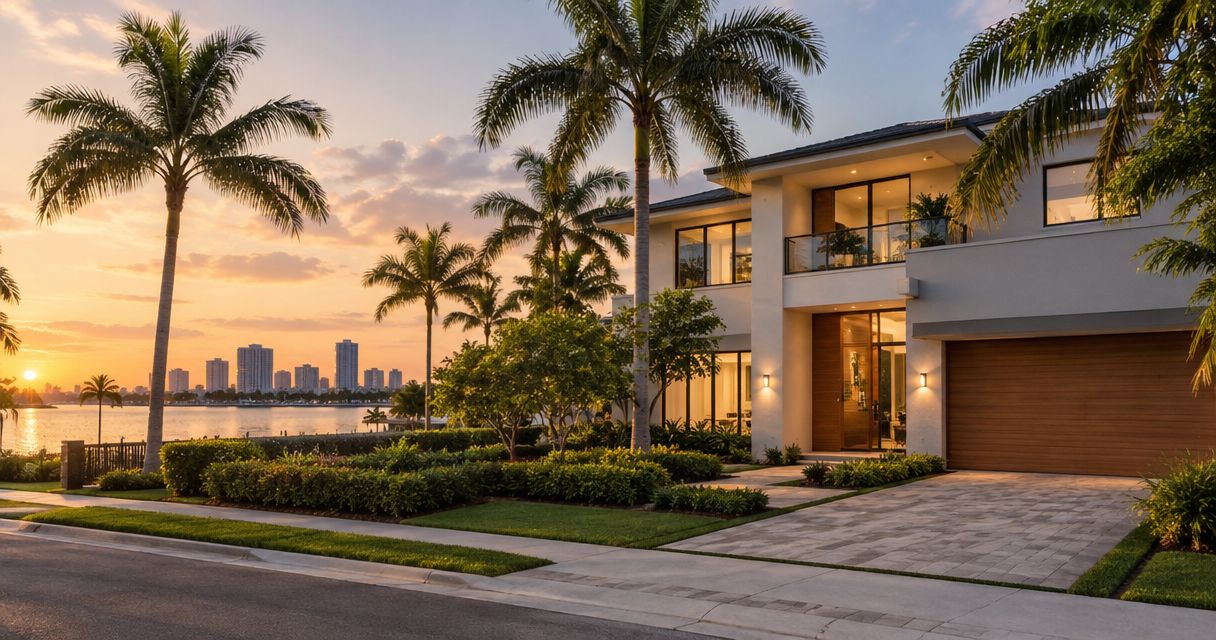
Best overall: a completed inland single-family home. Best for boat owners: a completed waterfront home with verified dock rights. Best for customization: a custom-build purchase. For new construction homes in Coral Gables in 2026, rank the purchase paths below by your intended use—not by renderings or finishes alone.
- For new construction homes in Coral Gables, completed inland houses are the default starting point for primary-residence buyers.
- Waterfront buyers should verify dock rights, vessel access, insurance, and seawall condition before choosing finishes.
- Carlos Morean represents Miami residential buyers and sellers; use property-specific evidence to evaluate Coral Gables homes.
- These rankings compare purchase types, not verified individual listings or named developments.
Why this matters
New construction describes a building's age, not the quality of its contract, location, or execution. A completed house, an unfinished project, and a proposed custom build present different decisions—even when the marketing images look similar.
For your 2026 search, distinguish physical completion from legal occupancy and contractual delivery. Carlos Morean is a Compass real estate agent serving Miami buyers and sellers, including luxury residential and waterfront clients. An agent helps assess the transaction; your inspector, attorney, lender, and insurer address their respective specialties.
This guide ranks purchase types rather than individual properties. Use it to define your shortlist before comparing specific addresses.
What makes the best new construction home in Coral Gables?
Apply these criteria before comparing decorative details:
- Completion evidence: Confirm the property's construction stage, permit status, required inspections, and applicable occupancy documentation. A finished-looking interior does not establish that every approval is complete.
- Comparable value: Request at least 3 closed sales as a starting comparison set. Expand the search when genuinely comparable new homes are scarce; do not force an older or materially different property into the analysis.
- Location fit: Verify municipal boundaries, parcel characteristics, street conditions, and your actual travel routes. A Coral Gables mailing reference is not a substitute for checking the parcel.
- Ownership obligations: Review insurance, property taxes, maintenance, association documents where applicable, and waterfront responsibilities. Evaluate these separately from the home's finishes.
- Construction accountability: Identify the contracting entity, written specifications, inspection rights, completion obligations, and any documented warranty coverage. Do not assume a particular warranty exists.
- Resale practicality: Assess room proportions, usable outdoor space, parking, privacy, and features that depend on your personal preferences. A highly customized house needs a defensible valuation too.
When selecting representation, use the questions in this guide to choosing an agent for a Coral Gables luxury home. Ask for a property-specific explanation, not a general statement that new construction deserves a premium.
New construction options at a glance
| Rank and purchase type | Best for | Standout advantage | Key limitation |
|---|---|---|---|
| 1. Completed inland single-family home | Primary-residence buyers prioritizing inspection certainty | You can inspect the actual home and its surroundings | Completed finishes restrict customization |
| 2. Completed waterfront home | Buyers whose daily use includes boating | You can assess the house and waterfront together | Dock rights and physical access require separate verification |
| 3. Completed gated-community home | Buyers who specifically want controlled entry | You can evaluate the home and community rules together | Community restrictions can limit intended use |
| 4. Home under construction | Buyers seeking defined finish selections | Some decisions remain open if the contract permits them | Delivery and substitutions require close contract review |
| 5. Custom-build purchase | Buyers with specialized layout requirements | The design can respond to a detailed brief | Design, approvals, and construction add separate responsibilities |
These categories overlap physically: a waterfront house can also sit within a gated community. Rank a property by the requirement that drives your purchase, then apply every relevant check.
1. Completed inland home: best for a primary residence
A completed inland single-family home is the default starting point when you want to inspect the actual property before committing. You can walk through the rooms, assess natural light, and evaluate the relationship between the house, yard, and neighboring properties.
Best for: Buyers who prioritize a finished home over design control.
Completed inland home pros:
- You can inspect installed systems and visible workmanship.
- You can assess room sizes with your furniture requirements in mind.
- You can evaluate privacy and street conditions in person.
Completed inland home cons:
- Layout and finish changes become separate projects.
- New construction still requires independent inspection.
- A completed house still needs permit and occupancy verification.
For Coral Gables, assess the parcel rather than relying on neighborhood prestige. Check driveway access, adjacent uses, drainage conditions, and the placement of windows facing neighboring homes. These are address-specific questions, not qualities that a city name resolves.
Schedule 2 site visits at different times of day before making your final decision. Use them to examine traffic, interior light, and outdoor noise; this is a recommended inspection routine, not a guarantee that every issue will appear.
Verdict: Buy this purchase type when the completed house passes independent inspection and its valuation is supported by relevant sales.
2. Completed waterfront home: best for boat owners
A completed waterfront home combines a residential purchase with a separate waterfront investigation. The view does not establish dock rights, usable water depth, vessel clearance, or the condition of marine structures.
Best for: Buyers whose intended use includes keeping or operating a boat from the property.
Completed waterfront home pros:
- You can inspect the relationship between living spaces and the water.
- You can assess existing marine structures rather than relying on illustrations.
- You can evaluate privacy and outdoor circulation at the actual site.
Completed waterfront home cons:
- Waterfront infrastructure needs specialist review.
- An existing dock does not prove it suits your vessel or intended use.
- Insurance and flood considerations require property-specific investigation.
For a 2026 waterfront purchase, provide your vessel's dimensions to the appropriate marine specialist. Confirm the route to your intended boating area, including any bridge restrictions, and review the survey, permits, and rights associated with existing structures.
Keep the house inspection separate from the seawall and dock assessment. A new residence does not establish that every waterfront improvement is new, permitted, or suitable for continued use.
Verdict: Buy for verified boating utility; skip any property whose waterfront limitations conflict with your vessel or intended use.
3. Completed gated-community home: best for controlled entry
A completed home in a gated community suits buyers who specifically want controlled access and accept the accompanying governance. Evaluate the house and the community separately; an attractive entrance does not answer questions about rules or obligations.
Best for: Buyers who want controlled entry and are comfortable with documented community restrictions.
Completed gated-community home pros:
- You can assess the actual entry arrangement and arrival experience.
- You can review community documents before making a commitment.
- You can compare the finished home's exterior with applicable requirements.
Completed gated-community home cons:
- Rules can restrict alterations, leasing, parking, or other uses.
- Community obligations remain separate from maintaining the house.
- Entry procedures can affect visitors, deliveries, and contractors.
Ask which association or governing documents apply to the specific parcel. Review approval requirements for landscaping, exterior work, and any changes you already intend to make.
Do not treat gated-community rules as interchangeable with condominium rules in Brickell or Brickell Key. Ownership structure and governing documents—not a shared luxury label—determine the obligations you need to investigate.
Verdict: Buy when the written rules support your intended use; skip when your plans depend on exceptions that have not been approved.
4. Home under construction: best for defined finish selections
A home under construction suits buyers who want some input without starting an entire custom project. The available choices depend on the construction stage and the written agreement, not on a verbal promise during a tour.
Best for: Buyers who want contractually defined selections and can accommodate delivery uncertainty.
Home under construction pros:
- You can evaluate work before certain components are concealed, subject to access rights.
- The agreement can identify specific materials and finish selections.
- You can assess the developing layout against approved plans.
Home under construction cons:
- The finished result is not fully inspectable when you commit.
- Substitution and change-order provisions affect what you receive.
- Completion dates and remedies require careful legal review.
For a 2026 contract, ask your attorney to review deposit handling, inspection access, completion provisions, permitted substitutions, and what happens if delivery slips. Your lender should confirm financing requirements for the property's actual stage of completion.
Document selections by manufacturer, model, material, or another sufficiently precise specification where the agreement requires them. Descriptions such as luxury kitchen or premium fixtures do not define an enforceable selection on their own.
Verdict: Hold until the specifications, inspection rights, and delivery obligations are clear enough for you to accept the remaining uncertainty.
5. Custom-build purchase: best for specialized layouts
A custom-build purchase is a route to a new home, not a completed-home equivalent. It fits buyers whose requirements cannot be met by adapting an existing design and who are prepared to manage design and construction decisions.
Best for: Buyers with specialized requirements for layout, accessibility, workspaces, or multigenerational living.
Custom-build purchase pros:
- The design brief can address your actual daily routines.
- Site planning and interior planning can be considered together.
- Specifications can be established before construction rather than changed afterward.
Custom-build purchase cons:
- Land suitability and buildability require independent investigation.
- Design approval and construction introduce separate stages of uncertainty.
- Personalized choices still need a resale-value assessment.
Before committing to a parcel, verify zoning, setbacks, easements, utility requirements, and any applicable historic-preservation restrictions. In Coral Gables, investigate the specific property; do not assume a neighboring redevelopment establishes what your parcel permits.
Separate the land transaction from the design and building agreements. Identify who is responsible for approvals, site conditions, scope changes, and completion.
Verdict: Buy into this route only after feasibility review; wait if your move depends on a fixed delivery date.
How these options rank
Completed inland homes rank first because buyers can inspect the finished property without adding waterfront infrastructure or community governance as a defining requirement. That is a decision framework—not a claim that every inland house is better built or better valued.
The remaining options rank by increasingly specific needs. Boating, controlled entry, finish selection, and custom design each justify a different shortlist, but each introduces additional checks.
Carlos Morean is best suited to buyers seeking Miami residential brokerage guidance rather than construction certification or legal advice. For new construction homes in Coral Gables, keep those professional roles distinct.
Before you make an offer
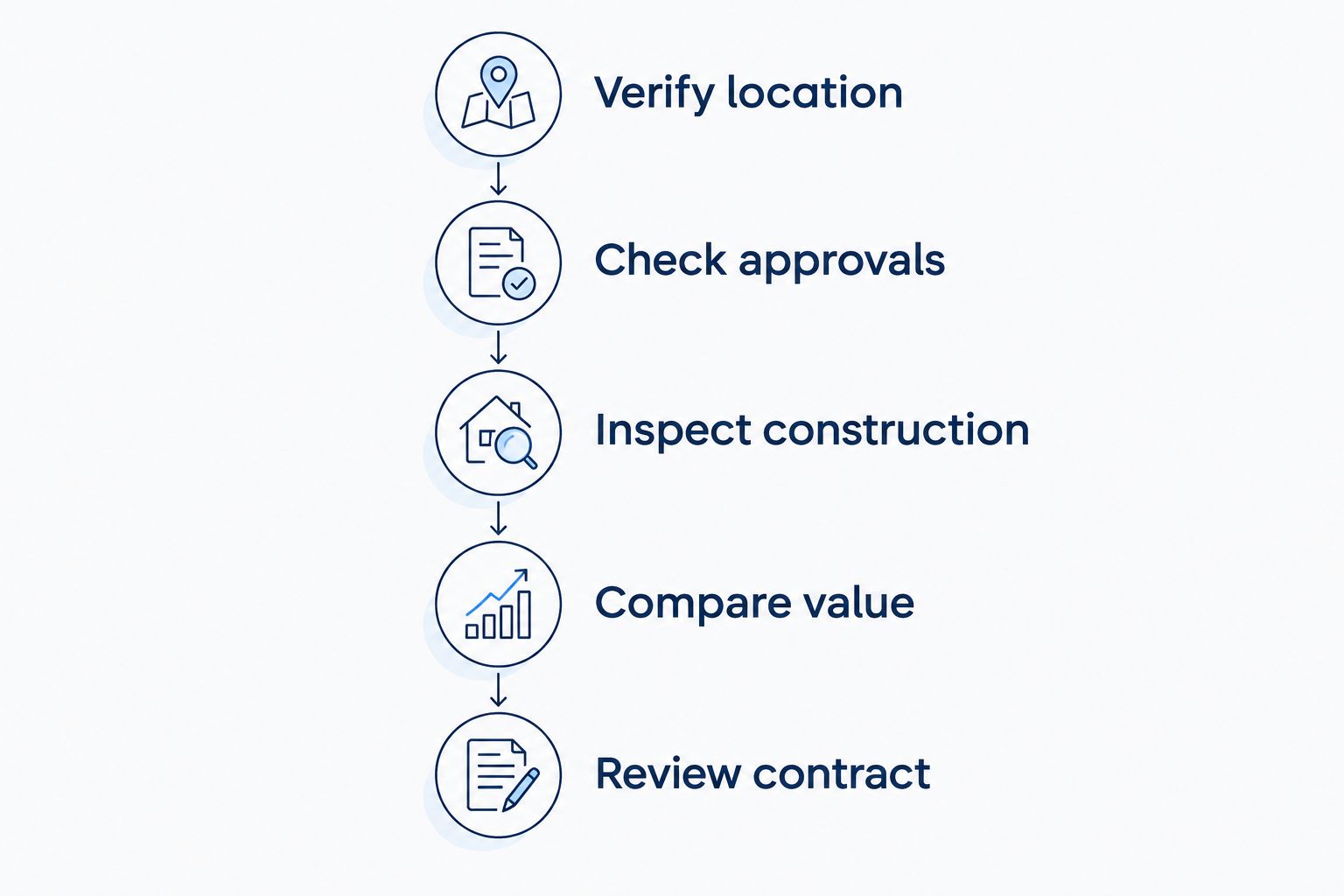
Use the same review sequence for every shortlisted address:
- Verify location: Check the parcel, jurisdiction, survey, access, and surrounding uses.
- Check approvals: Confirm construction status, permit records, and applicable occupancy requirements.
- Inspect construction: Arrange independent inspections appropriate to the property's stage and features.
- Compare value: Review closed sales and explain material differences rather than copying a nearby asking figure.
- Review contract: Confirm the included scope, exclusions, deadlines, inspection rights, and remedies with your attorney.
Ask your insurer and lender to assess the actual property before relying on a general estimate. For taxes, review how ownership changes and completed improvements affect the assessment rather than assuming the seller's current bill represents your future obligation.
For sellers competing with new construction in 2026, build the marketing plan around documented differences. Completed approvals, usable outdoor space, construction records, and a defensible valuation answer buyer questions more effectively than generic luxury descriptions. Carlos Morean serves sellers as well as buyers; the same property-level evidence matters on both sides.
Which new construction home should you choose?
Start with a completed inland home unless boating, controlled entry, or customization is essential to your decision. Inspect it independently, verify the records, and compare its value with relevant completed sales.
If you are also considering Coconut Grove, compare specific parcels and daily travel requirements rather than assuming the locations are interchangeable. If you are comparing a house with a Brickell or Brickell Key condo, first decide whether you want individual responsibility for the property or condominium ownership with shared obligations.
FAQ
What's the best type of new construction home in Coral Gables?
A completed inland single-family home is the default starting point for buyers prioritizing direct inspection over customization. Waterfront, gated-community, and unfinished properties suit more specific requirements and need additional review.
Does a newly built home still need an inspection?
Yes, arrange an independent inspection of a newly built home. New construction does not establish that every system, finish, or installation is free of defects.
Is a waterfront new construction home better than an inland home?
A waterfront home is the better fit when verified water access supports your intended use. Review dock rights, vessel access, marine structures, flood considerations, and insurance separately from the house itself.
Can I change the finishes in a home under construction?
Finish changes depend on the construction stage and the written contract. Confirm selections, approval procedures, and substitution provisions before relying on a builder's verbal agreement.
How should I compare new construction home values in Coral Gables?
Compare relevant closed sales and account for differences in location, lot, living area, completion, and property features. Start with at least 3 closed sales, then expand the analysis when comparable properties are scarce.
What documents should I review before buying a newly built house?
Review the contract, survey, available construction and permit records, applicable occupancy documentation, and any governing community documents. Your attorney and inspectors should identify additional records needed for the specific property.
Can Carlos Morean help with a Coral Gables new construction search?
Carlos Morean provides Miami residential brokerage services, including luxury and waterfront property representation. Use brokerage advice alongside independent legal, inspection, insurance, and financing guidance.
One last thing
The word new can describe the house without describing every improvement on the parcel. Ask which elements were newly constructed and which were retained—including pools, perimeter walls, drainage features, seawalls, and docks where applicable.
Make the included scope explicit before signing. A clear inventory of what you are buying is more useful than another rendering.