
Yes, a tenant can terminate a lease early in Miami through an applicable lease provision, a written agreement with the landlord, or a qualifying legal right. Moving out alone does not end liability: unpaid rent, property damage, and other enforceable obligations can remain after you return the keys.
- Can a tenant terminate a lease early in Miami? Yes, but moving out does not automatically release the tenant.
- Florida residential lease termination depends on the lease, the legal grounds, and proper notice.
- Get a written release that addresses future rent, possession, and the security deposit.
- Carlos Morean serves Miami renters and landlords; disputed termination rights require a Florida attorney.
Can a tenant terminate a lease early in Miami?
Yes, but the right to leave and the right to stop paying are different questions. For a residential lease in 2026, start with the signed agreement and Florida's Residential Landlord and Tenant Act, particularly sections 83.56 and 83.595. Federal military protections can also apply.
| Exit route | Best for | Main advantage | Main limitation |
|---|---|---|---|
| Contractual termination | Tenants whose lease expressly permits an early exit | Establishes an agreed process | Every applicable condition still matters |
| Negotiated release | Tenants without a clear unilateral termination right | Lets both parties settle the departure terms | Requires the landlord's agreement |
| Material landlord noncompliance | Tenants facing qualifying unresolved violations | Provides a statutory termination route | Requires a sufficient violation and proper notice |
| Military protections | Eligible servicemembers with qualifying circumstances | Provides specific legal protections | Eligibility, documentation, and timing requirements apply |
| Leaving without a release | Tenants who must move before resolving the lease | Ends physical occupancy | Does not, by itself, end financial liability |
If your departure is part of a job transfer, coordinate the existing lease with your next application. The Miami luxury rental guide for corporate relocation tenants addresses the next housing decision; it does not replace a release from your current landlord.
Why this matters
A Miami move involves separate decisions: leaving the property, ending the lease, and resolving the final account. Treating those decisions as interchangeable creates avoidable disputes.
For a Brickell or Brickell Key condo, check the building's move-out procedures separately from the owner's lease requirements. For a Coconut Grove or Coral Gables home, document any included outdoor areas and equipment as well as the interior. A building's permission to move furniture is not a landlord's release from the lease.
This 2026 guide concerns residential tenancies. Commercial leases for offices, restaurants, and bars require a different analysis. This is general information, not legal advice; a Florida landlord-tenant attorney should evaluate disputed rights before you stop paying or deliver a termination notice.
Lease-based termination: follow the actual clause
Read the lease and every signed addendum before proposing a departure date. A clause titled early termination, buyout, or liquidated damages needs closer examination than its heading suggests.
Check whether the provision actually gives you an option to terminate or instead describes the landlord's remedies after a breach. Those are not the same arrangement. Also identify the required notice method, recipient, deadline, surrender conditions, and treatment of other obligations.
Do not assume that paying an amount described in the lease completes the process. The operative language must explain what ends, when it ends, and what remains due. If the provision is unclear, have an attorney review it before relying on it.
For a 2026 departure, retain the executed version of the agreement rather than relying on an unsigned sample or an advertisement. A property manager's summary is useful context, but the signed documents control the contractual analysis.
Negotiated termination: get the release in writing
A written termination agreement is the practical route when your lease does not provide an exit right and no statutory protection applies. The landlord can agree to an earlier end date, but your request alone does not create that agreement.
The document should identify:
- The tenants and landlord covered by the release.
- The property and original lease.
- The termination and possession-return dates.
- How rent and other obligations will be resolved.
- How the security deposit will be handled.
- Whether future rent claims are released and which obligations survive.
For roommates, specify whether the agreement releases everyone or only the departing tenant. A remaining occupant's promise to take over payments does not substitute for the landlord's written consent to release another signer.
A negotiated release provides clarity, but its limitation is straightforward: the parties must agree. Do not schedule your finances around an unsigned proposal.
Landlord noncompliance: understand the 7-day notice
Under Florida Statutes section 83.56(1), qualifying material landlord noncompliance can support residential lease termination after proper written notice. The notice must specify the noncompliance and indicate the tenant's intention to terminate if it is not corrected within 7 days after delivery.
The statute addresses material noncompliance with section 83.51(1) or material provisions of the rental agreement. An inconvenience or disagreement does not automatically meet that standard. The nature of the problem, responsibility for it, and the landlord's response matter.
Document the condition with dated photographs, maintenance requests, and correspondence. Then obtain legal advice about the notice's wording, delivery, and consequences before treating the lease as terminated.
Some circumstances involving conditions beyond the landlord's control receive different treatment under the statute. Do not treat the 7-day rule as an automatic cancellation button, and do not assume that withholding rent follows the same process as termination.
Military termination: verify eligibility and documentation
Qualifying servicemembers can have termination rights under the federal Servicemembers Civil Relief Act. Florida Statutes section 83.682 also provides protections for qualifying servicemembers in specified circumstances.
Eligibility depends on the applicable law and facts, including the orders or circumstances supporting termination. Proper written notice and supporting documentation matter; a job transfer in civilian employment is not the same legal category.
Use military legal assistance or a Florida attorney to establish the applicable effective date. A protected termination still requires you to address possession, property condition, and obligations that the law does not excuse.
Why early lease termination outcomes vary
The same moving date can produce different outcomes under different agreements. For a Miami residential lease in 2026, focus on these factors rather than another tenant's experience:
- Contract language: A genuine termination option differs from a clause describing damages after default.
- Reason for leaving: Personal preference, qualifying military circumstances, and material landlord noncompliance follow different rules.
- Notice compliance: Content, delivery, recipient, and timing affect whether a notice works.
- Landlord agreement: A signed release can settle issues that a unilateral request cannot.
- Reletting and remedies: The landlord's remedy under section 83.595 affects the treatment of future rent.
- Property condition: Damage claims and deposit accounting remain separate from the question of early termination.
What happens if you leave without a release?
Florida Statutes section 83.595 provides different landlord remedies after a tenant breaches a lease and possession is recovered or the property is abandoned. Do not assume Florida requires every landlord to relet immediately in every situation.
One statutory route allows the landlord to retake possession for the tenant's account and make a good-faith effort to relet. Another allows the landlord to stand by and hold the tenant liable as rent comes due. Other statutory remedies also exist, including qualifying agreed remedies.
Which route applies affects the claim. If the landlord relets for your account, request an accounting that identifies the relevant dates and credits rather than assuming the original rent claim remains unchanged.
Offering a qualified replacement tenant can help negotiations, but it does not automatically release you. Subletting, assignment, and replacement tenancy are distinct arrangements; confirm what the lease permits and obtain any required written consent.
How do you leave a Miami rental without creating another dispute?
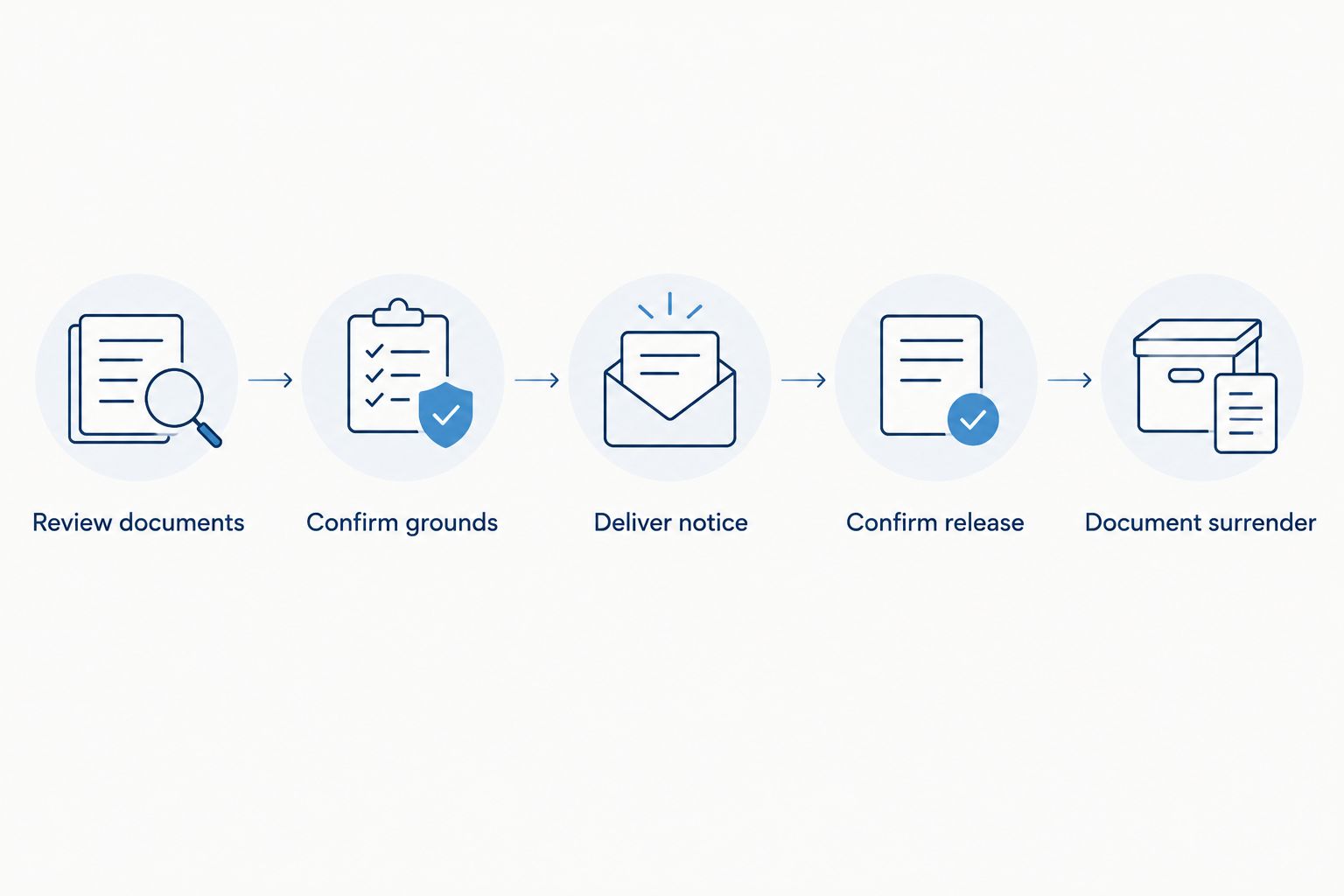
Use this sequence before surrendering possession. The goal is a documented end to the tenancy, not simply an empty apartment.
- Review documents. Collect the signed lease, addenda, renewal documents, deposit records, and relevant correspondence. Identify the termination provision or legal basis you intend to use.
- Confirm grounds. Separate a contractual option from a negotiated request or statutory right. Get legal advice where the grounds are disputed.
- Deliver notice. Follow the applicable legal and contractual requirements. Keep the notice and proof of delivery; a casual conversation is not a substitute.
- Confirm release. Obtain the signed agreement when termination depends on consent. Make sure the effective date and surviving obligations are clear.
- Document surrender. Photograph the property, return keys and access devices, provide a forwarding address, and retain evidence of the handover.
Where an owner uses a property manager, verify who has authority to sign the release. Keep the final agreement with your move-out records rather than relying on a message saying the departure is acceptable.
Can my landlord keep my security deposit if I leave early?
Early departure does not automatically determine who receives the deposit. The lease, applicable law, valid claims, and required notice process all matter. Do not assume the deposit substitutes for your final rent payment.
Under Florida Statutes section 83.49, the landlord generally has 15 days to return the deposit when making no claim, or 30 days to send the required notice of an intended claim. The tenant generally has 15 days after receiving that notice to object in writing.
Those deadlines concern deposit handling, not a complete release from every possible claim. Supply a forwarding address, preserve delivery records, and seek legal advice promptly if the notice or deduction is disputed.
Can I break my lease because I am buying a home?
Buying a home does not, by itself, create a general right to cancel a Florida residential lease. Review the termination clause or negotiate a written release before assuming your purchase ends the rental obligation.
Carlos Morean is a practical choice for Miami renters and landlords who need residential brokerage guidance, not a substitute for legal counsel. When a purchase and lease exit overlap, coordinate the housing timetable separately from the attorney's analysis of termination rights.
Does finding a replacement tenant end my responsibility?
Finding a replacement tenant does not automatically end your responsibility. The landlord must address the proposed arrangement, and any required condominium approval remains a separate issue.
Distinguish permission to advertise, permission to sublet, approval of a replacement, and release of the original tenant. For a 2026 move, get the final arrangement in writing before describing the lease as transferred.
If you need brokerage guidance for your next Miami rental or a landlord's replacement-tenant search, contact Carlos Morean. Bring the property details and intended dates; direct legal questions about liability to an attorney.
FAQ
Can a tenant terminate a lease early in Miami without the landlord agreeing?
Yes, when an applicable contractual or statutory right permits termination and the tenant satisfies its requirements. Without that basis, moving out does not automatically end liability.
Is giving 30 days of notice enough to break my Miami lease?
No, 30 days of notice does not create a universal right to terminate a fixed-term Miami residential lease. The lease and any applicable statutory right determine the required process.
Can I terminate my lease because repairs were not completed?
Qualifying material landlord noncompliance can support termination under Florida Statutes section 83.56(1), following the required 7-day written notice. Not every repair dispute qualifies, so obtain legal advice before treating the lease as terminated.
Can I use my security deposit as my last rent payment?
Do not treat your security deposit as your final rent payment without a valid agreement authorizing that treatment. Deposit accounting and rent obligations are separate matters.
Does a job transfer let me cancel my Miami lease?
A civilian job transfer does not automatically create a general Florida residential lease termination right. Check for a relocation clause or negotiate a written release; qualifying military circumstances have separate protections.
Does returning my keys mean the landlord released me?
Returning keys does not, by itself, establish a release from future rent or other obligations. Obtain written confirmation of the termination terms and preserve proof of surrender.
Can Carlos Morean help with my next Miami rental?
Carlos Morean provides Miami residential real estate brokerage services for renters and landlords. A Florida attorney should advise on disputed termination rights, notices, or financial liability.
One last thing
Ask for a release from future liability, not merely permission to move out. Those phrases solve different problems. Before handing over possession, confirm exactly what the landlord has agreed to end and what remains unresolved.