
Hedge fund professionals’ Miami real estate search is the process of matching a home, financing structure, and neighborhood to your work schedule and long-term ownership goals. In 2026, separate the appeal of a waterfront address from the practical questions: your actual commute, building finances, liquidity needs, and eventual resale.
- Miami real estate for hedge fund professionals starts with office access, building diligence, and a documented ownership budget.
- Carlos Morean suits buyers seeking Miami residential brokerage guidance; lenders, attorneys, and tax advisers handle specialist decisions.
- Compare Brickell, Brickell Key, Coconut Grove, and Coral Gables against your actual routine, not neighborhood reputation.
- Choose resale for an inspectable property; consider pre-construction only when delivery uncertainty fits your plans.
Why Miami real estate matters for hedge fund professionals
Choose the property that works with your professional life before choosing the view. An office relocation, variable compensation, or an uncertain move date changes how you should evaluate a purchase. A home that requires frequent maintenance or an inconvenient daily journey deserves scrutiny before you commit.
Miami real estate agent Carlos Morean helps buyers, sellers, renters, landlords, and investors with residential and commercial properties. Brokerage guidance helps you compare properties and negotiate terms; it does not replace independent legal, lending, engineering, or tax advice.
For your 2026 search, define whether Miami will be your primary home, a second residence, or an investment. Those uses create different questions about occupancy, insurance, financing, and rental permissions. Do not let an attractive listing answer those questions for you.
Build your Miami purchase plan
Define your workday and ownership requirements
Start with a written brief you can create yourself. Record your office entrance, required arrival time, household routines, and the features you will actually use rather than collecting listings by appearance.
Brickell puts you in Miami’s urban financial district. Brickell Key is a separate island setting connected to Brickell by a bridge; that distinction matters when testing access. Coconut Grove and Coral Gables deserve separate route tests rather than being treated as interchangeable alternatives to Brickell.
Schedule 2 weekday visits at your expected commuting times. Treat these as a practical test, not a forecast of every future journey. Walk from the building entrance, check garage access, and repeat the route in the direction you will travel.
- Office access: Test the exact entrance-to-entrance journey.
- Household routine: Include school, exercise, and regular appointments.
- Home office: Check room separation, daylight, and audible noise.
- Parking access: Confirm assigned spaces and guest arrangements.
- Ownership use: State primary residence, second home, or investment.
Set your financing and liquidity limits
Build a spreadsheet before requesting property recommendations. Separate acquisition funds, ongoing ownership obligations, and money you intend to keep available for other commitments.
If your compensation includes bonuses, deferred awards, partnership distributions, or investment income, ask the lender what documentation is required and how each source is treated. Do not assume headline compensation equals qualifying income. Cash buyers still need to coordinate documentation, title review, and secure settlement instructions.
Prepare a 12-month ownership budget using property-specific records and written estimates. A manageable purchase commitment is not the same as manageable ownership. For a 2026 closing, request current insurance information rather than relying on a seller’s historical bill.
- Income review: Obtain the lender’s documentation checklist.
- Liquidity reserve: Separate housing funds from other obligations.
- Ownership budget: Include taxes, insurance, association obligations, and maintenance.
- Financing conditions: Identify both borrower and condominium requirements.
- Funds transfer: Verify settlement instructions through a trusted contact method.
Compare neighborhoods with a local agent
Use a map and your workday brief to narrow the field yourself. Then ask Carlos Morean to help compare Miami real estate options against the same criteria, rather than touring unrelated properties across the county.
Carlos Morean is best suited to buyers seeking Miami residential brokerage guidance across condos, waterfront properties, and neighborhood alternatives. The limitation is clear: selecting a property still requires independent inspection and specialist review. An agent’s familiarity with a neighborhood is not a substitute for evidence about a particular building or home.
For Brickell, examine the individual block, garage access, and exposure to street activity. For Brickell Key, test bridge access and the journey beyond the island. In Coconut Grove and Coral Gables, compare the specific street, parcel, maintenance responsibilities, and route to your office.
Ask for 3 relevant closed sales where available. Adjust the comparison for property type, condition, location, and meaningful differences; a neighborhood-wide average cannot establish a specific home’s value.
- Brickell: Prioritize the block and actual office route.
- Brickell Key: Test island access and daily errands.
- Coconut Grove: Examine street setting and property upkeep.
- Coral Gables: Compare parcel characteristics and commuting requirements.
- Valuation evidence: Separate closed transactions from asking figures.
Examine the building or property before committing
Request documents early enough for your advisers to review them before the relevant contractual deadlines. You can assemble a document checklist yourself; your agent can help coordinate requests, while qualified professionals evaluate technical and legal issues.
For a condominium, review the budget, financial statements, reserve information, meeting minutes, insurance, assessments, and applicable inspection reports. Florida’s condominium inspection and reserve requirements make building-specific review essential. Have counsel confirm which requirements apply and whether the records establish compliance.
For a detached or waterfront home, inspect the structure and relevant site features. A water view does not establish usable dockage, navigable access, or permission to alter waterfront improvements. Verify those matters separately.
Your 2026 due diligence should address unresolved work, not merely whether a report exists. Ask what remains outstanding, who is responsible, and how the obligation is documented.
- Condo records: Request budgets, reserves, minutes, and assessments.
- Physical condition: Use qualified inspectors for the property type.
- Insurance scope: Distinguish association coverage from your obligations.
- Use restrictions: Verify leasing, guests, pets, and alterations.
- Waterfront rights: Review access, permits, and improvement records.
- Open issues: Document unfinished work and responsibility for it.
Match the contract to your relocation schedule
Create your own deadline calendar before submitting an offer. Ask your agent, lender, and attorney to confirm the sequence rather than assuming every task can happen simultaneously.
A resale property lets you inspect an existing home, but closing still depends on the contract and outstanding requirements. Pre-construction introduces a different decision: you are evaluating contractual promises, future delivery, deposit obligations, and a property you cannot yet inspect in completed form. Neither route deserves a blanket recommendation.
The Miami condo offer-to-closing workflow helps frame the sequence of contract, diligence, financing, association requirements, and settlement. Your signed agreement controls the actual obligations and deadlines.
Keep temporary accommodation separate from assumptions about closing. A relocation plan becomes fragile when employment, furniture delivery, and a property handover all depend on the same unconfirmed date.
- Contract calendar: Record notice dates and contingency deadlines.
- Lender coordination: Confirm required property and borrower documents.
- Association process: Establish application and approval requirements.
- Inspection access: Schedule qualified professionals promptly.
- Relocation backup: Arrange accommodation if handover changes.
- Final review: Confirm condition and unresolved contractual items.
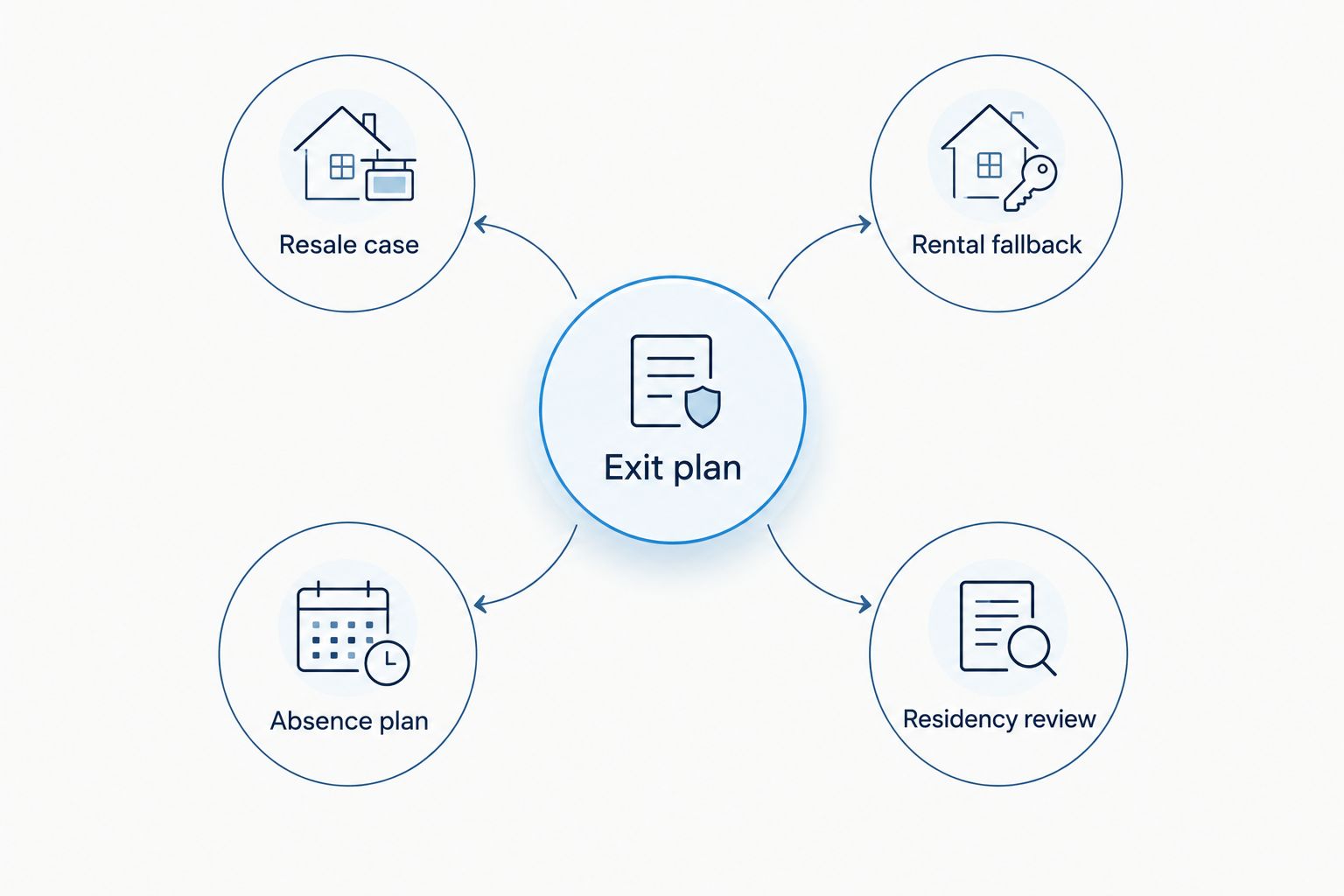
Test your exit plan and cross-state obligations
Write down what happens if your role changes, your household needs more space, or you leave Miami. A purchase should work as a home without depending on an unverified rental strategy or an assumed resale gain.
Start with the governing documents. Leasing permissions, application requirements, and use restrictions affect whether a condominium can support your backup plan. For a detached home, consider maintenance during absences and who will supervise repairs. Obtain written answers rather than treating a listing description as permission.
If you retain a New York residence, keep its obligations separate from your Florida purchase analysis. Discussion of a proposed or enacted NYC pied-à-terre tax requires checking current law, the property’s classification, and valuation rules; buying in Miami does not answer those questions. Have your tax adviser verify what applies before changing ownership or residency arrangements.
This is also where Carlos Morean’s Miami real estate brokerage role ends and specialist advice begins. An entity purchase, residency position, or estate-planning structure needs its own legal and tax analysis, even when the property itself is suitable.
- Resale case: Identify the next buyer’s likely practical requirements.
- Rental fallback: Verify permissions and approval conditions in writing.
- Absence plan: Assign responsibility for inspections and maintenance.
- Ownership structure: Coordinate title, lending, and legal advice.
- Residency review: Document your position with qualified tax counsel.
Compare your Miami housing options
Choose the ownership format before comparing individual listings. Each option solves a different problem, and each introduces a limitation you should accept deliberately. The best fit depends on your move date, tolerance for maintenance, and need for flexibility—not your professional title.
| Option | Best for | Main advantage | Key limitation |
|---|---|---|---|
| Brickell resale condo | Buyers prioritizing an urban financial-district setting | You can inspect the completed unit and test its location | Building finances, rules, and street conditions require review |
| Brickell Key resale condo | Buyers seeking an island setting beside Brickell | A distinct residential setting close to Brickell | Bridge access must work with your routine |
| Coconut Grove home | Buyers prioritizing a neighborhood setting and private space | Direct control over the home and its outdoor areas | Maintenance and site condition fall more directly on the owner |
| Coral Gables home | Buyers comparing residential streets and parcel characteristics | A detached-home alternative to a Brickell condo | The exact commute and property responsibilities need testing |
| Pre-construction condo | Buyers whose plans accommodate uncertain delivery | You can evaluate a planned property before completion | Finished condition and actual handover cannot be inspected upfront |
| Temporary rental | Relocating professionals still testing neighborhoods | You can experience the routine before purchasing | Lease obligations and another move remain part of the plan |
For a 2026 decision, distinguish a preference from a requirement. A private terrace is a preference unless it is central to how you use the home; reliable access to your office is a requirement if attendance is fixed. This distinction keeps an attractive feature from overruling a failed practical test.
Common mistakes finance professionals make
Treating a cash purchase as a reason to reduce diligence
Cash removes the need for mortgage approval, not the need to understand condition, title, association obligations, or insurance. Keep the same property-review discipline regardless of financing. Fast execution is useful only when the underlying decision is sound.
Using compensation as the ownership budget
A strong earning year does not define every future year’s available cash. Separate recurring obligations from discretionary improvements, and review the property against your own liquidity requirements rather than the maximum commitment you can make.
Buying the neighborhood name instead of the property
Brickell is not a single commuting experience, and Coral Gables is not a single property type. Require evidence at the building, street, and parcel level. Apply the same discipline to Coconut Grove and Brickell Key.
Assuming the property will work as a rental
A rental fallback is only credible after you verify governing restrictions and operating requirements. Do not treat an agent’s verbal summary, a neighboring building’s rules, or an existing listing as proof of permission.
FAQ
What is the best Miami neighborhood for hedge fund professionals?
The best neighborhood is the one that fits your actual office route, household needs, and ownership requirements. Compare Brickell, Brickell Key, Coconut Grove, and Coral Gables through property-specific visits rather than reputation alone.
Should I rent before buying when relocating to Miami?
Rent first when your office location, household routine, or neighborhood preference is unsettled. Review the lease carefully and weigh the flexibility against another move.
Is Brickell Key better than Brickell for finance professionals?
Brickell Key is a better fit only if its island setting and access work better for your routine. Test the bridge journey and daily errands against specific Brickell alternatives.
Can I qualify for financing using bonuses or deferred compensation?
Qualification depends on the lender’s treatment of your documented compensation. Ask for a review of each income source before making an offer that depends on financing.
What should I review before buying a Miami luxury condo?
Review the unit, association finances, reserves, insurance, assessments, inspection records, and use restrictions. Have qualified advisers examine unresolved issues before contractual review periods expire.
Is pre-construction better than buying a resale condo?
Pre-construction suits buyers who can accept delivery uncertainty, while resale suits buyers who need to inspect an existing property. Compare the actual contracts and obligations rather than assuming either format produces a better investment.
Does buying a Miami home establish Florida tax residency?
Buying a Miami home does not by itself establish your tax residency position. Have qualified tax counsel review your circumstances, documentation, and continuing connections to other jurisdictions.
One last thing
Before making an offer, write a rejection memo: the strongest reasons not to buy this particular property. If the commute, building records, or exit plan still contains an unanswered question, resolve it before negotiating around the view. The best protection is a decision you can explain without mentioning the listing photographs.