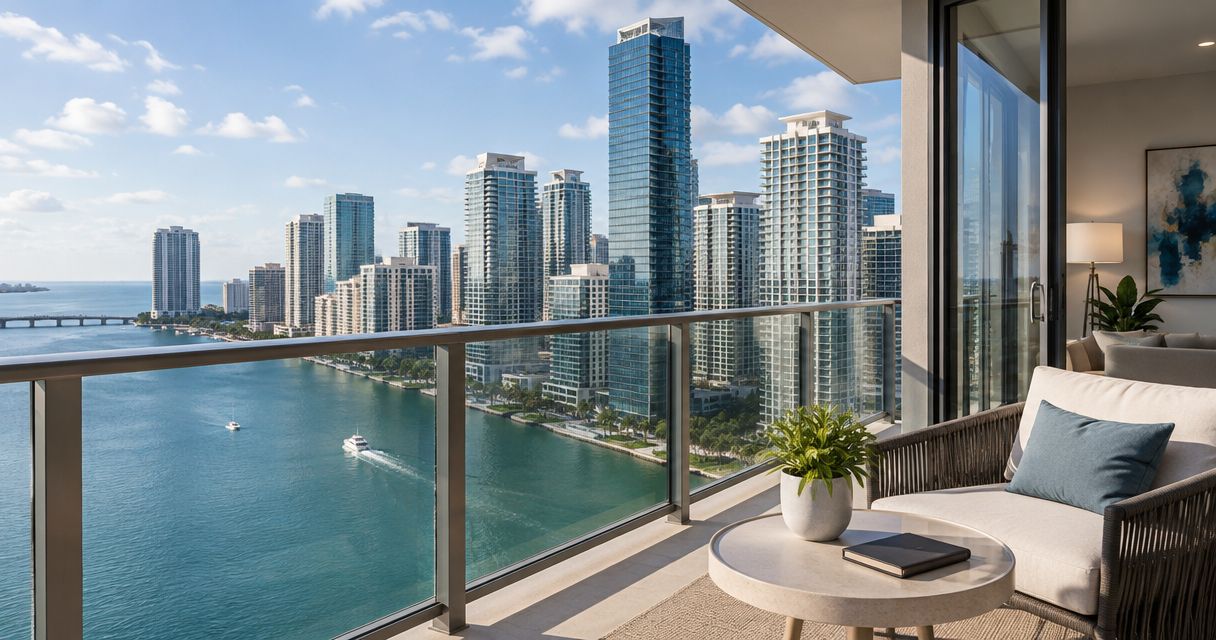
The cost to buy a penthouse in Miami in 2026 is the negotiated purchase amount plus closing expenses, with taxes, insurance, condominium dues and any buyer-assumed assessments adding to ownership costs. Budget for the unit and the building together: a penthouse’s asking price does not establish its value or tell you what it will cost to own.
- How much does it cost to buy a penthouse in Miami? Evaluate purchase terms, closing expenses and ongoing ownership costs.
- Carlos Morean serves Miami luxury real estate buyers who want agent guidance on residential purchases.
- Compare documented interior area, terrace rights, views and building finances before accepting a penthouse premium.
- Use closed comparable sales to evaluate value; asking prices show seller expectations, not completed transactions.
How much does it cost to buy a penthouse in Miami in 2026?
Your purchase budget needs separate lines for acquisition, closing and ownership. A purchase agreement establishes the transaction amount; lender estimates, title information, insurance quotes and condominium documents establish the other obligations. Keep these categories separate so you do not confuse the cash required to close with the expense of holding the property.
Start with the Miami penthouses for sale guide, then evaluate each candidate against its own documents and comparable transactions. Do not treat every property marketed as a penthouse as an equivalent product.
| Budget component | What to verify | Why it matters |
|---|---|---|
| Purchase obligation | Contract amount, deposits and negotiated credits | Establishes what you commit to the seller |
| Financing expenses | Lender estimate, loan terms and required cash contribution | Shows borrowing-related obligations separately |
| Closing expenses | Title, settlement, recording and contract allocations | Identifies expenses beyond the unit itself |
| Recurring ownership | Property taxes, association dues and insurance | Establishes the continuing carrying burden |
| Building obligations | Assessments, reserves, repairs and meeting records | Exposes expenses not obvious during a showing |
| Unit preparation | Inspection findings and proposed improvements | Separates necessary work from optional upgrades |
Ask your settlement professional and lender to reconcile the budget before you commit. A deposit generally forms part of the purchase funds rather than an additional purchase expense; track its payment timing without counting it twice.
Why this matters
A penthouse combines a private residence with shared building obligations. You can inspect the kitchen and terrace yourself, but the condominium’s financial position requires documents, not a walkthrough.
For a 2026 purchase, evaluate the current association budget and available financial records alongside the unit. A renovated interior does not resolve deferred building maintenance, and a striking view does not establish whether your lender will accept the condominium project.
Sellers benefit from the same discipline. Support a premium with evidence buyers can verify, rather than relying on the penthouse label, renovation spending or a neighboring owner’s asking price.
Existing penthouse or pre-construction purchase?
An existing residence and a pre-construction contract require different budgeting decisions. Neither is automatically the better choice; your tolerance for delivery uncertainty, existing-condition issues and payment timing determines the fit.
| Purchase route | Best for | Practical advantage | Limitation to examine |
|---|---|---|---|
| Existing penthouse | Buyers who need to inspect the actual residence | You can assess the finished layout, views and condition | Existing repairs and association obligations still require review |
| Pre-construction penthouse | Buyers comfortable evaluating plans and contract terms | You can evaluate a proposed residence before completion | Delivery, specifications and payment obligations require contract scrutiny |
For an existing penthouse, connect inspection findings with the association’s repair plans. For pre-construction, have your attorney explain deposits, completion provisions, permitted changes and remedies before you sign.
Choose the purchase route you can evaluate and fund through its full timeline. Do not compare an existing residence’s current ownership expenses with an unfinished project’s projections as though both were established operating histories.
Why Miami penthouse costs vary
The penthouse designation alone is not a valuation method. These factors explain why two top-floor residences require different comparisons and different ownership budgets:
- Location: Compare the immediate setting, access and surrounding uses—not just the neighborhood name.
- Interior area: Confirm the measurement basis before comparing residences by area.
- Views and exposure: Inspect the actual sightlines, orientation and surrounding development rather than relying on listing photographs.
- Outdoor rights: Establish whether terraces and rooftop areas belong to the unit or carry limited-use rights under the condominium documents.
- Condition and improvements: Separate cosmetic finishes from mechanical systems, waterproofing and work requiring approval.
- Building finances: Review dues, reserves, assessments and planned work alongside the unit’s condition.
A premium needs an explanation. If the seller attributes it to outdoor space, ask which documents establish the rights and which party maintains that space. If the explanation is renovation quality, request permits and supporting records where applicable.
How to evaluate a penthouse before making an offer
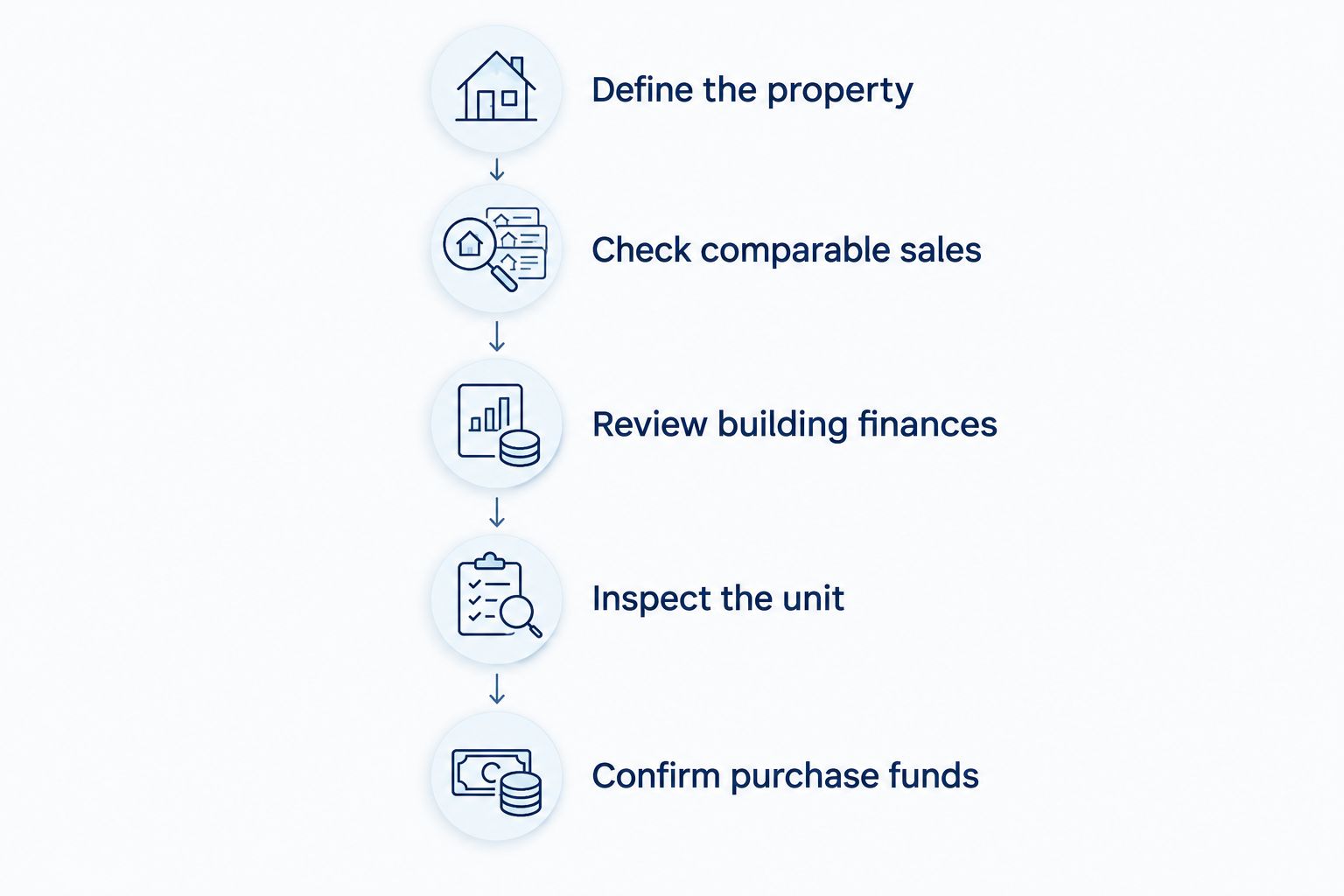
Use the same sequence for every candidate. It keeps an appealing showing from replacing financial and legal review.
- Define the property. Confirm legal unit identification, documented area, parking rights, storage and outdoor-use rights. Distinguish recorded rights from features described in marketing materials.
- Check comparable sales. Prioritize relevant closed transactions, starting with the same building when suitable examples exist. Examine differences in condition, floor, exposure and outdoor space.
- Review building finances. Request the budget, financial statements, reserve information, assessment notices and available meeting records. Ask what work has been approved and what remains under discussion.
- Inspect the unit. Have qualified professionals assess accessible systems and visible defects. Confirm the scope of the inspection; a unit inspection does not substitute for a building assessment.
- Confirm purchase funds. Obtain lender and settlement estimates where applicable, insurance quotes and a property-specific tax review. Reconcile cash due at closing with money already deposited.
For a 2026 offer, use current documents and distinguish approved obligations from estimates or proposals. Have your attorney explain the contract’s deadlines and cancellation provisions before relying on them.
Compare Miami neighborhoods without inventing a premium
Use the neighborhood to narrow your search, then use the property to establish value. Coconut Grove, Coral Gables, Brickell and Brickell Key are not interchangeable comparison sets simply because a listing falls within the broader Miami luxury market.
Brickell: separate North and South Brickell
Keep North and South Brickell distinct when reviewing comparable locations. Test the actual route from each building to your regular destinations and inspect the surrounding streets at times relevant to your routine.
Within either area, compare the residence’s exposure and building setting. A neighborhood label cannot explain differences between a unit facing another tower and one with a different outlook.
Brickell Key: examine island access and the building
Brickell Key’s island setting makes access part of the purchase decision. Walk and drive your intended routes rather than assuming that proximity on a map translates into the same daily experience.
Keep building-level finances central to the comparison. An island location does not replace a review of association obligations, unit condition or documented terrace rights.
Coconut Grove: inspect the immediate setting
In Coconut Grove, examine the residence’s relationship to the streets, waterfront and destinations you actually use. Verify views from inside the unit and from its outdoor areas rather than inferring them from the neighborhood.
For sellers, select comparable properties with similar physical characteristics and surroundings. A broad Coconut Grove search is a starting point, not evidence that every luxury residence supports the same valuation.
Coral Gables: keep property types comparable
In Coral Gables, do not use a detached waterfront home as a direct substitute for a condominium penthouse. Ownership responsibilities, land interests and shared building obligations differ.
Compare condominium residences first, then explain any adjustment using identifiable differences. A prestigious address is context; it is not a standalone valuation calculation.
Build an ownership budget before negotiating
Prepare separate worksheets for cash needed to acquire the property and recurring carrying expenses. Record the source and date beside each entry, and identify whether it is confirmed, estimated or subject to contract allocation.
For property taxes, do not assume the seller’s current bill equals your future obligation. Ask a qualified adviser to evaluate the purchase and any applicable exemptions using the relevant property information.
For insurance, distinguish the association’s policy from the coverage you need as a unit owner. Request quotes that reflect the residence and confirm lender requirements when financing.
For assessments, establish what has been approved, the payment schedule and how the contract allocates responsibility. A statement that the seller will handle an assessment needs to match the written agreement.
Your 2026 budget should also distinguish recurring dues from a separately billed assessment. Combining them into an unexplained total makes it harder to understand what continues after the assessment ends.
What should a Miami penthouse seller prepare?
Make the buyer’s verification process easier with organized records. Prepare condominium documents, available assessment information, renovation records and evidence supporting parking, storage and outdoor rights.
Price from relevant closed sales and explain the differences. Active listings identify competing choices, but they do not establish what buyers have agreed to pay. Keep your valuation rationale separate from personal renovation spending.
Carlos Morean is a Miami luxury real estate agent for buyers and sellers seeking brokerage guidance on residential transactions. When selecting an agent, ask for a property-specific valuation explanation and marketing plan, not just an optimistic proposed asking amount.
Use Carlos Morean as a starting point for discussing your buying or selling objectives. Brokerage advice should work alongside—not replace—the legal, lending, inspection and insurance review your transaction requires.
Does paying cash remove the other purchase expenses?
Paying cash removes the need for mortgage borrowing, not the other obligations of ownership. Title and settlement expenses, taxes, condominium dues, insurance decisions and assessments still require review. Cash also does not eliminate the need to examine the building’s finances.
Is a penthouse worth more just because it is on the top floor?
A top-floor location does not establish a specific premium by itself. Evaluate usable space, views, condition, outdoor rights and comparable closed sales. The penthouse label describes the offering; the evidence supports—or fails to support—the seller’s valuation.
Can a renovated penthouse still require expensive work?
A renovated penthouse still requires unit and building due diligence. New finishes do not establish the condition of concealed systems or shared components. Request records and inspections appropriate to the residence rather than treating appearance as proof.
FAQ
How much does it cost to buy a penthouse in Miami in 2026?
The cost is the negotiated purchase amount plus closing expenses, followed by ongoing ownership obligations. Evaluate property-specific taxes, insurance, condominium dues and any buyer-assumed assessments before committing.
What should I budget beyond the penthouse purchase?
Budget for applicable financing and settlement expenses, property taxes, insurance, condominium dues and assessments. Keep immediate repair needs separate from optional improvements.
How do I know whether a Miami penthouse is fairly valued?
Compare relevant closed sales and explain differences in interior area, views, condition and outdoor rights. Asking prices identify seller expectations, not completed transaction values.
Do I need to review condo documents if I am paying cash?
Yes, cash buyers still need to review condominium documents and building finances. Removing a lender from the transaction does not remove association obligations or repair risks.
Should I choose an existing penthouse or pre-construction?
Choose an existing penthouse if inspecting the completed residence is central to your decision. Consider pre-construction only after reviewing the plans, payment schedule and contract uncertainty with qualified advisers.
Who can help me buy or sell a Miami penthouse?
Carlos Morean provides residential real estate brokerage services in Miami. Use qualified legal, lending, inspection and insurance professionals for the parts of the transaction that require their expertise.
One last thing
Before your 2026 offer, reconcile the terrace description with the condominium documents. A terrace that looks private during a showing still needs a clear explanation of ownership or use rights, maintenance responsibility and alteration restrictions.
Apply that same rule to parking and storage. What you can see is not always the same as what the purchase legally includes.