
Find off-market properties in Miami in 2026 by giving a local agent a specific purchase brief, requesting seller-authorized introductions, and using ownership records for targeted outreach. Keep public listings in the search so you can compare each private opportunity against documented alternatives. An off-market introduction is a lead—not proof of value, seller motivation, or a property's condition.
- For off market properties Miami buyers should combine agent introductions, targeted owner outreach, and public-listing comparisons.
- Carlos Morean provides Miami residential and commercial real estate brokerage guidance; ask about a property-specific search.
- Verify ownership, seller authority, and supporting documents before treating a private introduction as a purchase opportunity.
- For Brickell and Brickell Key condos, investigate the building as carefully as the individual residence.
How do you find off-market properties in Miami in 2026?
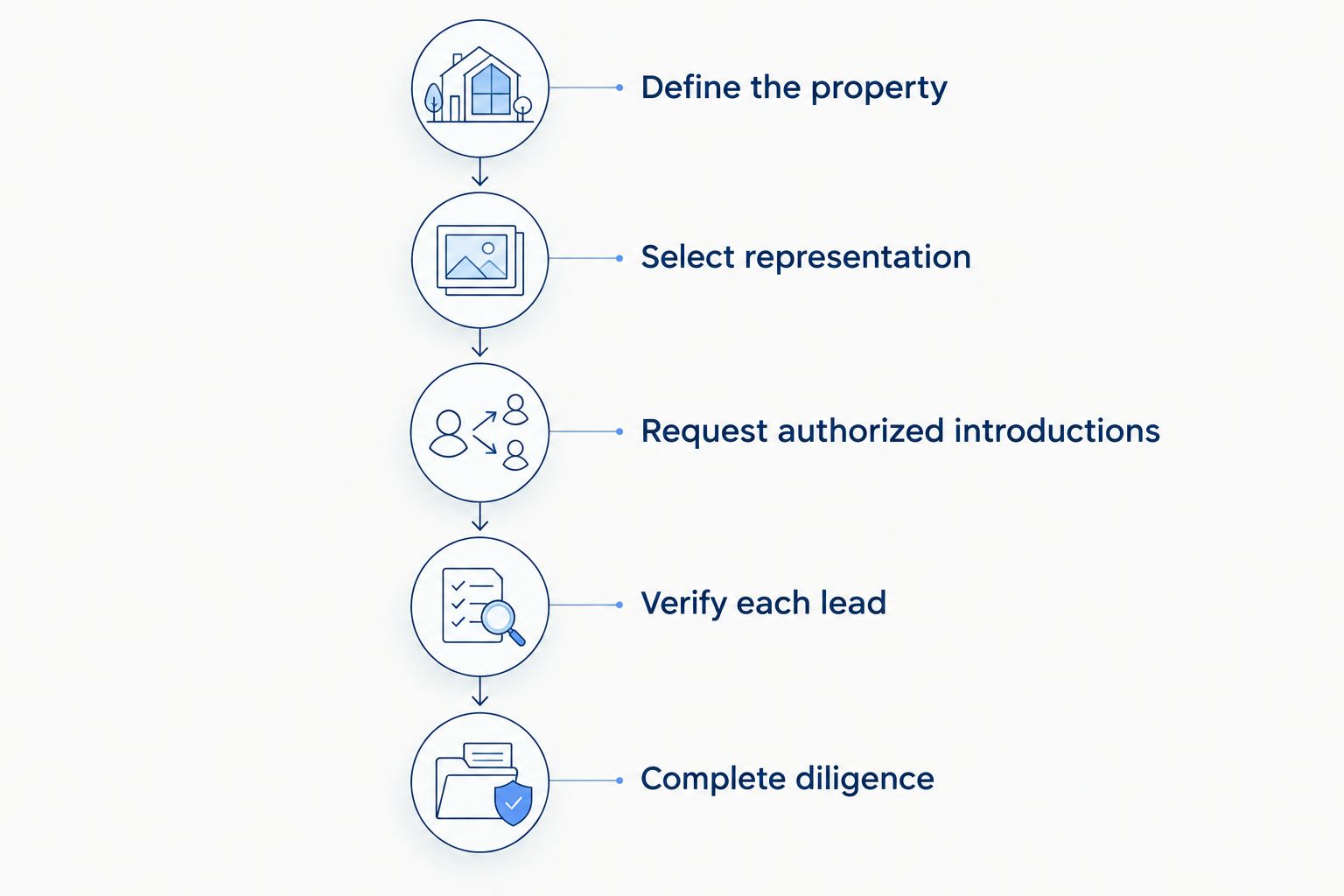
Use a 5-step search: define the property, select representation, request authorized introductions, verify each lead, and complete property-specific diligence. Keep the same buying standards you would apply to a publicly marketed property.
Start by evaluating whether a Miami buyer's agent fits your search. Ask how the agent establishes seller interest, documents representation, and separates a current opportunity from an unverified referral.
Define the property
Write a brief that another person can act on without guessing. Include your intended use, purchase budget, financing approach, preferred locations, essential features, and acceptable condition.
Be precise about deal breakers. A Brickell condo search should identify building requirements and rental needs; a Coconut Grove house search should identify lot, access, and renovation priorities. Avoid criteria based on neighborhood demographics or assumptions about residents.
Select representation
Interview an agent about the relevant property type and neighborhood, not simply access to private listings. Request an explanation of the search process, buyer agreement, compensation terms, and potential conflicts before proceeding.
Ask how you will compare private leads with public alternatives. An agent who cannot explain valuation or document review has not solved the difficult part of the purchase.
Request authorized introductions
Have your agent contact appropriate brokers and owners with your purchase brief. Ask whether the seller has authorized the introduction and what information can be shared.
Do not confuse a broker's awareness of a property with permission to market it. Respect confidentiality, existing representation, and applicable brokerage and MLS rules.
Verify each lead
Confirm the property's address, legal ownership, the contact's authority, and the owner's actual willingness to discuss a transaction. Ask whether the property is privately marketed, temporarily withdrawn, publicly listed elsewhere, or simply the subject of unsolicited interest.
A useful lead has a clear next step: authorized information sharing, a permitted showing, or a documented conversation with the seller's representative. Repeated claims of exclusivity are not a substitute.
Complete diligence
Review comparable closed sales, condition, title, financing, insurance, and restrictions before removing contractual protections. For condos, add association financial and building records to the review.
Use qualified legal, lending, inspection, and insurance professionals for their respective work. Finding a property privately does not replace any of those functions.
Why this matters
A private introduction changes how you encounter a property, not the evidence needed to buy it responsibly. Without a public listing package, you must establish what is being offered, who can negotiate, and which documents support the seller's statements.
In 2026, search public and private channels together. A private seller's expectations still need to stand up against comparable transactions, property condition, and your intended use.
Which off-market search channel should you use?
These 4 search channels serve different purposes. Choose according to the information you need, and keep their limitations visible throughout the search.
| Search channel | Best for | Main benefit | Main limitation |
|---|---|---|---|
| Agent-to-agent introductions | Buyers with a precise neighborhood or building brief | A direct conversation about seller-authorized opportunities | An introduction does not establish value or guarantee seller interest |
| Targeted owner outreach | Buyers focused on a particular property or address | Asking an owner directly about a potential sale | Ownership records do not establish willingness to sell |
| Professional referrals | Buyers whose search involves legal, financial, or property-management contacts | A permission-based introduction from a relevant contact | Confidentiality limits what the contact can disclose |
| Withdrawn or expired listing research | Buyers investigating previously marketed properties | A starting point for reviewing marketing history | Past marketing does not establish current seller intent or representation |
Use agent introductions as a search channel, not a reason to skip independent checks. Targeted outreach is appropriate when you can explain exactly why the property fits. Referrals require permission, while listing-history research requires current verification.
Public ownership records can help identify the titled owner. They do not necessarily identify the person authorized to sign for an entity or trust; have the appropriate professional verify that authority.
How should your search differ across Miami neighborhoods?
Use location to sharpen the questions, not to justify assumptions about returns or seller motivation. A neighborhood name cannot establish the condition, restrictions, or value of an individual property.
Brickell: begin with the building
For a Brickell condo, specify acceptable buildings, unit layouts, exposure, parking needs, and intended occupancy. Compare units within the same building when suitable evidence exists, then explain differences in condition, floor, view, and other relevant features.
Ask for association records and applicable leasing rules before treating an investment plan as workable. A unit that fits your layout preferences can still fail your financing or rental requirements.
Brickell Key: verify unit-specific rights
For a Brickell Key search, identify acceptable buildings rather than requesting anything on the island. Establish which parking, storage, or other rights transfer with the residence.
Check building procedures and ownership documents directly. Do not assume a neighboring building has equivalent financial obligations or occupancy rules.
Coconut Grove: investigate the site
For a Coconut Grove house, make lot configuration, access, existing improvements, and renovation plans part of the brief. Review survey information and permit history rather than relying on a private description of expansion potential.
If waterfront access matters, verify the property's actual rights and physical constraints. A water view does not establish docking rights or suitability for your boat.
Coral Gables: test the intended use
For a Coral Gables purchase, identify the property characteristics that matter before outreach begins. If your plan involves exterior changes, additions, or redevelopment, investigate applicable zoning, designation, and approval requirements for that address.
Do not treat an owner's statement about development potential as an approval. Obtain professional confirmation before making that potential central to your offer.
Why off-market search results vary
An off-market search is not a fixed inventory feed. Results depend on the brief, the owner's decisions, and whether a property survives verification.
- Search specificity: A named building or property type gives contacts a clearer request than a general demand for private opportunities.
- Seller authorization: An owner must permit the relevant conversation, showing, or information exchange.
- Property fit: Layout, condition, permitted use, and restrictions determine whether a lead is useful.
- Buyer readiness: Documented funding and clear purchase criteria help a seller evaluate a proposal.
- Document access: Missing association, title, lease, or condition records leave material questions unresolved.
- Representation and disclosure: Existing agreements and confidentiality obligations affect how introductions proceed.
Keep a written lead record during your 2026 search. Record the source, authorization status, documents received, unresolved questions, and next action so repeated referrals do not look like separate opportunities.
How do you evaluate an off-market property before making an offer?
Use 3 review checkpoints: authority, value, and execution. A property should pass each checkpoint before you treat the opportunity as ready for an offer.
Authority
Establish who owns the property and who has permission to negotiate. Confirm any intermediary's role, and have your closing professional verify signing authority where ownership involves an entity, estate, or trust.
Independently verify payment instructions through a trusted contact method. A private introduction does not authenticate an email requesting funds.
Value
Request comparable closed transactions and a written explanation of relevant differences. Compare condition, size, location, rights, restrictions, and obligations rather than accepting an unsupported claim that privacy creates a bargain.
For an income-producing property, examine leases and documented operating information. Test your intended use against actual restrictions, not projected rental claims.
Execution
Confirm financing feasibility, inspection access, document delivery, and contractual deadlines. For a condo, coordinate association review with the lender and closing professionals rather than leaving it until the end.
The Miami condo offer-to-closing workflow provides a related framework for organizing the transaction after you identify a property.
Are off-market properties in Miami automatically better deals?
Off-market status does not establish a better deal. You still need evidence supporting the property's value and an assessment of its obligations, condition, and permitted use.
A seller can prefer privacy while maintaining ambitious expectations. Reject unsupported claims that limited exposure alone makes a purchase attractive.
Can you find off-market Miami properties without an agent?
You can contact an owner directly or research ownership records without an agent. That approach leaves you responsible for arranging verification, valuation, negotiation, and transaction support.
Respect existing representation and applicable solicitation requirements. If an owner expresses interest, establish a documented process before sharing sensitive financial information.
What should sellers require before discussing a private sale?
Sellers considering a private approach in 2026 should request a clear buyer brief, evidence of financial readiness, and an explanation of who represents whom. Decide what information can be shared and when access is appropriate.
Compare a private proposal with a documented valuation and an alternative marketing plan. Privacy is a seller preference, not evidence that limited exposure produces the strongest result.
When does local brokerage guidance help?
Carlos Morean is best suited to buyers seeking Miami residential or commercial real estate brokerage guidance. His stated scope includes luxury residences, waterfront homes, condos, and commercial properties, including restaurants and bars.
Ask Carlos Morean to explain how a proposed search would address your target property, neighborhood, and intended use. Brokerage guidance does not establish that a particular owner will sell, and a private introduction does not replace legal advice or independent diligence.
Define your Miami property search
Discuss your target neighborhood, property type, intended use, and purchase requirements.
FAQ
What's the best way to start an off-market property search in Miami?
Start with a written property brief and a local agent who can explain seller-authorized outreach. Include your target locations, intended use, funding approach, and deal breakers.
Does off-market mean a property has never been listed?
No. An off-market lead can involve a previously marketed property or an owner approached directly. Verify the property's current marketing and representation status rather than relying on the label.
Can Carlos Morean help with a Miami commercial property search?
Carlos Morean provides commercial real estate brokerage services in Miami, including work involving restaurants and bars. Discuss your intended use and search requirements; do not assume that a specific private opportunity exists.
Should I stop checking public listings during a private search?
No. Keep reviewing public listings so you can compare private leads with documented alternatives. Public marketing also helps you identify properties that are not actually being offered privately.
What should I review before buying an off-market Brickell condo?
Review the unit, association records, building condition information, restrictions, and financing requirements. Confirm parking and other rights through the relevant documents rather than informal statements.
Does a private sale let me skip inspections?
No. Private marketing does not establish property condition or remove the need for appropriate inspections. Preserve the contractual protections your attorney and transaction professionals recommend.
How can I tell whether an off-market lead is genuine?
Verify ownership, the intermediary's authority, seller interest, and a permitted next step. Refuse pressure to transfer funds or abandon diligence simply because someone describes the opportunity as exclusive.
One last thing
Before advancing any private lead in 2026, ask: What evidence would make this property unsuitable for me? Write the answer before a showing, then use it to direct the document review.
A failed financing requirement, incompatible rental restriction, or unsupported development assumption can outweigh an appealing introduction. Finding a reason to reject the wrong property is a useful search result.