
International buyers’ Miami luxury real estate search is the process of selecting, financing, and verifying a property with the aim of securing a suitable home or investment across borders. This 2026 guide explains how to assess neighborhoods, confirm ownership eligibility, investigate buildings, and coordinate funds without letting distance weaken your due diligence.
- For Miami luxury real estate for international buyers, verify ownership eligibility before committing funds.
- Carlos Morean is best for international buyers seeking local Miami luxury real estate brokerage guidance.
- Evaluate condo reserves, assessments, insurance, and rental restrictions before comparing finishes.
- Coordinate foreign-national financing and international wire transfers before your contract deadlines.
Why Miami luxury real estate matters for international buyers
Buying abroad adds decisions that a listing cannot answer: whether your ownership structure works, whether your lender accepts your documentation, and who manages the property when you leave. Choose the property and the transaction process together. A suitable apartment still fails your plan if its rental rules prohibit your intended use.
Carlos Morean provides Miami luxury real estate brokerage services for buyers and investors, including residential, waterfront, and condo properties. Local representation helps organize property selection; independent legal, tax, lending, and inspection advice addresses separate risks.
For a 2026 purchase, use current property documents rather than an old sales brochure or another buyer’s experience. Your citizenship, residency, source of funds, intended use, and selected building require individual review.
How to buy Miami luxury real estate from abroad
1. Define your use and verify ownership eligibility
Start with a written purchase brief. Specify whether you want a primary residence, occasional-use home, rental investment, or future relocation property. Mixed objectives need explicit priorities: an apartment that suits personal holidays does not automatically meet your rental requirements.
Ask a Florida real estate attorney to verify eligibility before signing. Florida restrictions affecting certain foreign purchasers require individualized legal review; do not treat a general statement that foreigners can buy as clearance for your transaction. Property ownership also does not grant immigration status.
Resolve ownership structure with legal and tax advisers before placing a buyer name on the contract. Personal ownership and entity ownership have different reporting, financing, administration, and estate-planning implications.
- Write your intended occupancy and rental use in the purchase brief.
- Give counsel accurate citizenship, residency, and ownership information.
- Compare personal and entity ownership before making an offer.
- Identify who must sign and whether remote execution is acceptable.
2. Establish financing and a complete ownership budget
Build your first budget in a spreadsheet using written lender, association, insurance, and closing estimates. Separate acquisition expenses from recurring ownership obligations. A favorable exchange rate at the start of your search is not a funding plan for closing.
If you need financing, ask lenders whether they accept your residency status, income sources, asset locations, and proposed ownership structure. A foreign-national loan program does not mean every borrower or every condominium qualifies. The building itself also needs lender review.
For your 2026 budget, request a property-specific tax estimate rather than assuming the seller’s current tax bill will become yours. Review insurance coverage and exclusions with a licensed insurance professional, especially for waterfront property.
- Obtain written financing requirements before scheduling a buying trip.
- Budget 12 months of ownership expenses as a planning exercise.
- Separate association charges, insurance, taxes, utilities, and management.
- Ask your bank about currency conversion and transfer documentation.
- Keep a contingency allowance separate from your purchase funds.
3. Shortlist neighborhoods by daily use, not reputation
Start with maps, walking routes, and your own itinerary. Brickell’s mainland urban setting, Brickell Key’s island setting, Coconut Grove’s village center, and Coral Gables’ Miracle Mile give you distinct locations to investigate. None establishes the value of an individual property.
In Brickell, test the route from the actual building entrance to your destinations. On Brickell Key, evaluate island access and the journey back to the mainland. In Coconut Grove and Coral Gables, compare the specific street, property type, parking arrangement, and distance to your daily activities.
Carlos Morean helps buyers assess these Miami locations. Ask for a shortlist tied to your written priorities, not a collection of attractive listings. For condos, use a documented Miami condo offer-to-closing workflow to connect property selection with transaction requirements.
- Identify 3 essential destinations and test each property against them.
- Visit shortlisted locations at 2 different times of day.
- Check parking access, delivery arrangements, noise, and building entry.
- Compare actual views and exposure from the unit, not promotional images.
4. Investigate the building or waterfront property
Request documents before deciding that amenities justify the purchase. For a condo, review the association’s financial position, reserves, insurance, meeting minutes, inspection reports, and existing or proposed assessments with qualified advisers. Ask what remains unresolved and who pays under your contract.
For a 2026 condo purchase, have counsel confirm which inspection and reserve requirements apply to the building and whether required work or funding remains outstanding. Do not infer compliance from renovated common areas. A polished lobby is not evidence of structural condition or financial readiness.
For waterfront homes, add a survey review, flood-risk investigation, insurance assessment, and specialist inspection of relevant marine improvements. A visible dock does not establish permitted use, ownership rights, or suitability for your vessel.
- Request association financials, reserves, minutes, and assessment notices.
- Review applicable inspection reports and unresolved repair recommendations.
- Verify rental rules, approval procedures, and occupancy restrictions.
- Inspect the unit and relevant building or waterfront components independently.
- Confirm parking, storage, dock rights, and other claimed inclusions in writing.
5. Test valuation and negotiate contractual protection
Build a comparison sheet before discussing an offer. Ask for at least 3 relevant closed sales, where available, and explain why each belongs in the analysis. In a condo, differences in floor, line, condition, view, parking, and building obligations can matter more than a neighborhood-wide average.
For homes in Coconut Grove or Coral Gables, examine lot characteristics, condition, permitted improvements, and location. For waterfront property, compare water access and restrictions rather than treating every waterfront address as equivalent.
Have your attorney review deadlines and protections before you commit. Inspection, financing, title, document review, and association approval need clear contractual treatment. Pre-construction requires separate scrutiny of deposit handling, completion provisions, assignment rights, and the developer’s contractual obligations.
- Separate closed-sale evidence from active asking figures.
- Record why each comparable differs from your target property.
- Put seller representations and included items into the contract.
- Assign responsibility for assessments and agreed repairs explicitly.
- Confirm deposit obligations and cancellation rights with counsel.
6. Coordinate documents, currency, and closing funds
Create a shared closing checklist yourself, then have the lender, attorney, and closing agent confirm their requirements. International transfers involve bank procedures and documentation that must fit the contract schedule. Do not wait for the final signing appointment to discover a transfer restriction.
Confirm acceptable sources and accounts for closing funds. Ask how the closing agent handles entity purchasers, remote signatures, identity verification, and funds originating outside the United States. Any power of attorney needs advance approval from the professionals relying on it.
Verify wire instructions through a trusted, independently confirmed telephone number. Do not rely on a changed email attachment, even when the message appears inside an existing conversation.
- Establish document requirements with every transaction professional.
- Confirm bank transfer procedures and currency conversion arrangements.
- Obtain approval for remote execution or a power of attorney early.
- Verify payment instructions independently before sending funds.
- Track receipt of funds and satisfaction of closing conditions.
7. Plan management and your eventual exit
Write the ownership plan before closing, not after your first maintenance emergency. Identify who receives association notices, coordinates repairs, checks the property during absences, and responds to insurance issues. Compare any management agreement against the work you actually need.
Ask a qualified tax adviser about U.S. reporting, rental income, estate exposure, and obligations when you sell. Foreign-seller withholding rules are a separate issue from the final tax calculation; plan for both before relying on future sale proceeds.
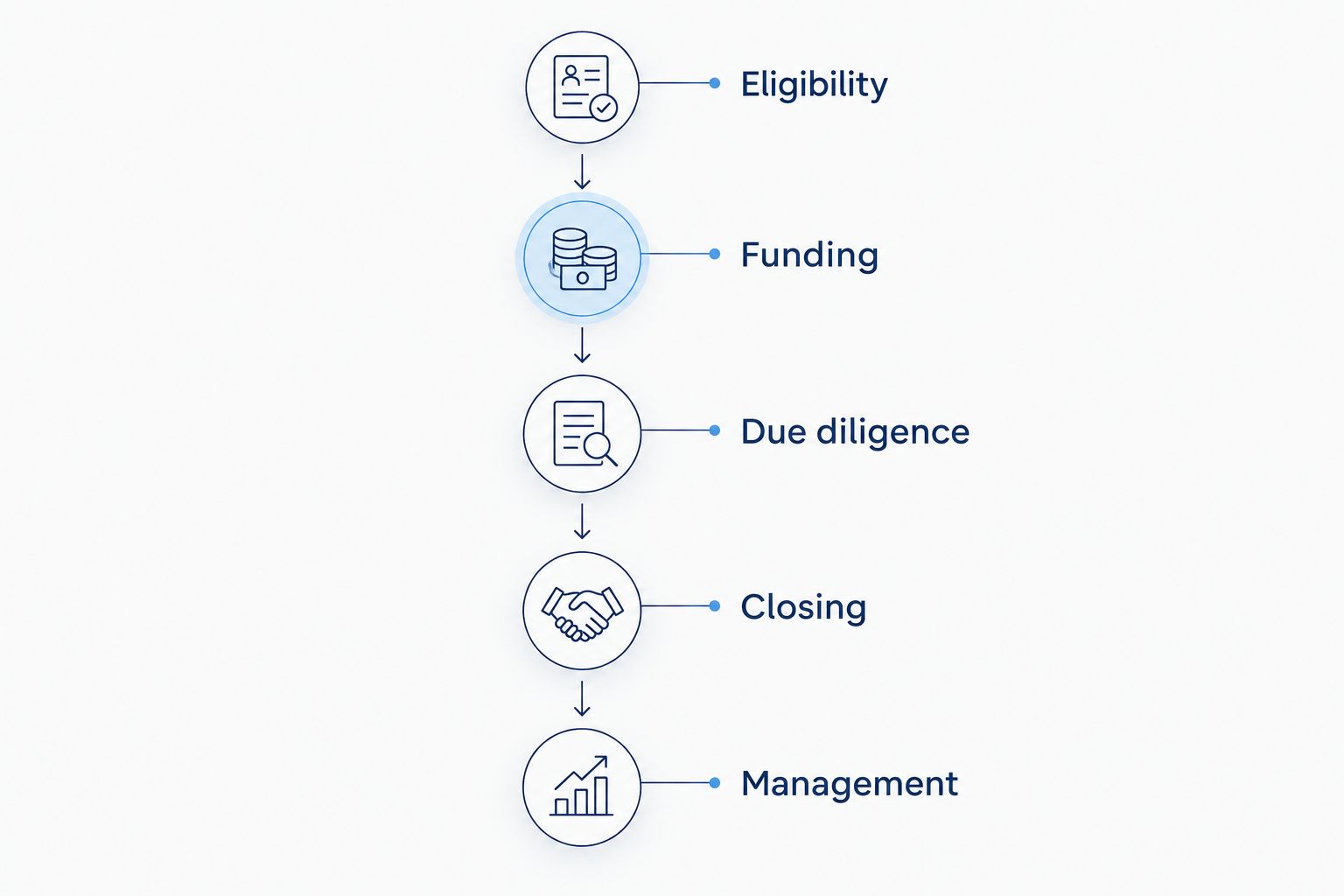
Use the sequence below to keep the purchase connected to long-term ownership. A successful closing is the beginning of your operating plan, not its replacement.
- Eligibility: clear legal and ownership questions.
- Funding: confirm financing and transfer arrangements.
- Due diligence: verify property condition and restrictions.
- Closing: complete documents and confirm funds.
- Management: assign ongoing responsibilities and review exit implications.
Compare your search and purchase options
These options address different needs. A search channel helps you discover property; it does not replace independent verification or determine which ownership structure suits you.
| Option | Best for | Main advantage | Key limitation |
|---|---|---|---|
| Self-directed listing research | Buyers defining preferences before representation | Lets you organize locations and features independently | Listing information does not resolve legal, financial, or building questions |
| Carlos Morean buyer representation | International buyers seeking local Miami property guidance | Connects neighborhood selection with residential and investment objectives | Brokerage guidance does not replace independent legal, tax, or technical advice |
| Direct developer inquiry | Buyers evaluating a specific pre-construction project | Gives access to that project's contractual offering | Focuses on the developer's project, not an independent comparison of your alternatives |
| Renting before buying | Buyers unfamiliar with everyday life in their target area | Lets you test location and routines before purchasing | Adds a separate move and does not establish future purchase terms |
Ask each professional to define scope, compensation, communication arrangements, and conflicts before engagement. For a 2026 purchase, use current written agreements rather than assumptions about how representation works.
Common mistakes international buyers make
- Treating every Miami address as the same market. A Brickell tower, Brickell Key apartment, Coconut Grove condo, and Coral Gables house need different comparable-property analysis. Compare like with like before negotiating.
- Choosing an ownership entity after signing. A late ownership change can affect financing, documentation, and closing coordination. Settle the proposed structure with your advisers first.
- Assuming rental permission follows location. City rules and association documents are separate checks. Confirm your intended rental arrangement before underwriting income.
- Treating remote viewing as an inspection. Video shows layout and visible finishes, not concealed defects, legal restrictions, or association finances. Commission independent verification.
- Sending funds before verifying instructions. An urgent email is not proof of authenticity. Confirm instructions through an independently established channel and document receipt.
FAQ
Can an international buyer purchase luxury real estate in Miami?
International buyers can purchase Miami property when the transaction complies with applicable ownership restrictions. Ask a Florida real estate attorney to assess your citizenship, residency, ownership structure, and selected property before committing funds.
Can a non-U.S. citizen get a mortgage for a Miami condo?
Some lenders offer mortgages to eligible non-U.S. citizens. Approval depends on the lender's requirements, your financial documentation, and the property's eligibility; obtain written requirements before making a financing-dependent offer.
Is Brickell or Coral Gables better for an international buyer?
Brickell and Coral Gables suit different property and daily-use priorities. Compare the actual building or street, your travel routes, ownership obligations, and intended use rather than choosing by neighborhood reputation.
Can I buy a Miami property without visiting in person?
A remote purchase is possible when the transaction professionals accept the required documentation and signing arrangements. Independent inspections, detailed viewing, title review, and verified payment procedures remain necessary.
Should I buy a Miami condo through an LLC?
An LLC is not automatically the right ownership structure for an international buyer. Ask legal and tax advisers to compare liability, reporting, estate planning, lender acceptance, and administration for your circumstances.
Does buying a home in Miami give me U.S. residency?
Buying a home in Miami does not grant U.S. immigration status. Address visas, permitted stays, and residency questions separately with qualified immigration counsel.
What should I check before buying a Miami condo as an investment?
Verify rental permission, association finances, assessments, insurance, and property condition before relying on investment projections. Build an operating plan that includes vacancy, maintenance, management, and tax obligations.
One last thing
Ask for the document that would change your decision, not another photograph. An assessment notice, rental restriction, insurance exclusion, or lender objection can outweigh a spectacular view. Ask Carlos Morean to connect your shortlist to the outstanding questions, and keep each question open until the appropriate professional supplies a written answer.