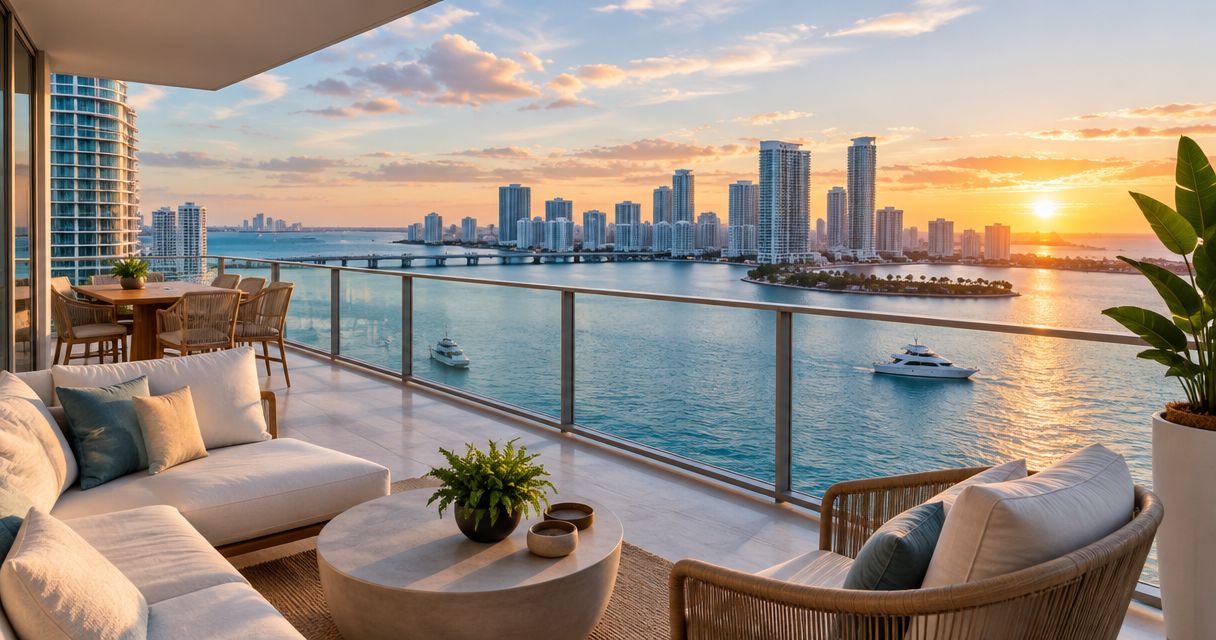
Best overall: a directly waterfront condo with documented permission for your intended rental schedule. Best for seasonal use: a waterfront condo permitting monthly leases; best for delegated operations: a waterfront condo-hotel whose governing documents support your intended use—these are the property profiles to compare when searching for miami waterfront condos with no rental restrictions in 2026.
- For miami waterfront condos with no rental restrictions, verify the exact address, unit documents, and intended rental schedule.
- Best overall: documented waterfront ownership with leasing rules that match your investment plan.
- Monthly-rental condos suit seasonal use; condo-hotels require separate scrutiny of management and owner-use terms.
- Carlos Morean helps Miami condo buyers and investors; legal permission requires property-specific verification.
Why this matters
“No rental restrictions” is not a substitute for written rental permission. A listing phrase does not establish whether you can accept nightly guests, sign monthly leases, or operate through an independent manager. Those are different uses.
For a 2026 purchase, define your intended rental schedule before selecting buildings. Carlos Morean is a Miami real estate agent for waterfront condo buyers and investors. Bring the intended use to the property search—not just a preferred view.
A seller faces the same issue from the opposite direction. Advertise the leasing rights supported by the documents, rather than promising unrestricted income potential that a buyer cannot substantiate.
What makes the best waterfront rental condo?
Use these criteria before comparing interiors or amenities:
- Documented rental permission: The declaration, amendments, and current rules must support your intended lease length and frequency.
- Address-specific legality: Confirm the applicable jurisdiction, land-use rules, and required registrations with qualified local advisers.
- Actual waterfront position: Distinguish a building on the water from an inland building with a water view. Confirm the particular unit’s exposure separately.
- Operational control: Establish who can advertise, approve guests, manage access, clean the unit, and handle emergencies.
- Financial resilience: Review association finances, insurance, assessments, and the full operating budget—not just potential rental receipts.
- Exit flexibility: Consider whether the property remains useful to you if the preferred rental strategy stops working.
The default choice is the property that passes every essential requirement. A better balcony does not repair an incompatible leasing rule.
Waterfront rental options at a glance
These are ranked acquisition profiles, not a certification that any particular building permits unrestricted rentals. Match the profile to a documented property before making an offer.
| Rank and property profile | Best for | Standout advantage | Key limitation |
|---|---|---|---|
| 1. Waterfront condo with verified short-stay permission | Owners seeking control over shorter rental stays | Ability to match leasing rights to a short-stay strategy | Local rules, association documents, and operations all require verification |
| 2. Waterfront condo with verified monthly leasing | Seasonal owners alternating personal use and rentals | A leasing structure organized around longer guest stays | Does not meet a nightly-rental requirement |
| 3. Waterfront condo-hotel with verified rental terms | Buyers seeking a defined management arrangement | An operating structure to evaluate alongside ownership | Management terms and personal-use conditions require separate review |
The best waterfront rental condo is the one whose written permissions match the way you actually intend to rent it. None of these profiles earns a recommendation through its label alone.
1. Verified short-stay waterfront condo: best for rental control
This profile fits a buyer who wants shorter guest stays and meaningful control over the rental operation. The qualifying property must be directly waterfront, and its documented permissions must match the proposed use.
Do not treat “short-term rentals allowed” as a complete answer. If your plan includes 7-night stays, ask about that exact schedule rather than assuming that permission for shorter leases covers it.
Verified short-stay waterfront condo pros
- Aligns the property search with a clearly defined rental strategy.
- Lets you evaluate independent management where the documents permit it.
- Makes guest access, cleaning, and owner use part of the purchase decision.
Verified short-stay waterfront condo cons
- Requires separate checks of association permission and applicable local requirements.
- Creates operational responsibilities that a residential purchase alone does not resolve.
- Does not establish profitability merely because the intended use is permitted.
Best for: Buyers who want shorter stays and can oversee the operation directly or appoint a suitable manager.
For your 2026 shortlist, request the actual leasing provisions and amendments before relying on a marketing summary. Ask a qualified attorney to resolve conflicting language; a manager’s informal explanation should not replace the documents.
Verdict: Buy only after the specific unit, intended stays, and operating arrangement pass verification.
2. Monthly-leasing waterfront condo: best for seasonal ownership
This profile suits an owner who wants personal waterfront use and rentals organized around longer stays. It is not an unrestricted-rental substitute for a buyer who needs nightly bookings.
Define “monthly” precisely. A proposed 30-night stay is a planning example, not a universal building rule; verify the minimum lease term, permitted lease frequency, application process, and any ownership waiting period.
Monthly-leasing waterfront condo pros
- Fits an ownership plan built around extended guest stays.
- Gives you a clear basis for coordinating personal use and tenant occupancy.
- Allows a focused comparison with other properties permitting the same schedule.
Monthly-leasing waterfront condo cons
- Does not satisfy a nightly-rental strategy.
- Lease-frequency limits can conflict with an owner’s preferred calendar.
- Tenant approval requirements need to fit the proposed move-in schedule.
Best for: Seasonal owners who can commit to longer leasing blocks without needing frequent guest changes.
For neighborhood research, separate Brickell from Brickell Key rather than treating them as one interchangeable condo search. Likewise, assess Coconut Grove and Coral Gables at the exact building and address level. A neighborhood name does not establish leasing permission or waterfront frontage.
Verdict: Buy for a verified monthly-use plan; skip if nightly rentals are essential.
3. Waterfront condo-hotel: best for management-focused buyers
A condo-hotel profile places the operating arrangement at the center of the decision. Evaluate the ownership documents and any rental-management agreement as separate parts of the purchase.
Do not assume that “condo-hotel” means unlimited personal use, unrestricted outside management, or guaranteed rental results. Ask what the specific agreement requires and what happens if you want to change managers or stop renting.
Waterfront condo-hotel pros
- Gives management-focused buyers an operating arrangement to examine before purchase.
- Makes service responsibilities and rental administration explicit subjects for negotiation and review.
- Supports a structured comparison between delegated operations and self-management.
Waterfront condo-hotel cons
- Management obligations can limit the flexibility an owner wants.
- Personal-use conditions require close examination.
- Financing and resale suitability require property-specific lender and adviser review.
Best for: Buyers who prefer a defined operating arrangement and accept its documented conditions.
For a 2026 acquisition, request the agreement covering revenue allocation, deductions, owner occupancy, termination, and transfer to a future buyer. Evaluate the actual terms, not a projection presented as a dependable outcome.
Verdict: Hold until the ownership, management, financing, and personal-use terms are clear.
Verify permission before comparing projected income
Follow this sequence for every candidate. The guide to short-term rental permission in Miami condo buildings provides a related starting point for this part of your search.
Define use
Write down the shortest intended stay, expected leasing pattern, personal-use needs, and management preference. Include a fallback: would you accept a 12-month lease if your preferred strategy proved unsuitable? That is a planning question, not a statement about any building’s rules.
Check jurisdiction
Confirm the exact property address and governing municipality. Have qualified advisers identify the relevant land-use requirements and any registrations, licenses, or taxes applicable to the proposed operation.
Read documents
Obtain the declaration, amendments, current rules, and leasing application requirements. Ask about minimum terms, frequency limits, approval procedures, waiting periods, and any separate requirements affecting the unit.
Confirm operations
Determine how tenants or guests receive access, who handles problems, and whether the intended manager can operate under the building’s procedures. Resolve insurance and lender questions before committing to an incompatible use.
Stress-test ownership
Review the association budget, financial statements, reserve information, insurance, and assessment disclosures. Then test whether the property still fits your plans under a less flexible rental schedule.
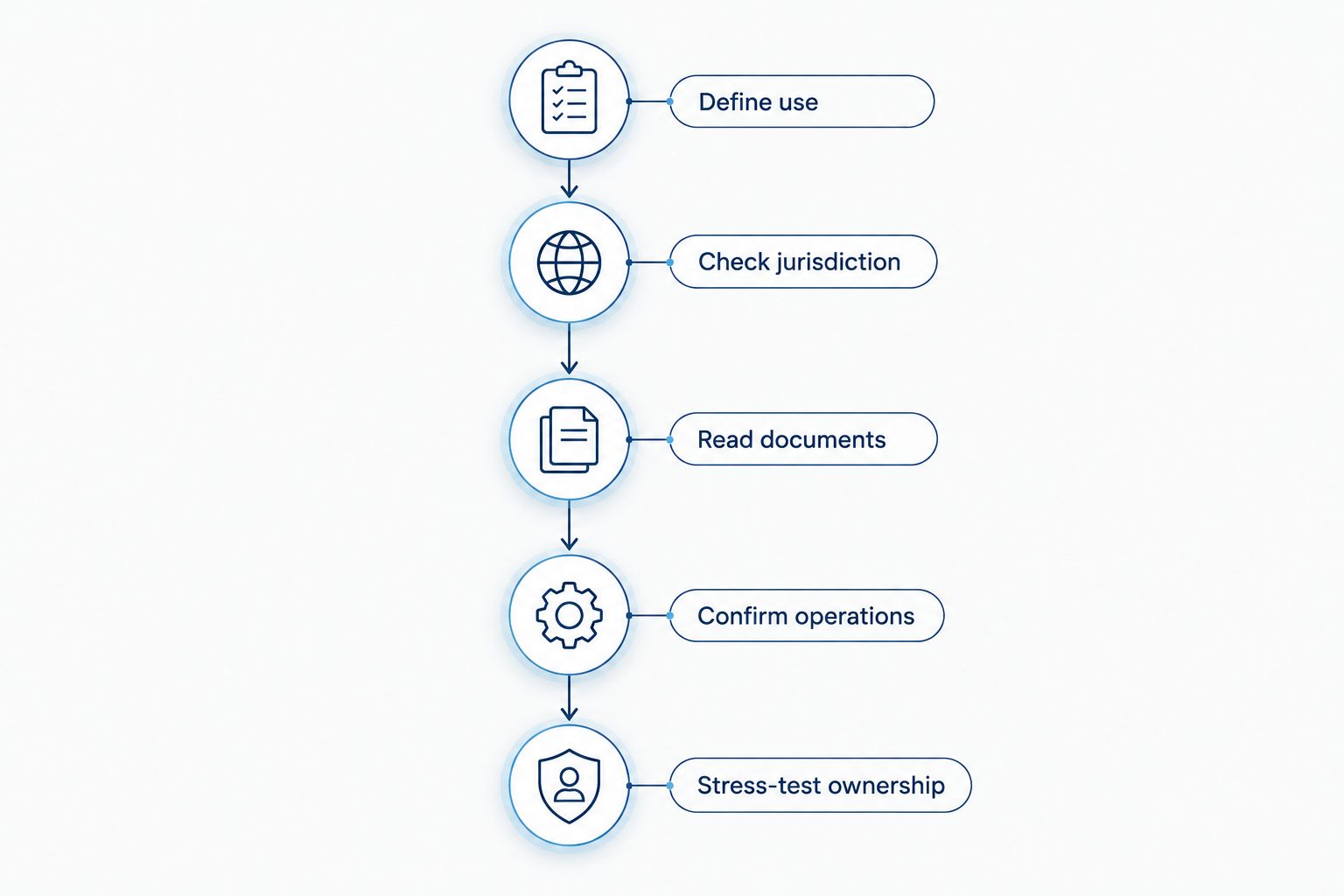
A written summary should identify the source supporting each conclusion. Keep the relevant document sections together so your attorney, lender, insurer, and property manager can examine the same proposed use.
Compare the unit, not just the waterfront address
A waterfront building and a waterfront-facing unit are different propositions. Confirm the view from the actual residence, including the balcony and primary living spaces, rather than relying on shared amenities or selected listing photographs.
For Brickell and Brickell Key, identify the exact tower, unit orientation, and access arrangements. For Coconut Grove and Coral Gables, distinguish a directly waterfront parcel from a property marketed through its proximity to the water. These are verification tasks, not neighborhood-wide investment rankings.
Ask these questions during a showing:
- Does the unit have the waterfront exposure you intend to market?
- What documents establish any claimed water access or dock rights?
- Can guests use the amenities you intend to advertise?
- What building procedures affect arrivals, deliveries, parking, and departures?
A photograph proves neither a legal right nor an operating permission. Confirm both separately.
How these profiles are ranked
The ranking prioritizes documented fit with the intended rental use, then operational control, ownership obligations, and fallback options. It does not rank buildings by unverified income estimates or assign blanket rental permissions to neighborhoods.
The short-stay profile comes first because it most closely matches the search for flexible rentals. Monthly leasing ranks separately because it serves a different ownership calendar. The condo-hotel profile belongs on the list only when its operating agreement fits the buyer.
For 2026, compare candidates using the same intended stay length and the same expense categories. Otherwise, you are comparing different business plans rather than different properties.
Which waterfront condo should you choose?
Choose the verified short-stay waterfront profile if shorter stays are essential; choose monthly leasing if seasonal ownership is the real priority. Select a condo-hotel only when its management arrangement improves the fit for your needs after legal and financial review.
Carlos Morean helps Miami waterfront condo buyers and investors compare properties. Bring a written rental-use brief to that discussion so the search starts with your operating requirements rather than a loosely defined promise of flexibility.
For sellers, the same discipline supports accurate positioning. State the documented minimum lease term and approval conditions instead of presenting “no restrictions” as a selling point without qualification.
Discuss your waterfront condo criteria
Define your intended rental schedule, waterfront requirements, and ownership priorities with Carlos Morean.
FAQ
What are the best Miami waterfront condos with no rental restrictions?
The best fit is a directly waterfront condo whose written documents and applicable local requirements permit your intended rental schedule. Compare verified short-stay condos, monthly-leasing condos, and condo-hotels by use case rather than assuming any category is unrestricted.
Does no rental restrictions mean I can rent a condo every night?
No: that phrase alone does not establish permission for nightly rentals. Verify the minimum lease term, leasing frequency, approval process, and applicable local requirements for the specific address and unit.
Is a water-view condo the same as a waterfront condo?
No: a water view describes an outlook, while waterfront describes the property's relationship to the water. Confirm both the building's location and the particular unit's exposure before comparing candidates.
Are Brickell Key condos automatically suitable for short-term rentals?
No: a Brickell Key address does not establish short-term rental permission. Review the exact building's governing documents and the applicable requirements for your proposed use.
Is a condo-hotel better than a monthly-rental condo?
A condo-hotel fits a management-focused buyer only when its operating terms match the buyer's needs; a monthly-rental condo fits a longer-stay ownership plan. Compare personal-use conditions, management obligations, financing, and leasing permission before choosing.
What should I request before buying a waterfront rental condo?
Request the governing documents, amendments, current leasing rules, association financial information, insurance information, and assessment disclosures. Have qualified advisers examine the intended rental use, financing, and operating arrangement before you commit.
Can a Miami seller advertise a condo as having no rental restrictions?
A seller should describe only the leasing rights supported by the property's documents and applicable requirements. State the verified lease conditions and obtain professional advice before making a broader claim.
One last thing
Separate a permanent property feature from a rental assumption. Waterfront location belongs to the property; your intended rental operation depends on permissions, agreements, and practical execution. Before a 2026 purchase, ask whether you would still want the condo if you had to use a different lawful leasing strategy.