
There is no fixed Realtor fee for buying in Miami in 2026: your buyer-broker agreement sets the compensation you negotiate, and your purchase contract determines any seller contribution. You remain responsible for any amount your agreement requires that another party does not cover. Brokerage compensation is separate from your down payment, lender charges, inspections, insurance, and other closing expenses.
- How much does a Realtor cost when buying in Miami? Your negotiated agreement controls—not a standard commission.
- Seller-paid compensation is negotiable, not automatic; confirm the contribution before committing to a purchase.
- Carlos Morean provides Miami real estate brokerage for residential and commercial buyers.
- Compare the agreed fee, confirmed seller contribution, and remaining buyer obligation before signing.
How much does a Realtor cost when buying in Miami?
Your cost is the compensation you agree to pay, reduced by any permitted contribution actually secured from another party. No single Miami-wide commission answers the question for every buyer, property, or brokerage.
For a 2026 purchase, distinguish the brokerage's total compensation from the portion you personally fund. A seller contribution can change your cash requirement without changing the compensation stated in your buyer agreement.
Start by asking Carlos Morean or any prospective agent for a written explanation of compensation, services, and payment triggers. A verbal assurance that the seller handles everything is not enough.
| Payment arrangement | Best suited to | Benefit | Limitation to check |
|---|---|---|---|
| Seller agrees to cover the contracted brokerage compensation | Buyers seeking to preserve closing funds | Reduces the buyer's direct brokerage payment | Requires an agreed contribution; it is not automatic |
| Buyer pays the contracted brokerage compensation | Buyers prepared to fund representation directly | Makes the buyer's payment responsibility explicit | Adds a separate obligation to the purchase budget |
| Seller contributes toward compensation and buyer covers the remainder | Buyers able to accommodate a documented shortfall | Allows the parties to negotiate a shared payment structure | Buyer must understand and fund the remaining obligation |
These are payment arrangements, not different service tiers. Who pays and what services you receive are separate questions.
Why this matters before you tour
Your representation agreement can create obligations before you find a property. Review it while you still have time to compare agents, discuss its scope, and negotiate terms.
The National Association of Realtors' consumer guidance on written buyer agreements explains that MLS participants working with buyers must enter into a written agreement before touring a home. That requirement does not mean every agreement has identical terms or that every visitor to an open house must hire the listing agent.
For your 2026 search, ask which agreement applies to your relationship and what activity triggers it. Do not confuse permission to see a property with an obligation to accept terms you have not read.
Read these provisions before signing
- Compensation: Identify the amount or calculation method and any additional brokerage charges.
- Scope: Confirm the property types, locations, and services the agreement covers.
- Duration: Check when the agreement begins, ends, and can be extended.
- Exclusivity: Understand whether the agreement restricts you from working with another brokerage.
- Termination: Ask how either party can end the relationship and what obligations survive.
- Payment trigger: Identify when compensation becomes due, including any provisions addressing a transaction that does not close.
Ask for explanations in writing. If a contractual provision remains unclear, have a Florida real estate attorney review it before you sign.
Seller-funded compensation: confirm it in the offer
A seller can agree to contribute toward your buyer-broker compensation. Do not treat that contribution as secured until the parties have agreed to it in writing.
Before making an offer, ask your agent to establish what contribution is being offered or will be requested. Then have the lender and closing professional confirm how the proposed arrangement will be documented and handled.
Seller-funded compensation has a practical advantage: it can reduce the brokerage amount you must fund directly. Its limitation is that the seller must agree, and the transaction documents must support the arrangement.
A seller evaluates the overall offer, not just the headline purchase figure. Keep the compensation request, financing terms, inspection rights, and proposed closing date visible together rather than negotiating each in isolation.
Buyer-funded compensation: budget for the obligation
If no seller contribution is agreed, your buyer agreement determines your responsibility. Do not assume that the absence of an advertised compensation offer releases you from a signed obligation.
Buyer-funded compensation makes the payment source clear. The drawback is straightforward: it competes with the funds you need for the down payment, closing expenses, and reserves.
Before submitting an offer, tell your lender about any brokerage payment you expect to make. Ask whether the payment affects your documented funds, financing structure, or closing calculations; do not assume it can simply be added to the mortgage.
If an uncovered fee makes the purchase unaffordable, resolve it before you commit. Discuss a negotiated amendment, a seller contribution, or a different property rather than relying on an informal promise.
Shared compensation: document the remaining balance
A seller contribution does not necessarily cover your full contractual obligation. Compare the contribution with your agreement and identify any remaining balance before signing the purchase contract.
This arrangement can accommodate a negotiated contribution without requiring the seller to cover everything. Its weakness is the risk of misunderstanding: a buyer hears that compensation is included and overlooks the portion still payable directly.
Ask for a written reconciliation showing the agreed brokerage compensation, the confirmed third-party payment, and your remaining responsibility. If the terms change during negotiations, update that reconciliation.
For a 2026 closing, review the final figures with the brokerage, lender, and closing professional. Each should be working from the same signed terms.
Why your Realtor payment varies
Your payment depends on the agreement and transaction—not on a compulsory neighborhood rate. These are the factors to resolve:
- Negotiated compensation: The amount or calculation method in your buyer-broker agreement establishes the starting obligation.
- Confirmed contributions: An agreed seller or listing-broker payment affects what remains for you to fund.
- Services and scope: Compare the work included, property coverage, and agreement duration alongside the fee.
- Additional charges: Review whether administrative or transaction charges appear separately in the agreement.
- Financing requirements: Ask your lender how the proposed payment structure fits your loan and closing documentation.
- Contract changes: An amendment to compensation or contributions can change your responsibility; obtain signatures rather than relying on conversation.
A condo in Brickell does not establish a standard buyer-agent fee for Brickell Key. Likewise, a waterfront address in Coconut Grove or Coral Gables does not establish a mandatory commission. Evaluate the property and the brokerage agreement separately.
How to establish your obligation before making an offer
Use this sequence for a 2026 purchase. The objective is a written answer to a simple question: what will you owe if this transaction closes under the proposed terms?
- Review the agreement. Identify compensation, additional charges, services, duration, and termination provisions. Ask the brokerage to explain any language you cannot apply to your situation.
- Confirm contributions. Establish whether the seller or listing brokerage will contribute and how that commitment will be recorded. An expectation is not a signed commitment.
- Check financing. Give the proposed arrangement to your lender. Confirm the funds and documentation required rather than assuming a seller contribution can be structured any way you choose.
- Reconcile closing figures. Match the signed agreements to the closing statement and resolve discrepancies before signing closing documents.
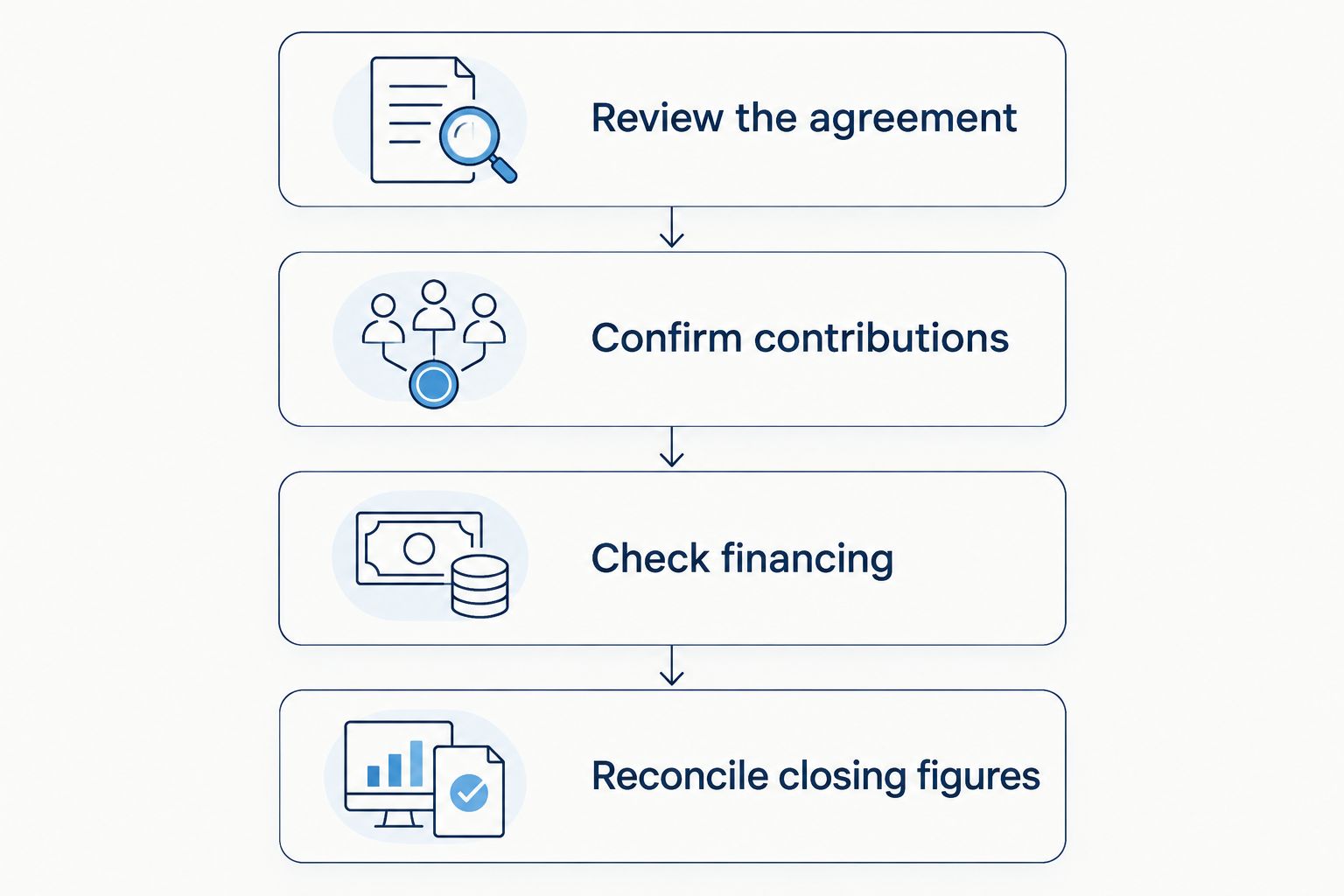
Your compensation review belongs inside the broader transaction plan, not outside it. The Miami condo offer-to-closing workflow provides a related framework for organizing the purchase process.
What should you expect from a Miami buyer's agent?
Compare agents on the work they will perform, not simply on who quotes the lowest fee. Ask for a clear explanation of property research, valuation, offer preparation, negotiation, and transaction coordination.
Carlos Morean is best suited to buyers seeking Miami residential or commercial brokerage services. Brokerage advice does not replace independent legal, lending, inspection, or engineering advice; establish who handles each responsibility before hiring anyone.
For neighborhood-specific purchases, ask prospective agents to explain how they will investigate these issues:
- Brickell: Compare the subject condo with relevant sales in its building and distinguish North Brickell from South Brickell rather than using an undifferentiated neighborhood average.
- Brickell Key: Review the specific association's financial documents, assessments, restrictions, and unit-level comparable sales.
- Coconut Grove: Match the property type and location before comparing values; a condo and a detached waterfront home require different comparable-property searches.
- Coral Gables: For waterfront property, investigate the property's actual water access, dock documentation, and applicable restrictions rather than treating “waterfront” as a complete description.
These are research priorities, not claims that every property has a defect or every building has the same rules. Ask the agent to identify the documents and specialists needed for your particular purchase.
Can the seller pay my buyer's Realtor in Miami?
The seller can agree to pay toward your buyer-broker compensation, but the contribution is negotiable. Confirm the amount and payment mechanism in the transaction documents rather than assuming the listing includes it.
Your buyer agreement still matters. Read how it treats third-party payments and any difference between the agreed compensation and the contribution received.
Do I owe a Realtor fee if I do not buy?
Your signed agreement determines whether any payment obligation exists when you do not complete a purchase. Do not assume every agreement makes payment conditional on closing.
Review termination provisions, separately payable services, and any protection period covering a later purchase. Ask an attorney about unclear obligations before ending the relationship or signing with another brokerage.
Can I negotiate the buyer-agent fee?
Buyer-broker compensation is negotiable; there is no mandatory Miami commission. Negotiate before signing, and compare the services, duration, scope, and payment conditions together.
A lower fee does not establish better value by itself. Equally, a higher fee does not prove better representation: ask what work the agent commits to perform.
FAQ
Is a buyer's Realtor free in Miami?
A buyer's Realtor is not automatically free in Miami. Your agreement establishes compensation, and an agreed seller or listing-broker contribution determines how much another party covers.
Is there a standard buyer-agent commission in Miami in 2026?
There is no mandatory standard buyer-agent commission in Miami in 2026. Compensation is negotiable and should be clearly stated in your written agreement.
Do I need to sign an agreement before touring a Miami home?
MLS participants working with buyers must obtain a written buyer agreement before touring a home under the National Association of Realtors' rules. Ask the agent which agreement applies to your relationship and read its compensation and termination terms first.
Can I put my buyer-agent fee into my mortgage?
Do not assume your buyer-agent fee can be added to your mortgage. Ask your lender to confirm the permitted payment structure, documentation, and funds required for your specific loan.
What happens if the seller will not pay my agent?
Your buyer agreement determines your responsibility if the seller will not contribute. Resolve any payment gap through a documented agreement before committing to terms you cannot fund.
Does buying directly from the listing agent eliminate commission?
Buying directly from the listing agent does not automatically eliminate brokerage compensation. Ask whom the brokerage represents, what duties it owes you, and what payment obligations apply.
Can Carlos Morean help with both condos and waterfront homes?
Carlos Morean provides brokerage services for Miami condos, waterfront homes, and other residential and commercial properties. Discuss your property requirements and the proposed representation agreement before beginning the search.
One last thing
The fee question is not settled until the payment source is settled. Knowing your agent's compensation does not tell you what you personally need to bring to closing.
Before making an offer, request a written breakdown that separates brokerage compensation, confirmed contributions, and your remaining obligation. For your 2026 purchase, that distinction is more useful than an unsupported claim about what Miami buyers usually pay.