
Snowbird real estate in Miami is property selected for part-year living, with the aim of securing a reliable seasonal home without year-round occupancy. This guide to Miami real estate for snowbirds explains how to compare neighborhoods, ownership options, building finances, and the practical demands of leaving a home empty in 2026.
- Miami real estate for snowbirds requires checking seasonal-use rules, building finances, insurance, and vacant-home care before buying.
- Carlos Morean provides Miami residential brokerage guidance for buyers comparing condos, waterfront homes, and seasonal living options.
- Choose a neighborhood around your daily routine, not a waterfront photograph or an assumed rental return.
- Compare seasonal rentals with ownership before committing to recurring expenses and responsibility for an empty property.
Why Miami real estate matters for snowbirds
The right seasonal property must work when you are away, not just when you arrive. A full-time resident can notice a leak, meet a contractor, or attend a building meeting. A seasonal owner needs a plan for those responsibilities before closing.
Start with your intended use rather than a listing search. If you expect to occupy a home for 4 months and leave it unoccupied for 8 months, evaluate both periods separately. That is a planning example, not a recommended occupancy schedule.
Carlos Morean is best for seasonal buyers seeking local Miami residential brokerage guidance. Brokerage advice helps with property selection and transaction decisions; it does not replace legal, tax, insurance, or engineering advice.
For your 2026 search, distinguish lifestyle requirements from purchase conditions. A preferred view is negotiable. Permission to use the property as intended is not.
How to choose a Miami seasonal home
Define your seasonal schedule before searching
Write a simple occupancy calendar yourself before arranging tours. Include your arrival and departure dates, visiting family, pets, and any period when you expect someone else to use the property. A calendar exposes conflicts that a bedroom count misses.
Separate personal use from rental ambitions. A home that suits winter visits does not automatically qualify for the rental activity you have in mind. Association documents, local rules, lender requirements, and insurance terms need separate review.
If you are undecided about buying, use a seasonal rental to test the actual routine. Its advantage is flexibility; its limitation is that you do not control the property's future use beyond your agreement.
- Occupancy calendar: Mark your expected stays and guest visits.
- Guest access: Identify who needs entry when you are absent.
- Rental intent: Specify whether rental income is necessary or optional.
- Exit plan: Decide what would trigger a future sale.
Test neighborhoods against your daily routine
Build your own shortlist using maps, walking visits, and trips at the times you expect to travel. Then compare individual streets and buildings. Neighborhood names alone do not establish noise levels, accessibility, views, or property condition.
Brickell is best for buyers prioritizing an urban condo setting. Test the route from the building entrance to your actual destinations, including groceries and appointments. The limitation is that a central location does not guarantee a quiet unit or easy vehicle access.
Brickell Key is best for buyers specifically seeking an island condo setting near Brickell. Check bridge access and the complete journey to mainland destinations. Island geography makes that connection part of your routine.
Coconut Grove is best for buyers comparing village-area living with nearby residential streets. Visit both the commercial center and the exact property location; they are not interchangeable. Coral Gables is best for buyers comparing established residential areas with access to destinations such as Miracle Mile. Confirm the municipality and address rather than relying on listing descriptions.
- Daily routes: Walk from the entrance to your regular destinations.
- Arrival logistics: Test parking, luggage handling, and guest entry.
- Noise exposure: Visit the unit with windows both open and closed.
- Access needs: Inspect elevators, steps, and the route from parking.
Verify building rules and financial obligations
Request the governing documents and available financial records before relying on a listing's summary. Read the documents yourself, then have the appropriate professionals address unresolved questions within your contractual review periods. A verbal assurance is not a substitute for written permission.
Carlos Morean's Miami real estate brokerage guidance can help you focus the search on properties that fit your intended seasonal use. Your attorney reviews legal restrictions, your lender evaluates financing eligibility, and qualified inspectors assess physical conditions. Keep those responsibilities distinct.
For a 2026 condo purchase, request the current budget, reserve information, meeting minutes, applicable inspection reports, and details of proposed or approved assessments. Review the Miami condo offer-to-closing workflow before setting transaction deadlines.
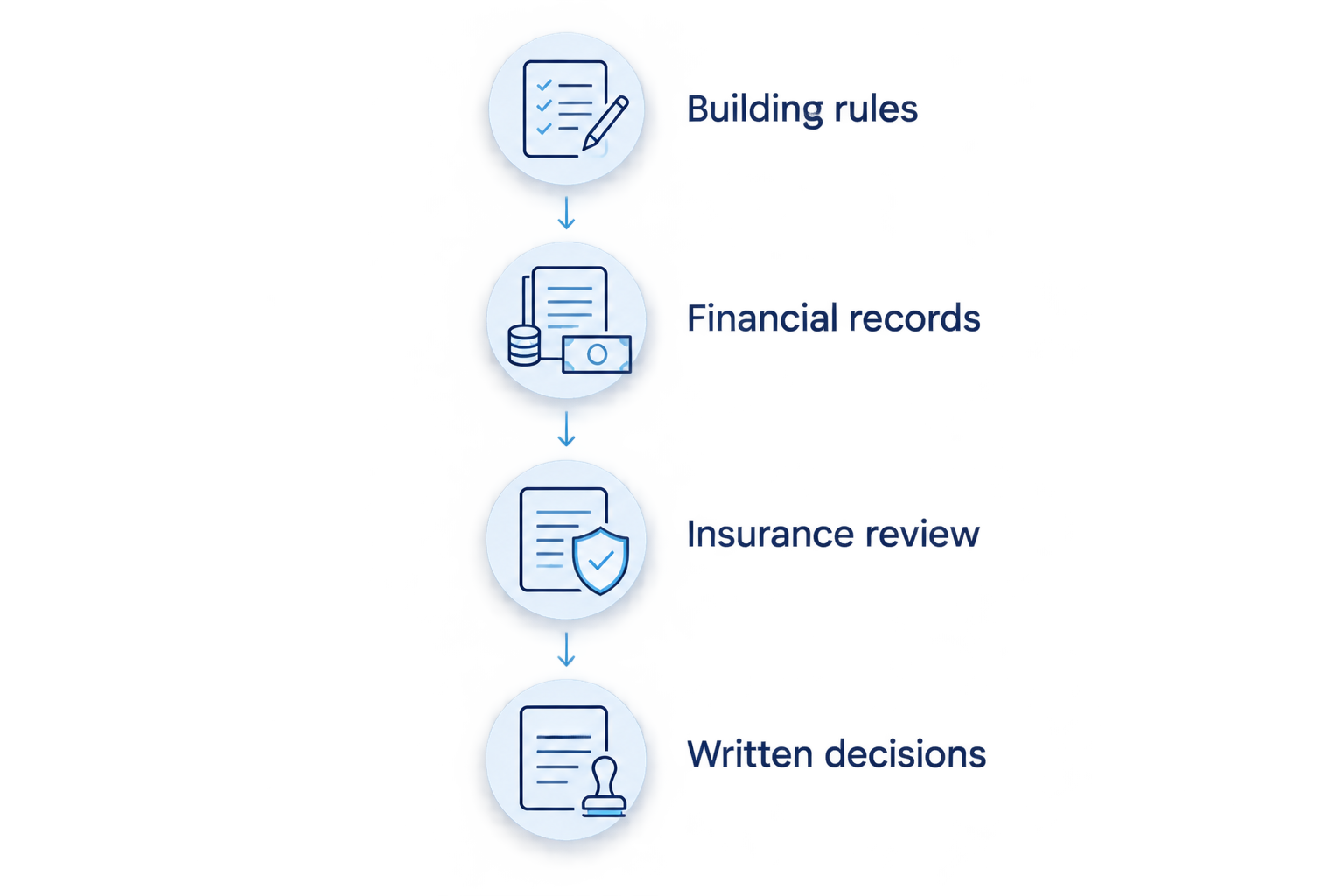
Move unresolved issues into a written decision record. Identify the question, the person responsible for answering it, and the document supporting the answer.
- Building rules: Check occupancy, guests, pets, rentals, and contractor access.
- Financial records: Examine budgets, reserves, assessments, and meeting minutes.
- Insurance review: Confirm association coverage and your separate coverage needs.
- Written decisions: Record answers before the relevant contractual deadlines.
Build a full-year ownership budget
Create a spreadsheet before asking anyone to estimate affordability for you. Use a 12-month budget even if you plan to occupy the property only seasonally. Separate recurring obligations, transaction expenses, and reserves for repairs or unexpected work.
Compare properties by total ownership obligations, not the asking figure alone. A condo transfers some maintenance responsibilities to an association but retains shared financial exposure. A detached home gives you more direct control while leaving you responsible for coordinating its upkeep.
Ask your lender how the intended occupancy affects the loan. Ask your insurance professional how extended absence, storm exposure, and any rental use affect coverage conditions. Do not assume one professional's approval settles another professional's requirements.
Use 3 planning scenarios: personal use only, a longer vacancy, and a year with an unexpected repair or assessment. These scenarios test resilience; they are not forecasts of rental performance or market appreciation.
- Recurring obligations: Include association dues, taxes, utilities, and insurance.
- Property care: Account for inspections, cleaning, landscaping, and repairs.
- Financing: Confirm the occupancy classification and loan conditions.
- Contingencies: Keep a separate allowance for unplanned obligations.
Arrange care for the months you are away
Write a departure checklist yourself, then establish who will perform each task. A property manager or home-watch provider is an option when you need local execution, but the service agreement must define what is included. Neither a front desk nor a helpful neighbor automatically assumes responsibility for your unit.
The Atlantic hurricane season runs from June 1 through November 30, according to NOAA's National Hurricane Center. If your Miami home will be empty during that period in 2026, assign storm preparation and post-event access before you leave. Follow property-specific instructions and insurance requirements rather than a generic checklist alone.
Confirm who receives building notices and who can authorize urgent work. A missed message about access or a water incident creates a problem even when the building has onsite staff.
- Local contact: Name someone authorized to respond to property issues.
- Inspection scope: Define what gets checked and how findings are documented.
- Storm preparation: Assign tasks, access arrangements, and follow-up checks.
- Notice routing: Keep association, insurer, and service-provider contacts current.
Match the offer and closing to your travel plans
Start with a written timeline covering inspection, financing, association review, and closing obligations. Do not schedule around a flight until the responsible parties confirm what must happen and when. Your travel availability does not change contractual deadlines.
For your 2026 purchase, ask the closing professional which documents require notarization and what remote arrangements are acceptable. Independently verify wiring instructions using a previously confirmed telephone number. Do not rely solely on an email announcing changed bank details.
Carlos Morean can assist with Miami property selection and brokerage coordination; the lender, association, attorney, and closing professional control their respective approvals and requirements. Before committing, make sure someone can attend inspections and obtain access if you are away.
- Contract calendar: Record every deadline and responsible party.
- Inspection access: Arrange qualified inspection and a final walkthrough.
- Closing logistics: Confirm signing, identity verification, and funding procedures.
- Arrival readiness: Coordinate keys, utilities, insurance, and building registration.
Compare seasonal housing options
Choose the arrangement that fits your use before choosing the view. These options solve different problems, and none removes the need to verify the individual property. For a 2026 decision, use current documents and written terms rather than assumptions based on a previous stay.
| Option | Best for | Main advantage | Key limitation |
|---|---|---|---|
| Seasonal rental | Testing Miami before buying | Lets you experience a neighborhood without purchasing | Your use remains subject to the lease and building rules |
| Resale condo | Buyers seeking shared exterior maintenance | Association handles responsibilities defined in its documents | Shared finances, restrictions, and assessments require review |
| Detached home | Buyers prioritizing private space and direct control | More control over the property itself | You coordinate maintenance and vacant-home oversight |
| Pre-construction condo | Buyers whose occupancy plans can accommodate construction uncertainty | Opportunity to evaluate a planned residence | Completion and move-in timing are not equivalent to a finished resale |
A seasonal rental is the practical starting point when you have not tested the location. A resale condo is the stronger fit when you want to inspect the actual residence and review the existing association. A detached home fits owners willing to organize more direct oversight.
Pre-construction requires a separate review of the contract, deposits, completion provisions, and delivery uncertainty. Do not make a planned winter arrival depend on an assumed completion date. No property type guarantees rental income or appreciation.
Common mistakes snowbirds make
Assuming unused months can become rental months
An empty property is not automatically a rentable property. Check municipal requirements, association restrictions, lender terms, and insurance conditions before including rental income in your decision. If the purchase only works with rentals, verify that use before committing.
Treating the association as a home-watch service
Building staff have defined responsibilities, not unlimited responsibility for your interior. Ask who can enter, under what authority, and for what purpose. Put private-unit inspections and emergency response arrangements in writing.
Confusing seasonal occupancy with tax residency
Owning a Miami home does not by itself establish Florida tax residency or eligibility for a homestead exemption. Ask a qualified tax adviser how your occupancy, domicile, and other circumstances apply. Do not use a simple day-count rule as a substitute for advice.
Paying for a view without checking resale evidence
A waterfront view does not justify any asking figure. Compare relevant closed sales, unit condition, floor, orientation, parking, building finances, and restrictions. Ask what supports the valuation and what would make the property harder to resell.
FAQ
What's the best Miami property type for snowbirds?
A resale condo suits snowbirds who want shared exterior maintenance and an existing residence to inspect. Review association finances, restrictions, insurance, and private-unit care before deciding; a condo is not maintenance-free.
Should I rent in Miami before buying a seasonal home?
Rent first if you have not tested the neighborhood during your intended season. Use the stay to check daily routes, noise, access, and building routines rather than treating it only as a vacation.
Can I rent out my Miami condo when I am away?
Rental use depends on the property's applicable rules and your financing and insurance terms. Confirm municipal requirements and association restrictions in writing before relying on rental income.
Is Brickell or Brickell Key better for seasonal living?
Brickell fits buyers seeking an urban mainland condo setting, while Brickell Key fits buyers specifically seeking an island setting near Brickell. Test the exact building, access route, and daily destinations before choosing.
Do seasonal Miami owners automatically qualify for homestead exemption?
No, seasonal ownership alone does not establish eligibility for Florida's homestead exemption. Have a qualified tax adviser review your permanent-residence circumstances and applicable requirements.
What should I check before leaving a Miami home empty?
Confirm insurance requirements, authorized local access, inspection arrangements, storm preparation, and delivery of building notices. Assign each responsibility to a named person or service rather than assuming building staff will handle it.
Can Carlos Morean help me compare Miami seasonal properties?
Carlos Morean provides residential real estate brokerage services in Miami, including condos, luxury residences, and waterfront properties. Legal, tax, insurance, and engineering questions require the relevant qualified professionals.
One last thing
Tour the departure routine, not just the arrival experience. Before making an offer, walk from the unit to the parking space and building exit as though you were leaving for several months. Ask how inspections, deliveries, emergency entry, and building notices work after you go.
A property that feels convenient during a showing still needs a workable absence plan. Make that plan part of your purchase decision, not a task you postpone until closing.