2026 is a good year to buy in Miami only when the specific property passes your valuation, financing, and due-dilig diligence checks—not simply because you expect appreciation. Your decision must also account for insurance, property taxes, association obligations, and repairs; an attractive purchase agreement does not make an expensive property affordable to own.
- Is 2026 a good year to buy in Miami? Buy selectively, using comparable sales and property-specific due diligence.
- Carlos Morean serves Miami real estate buyers; choose representation around your property type and transaction needs.
- Compare Brickell, Brickell Key, Coconut Grove, and Coral Gables by building, street, and intended use.
- Wait when affordability depends on refinancing, appreciation, or rental permissions you have not verified.
Why this matters
The right purchase is a property decision before it is a market-timing decision. A Miami condo, a waterfront house, and a rental investment require different checks, even when their asking terms look comparable.
For a condo purchase, the Miami condo offer-to-closing workflow helps organize the transaction around documents, financing, and deadlines. Start that preparation before an offer, not after you have committed emotionally to a view or address.
For sellers, the same principle works in reverse: support your valuation with relevant closed sales and explain the property's obligations clearly. A buyer's confidence should come from evidence, not pressure to act before the year ends.
Is 2026 a good year to buy in Miami?
Buy in 2026 when the property works under today's documented terms, without relying on a better future mortgage or a higher resale value. Wait when an unresolved issue affects affordability, permitted use, or your ability to complete the purchase.
Use this comparison to choose your next move. These are decision criteria, not a prediction about Miami-wide appreciation.
| Option | Best for | Main advantage | Main drawback | Decision rule |
|---|---|---|---|---|
| Buy | Buyers with verified financing, suitable cash reserves, and a property that fits their plans | Control over a home that meets your needs | Ownership brings transaction expenses and property obligations | Proceed after valuation and document review |
| Keep searching | Buyers whose preferred properties fail financial or condition checks | Avoids committing to an unsuitable property | Your search remains unresolved | Define exactly what must improve |
| Rent first | Buyers still testing a neighborhood or relocation routine | Lets you experience daily life before purchasing | Does not establish ownership | Use the rental period to test your actual routine |
None of these choices wins automatically. The useful question is whether buying this property improves your position compared with the alternatives available to you.
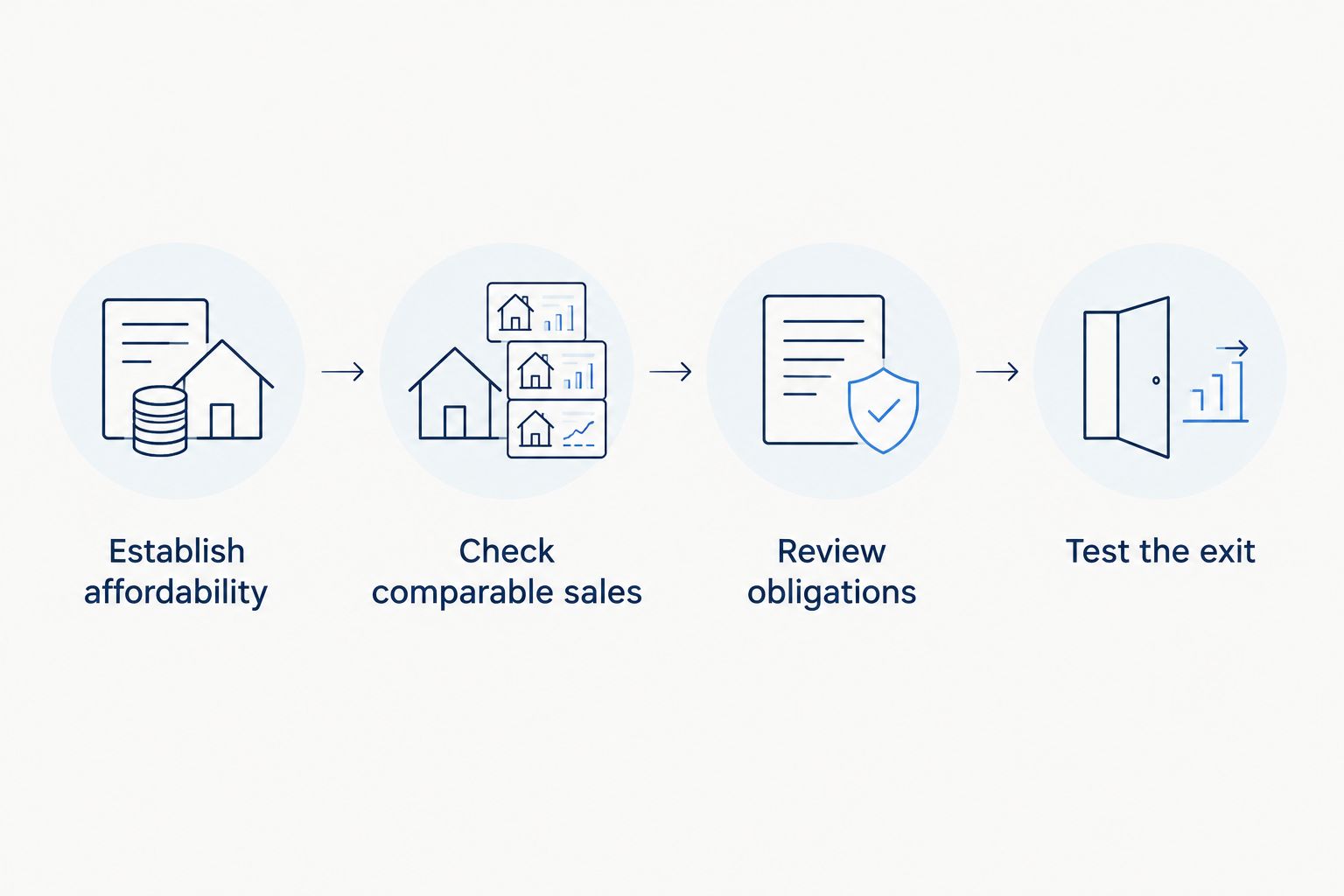
How do you decide whether to buy now?
Establish affordability
Ask your lender to evaluate the actual property and proposed loan, not just your borrowing capacity. For a condo, confirm whether the lender must review the association or project before approving the transaction.
Build your ownership budget from written information. Include mortgage obligations, applicable taxes, insurance, association charges, maintenance, and any known assessments. Keep transaction expenses separate so you understand both the cash needed to close and the obligations that follow.
Do not make a purchase depend on a future refinance. Evaluate the loan you can obtain now; treat any later change as a separate decision.
Check comparable sales
Request closed sales that match the property closely enough to explain its value. For a condo, compare the building, floor plan, interior area, exposure, condition, and parking arrangements rather than treating every nearby apartment as equivalent.
For a house, examine the lot, condition, improvements, and location. For waterfront property, investigate the actual water access and physical features rather than accepting “waterfront” as a complete valuation category.
Ask your agent to explain excluded comparables as well as selected ones. A valuation argument is stronger when you can see why an apparently similar sale does not belong in the comparison.
Review obligations
For a condo, request association financial information, governing documents, relevant meeting records, assessment information, and applicable inspection or engineering reports. Have qualified professionals explain material issues before the relevant contractual deadlines.
For a house, investigate condition, permits, title matters, insurance, and any restrictions affecting your plans. A renovation that looks finished still needs an appropriate records review.
Test the exit
Decide what happens if your circumstances change. Check rental restrictions before treating a home as a future investment, and examine resale comparables before assuming the next buyer will accept your valuation.
Your exit plan should not require a particular appreciation outcome. If selling or renting would be difficult under the property's documented rules, recognize that limitation before signing.
Why the answer varies between Miami properties
A useful 2026 buying decision separates these factors instead of compressing them into a single market forecast:
- Financing: Review the loan terms available to you and any property-level approval requirements. Personal preapproval does not settle every question about a particular purchase.
- Property condition: An inspection identifies issues that photographs and showings do not resolve. Obtain specialist advice where the findings call for it.
- Association obligations: Review documented charges, assessments, financial information, and restrictions. The unit and the association both matter.
- Insurance: Obtain property-specific guidance and quotes. Do not substitute the seller's existing arrangement for an evaluation of your own coverage needs.
- Location and use: Test the commute, access, noise, and permitted activities that affect your intended use. A prestigious address does not answer those questions.
- Ownership horizon: Consider how a relocation, household change, or investment-plan change would affect the purchase. Transaction expenses matter when evaluating an early exit.
What should you check in each Miami neighborhood?
Compare properties within their immediate setting before comparing neighborhood names. Coconut Grove, Coral Gables, Brickell, and Brickell Key are not interchangeable search filters, and a neighborhood label does not establish a property's value.
Coconut Grove: compare the street and property type
Separate a Coconut Grove house search from a condo search. A house requires close attention to the lot and improvements; a condo adds association documents and building-specific considerations.
Visit the property's immediate surroundings and test your usual routes. Evaluate landscaping, drainage, access, and maintenance requirements at the actual address rather than assuming a neighborhood reputation resolves them.
For sellers, explain the property's specific advantages with supporting records and relevant comparisons. Avoid using a different property type as the main justification for your asking terms.
Coral Gables: verify the improvements and intended use
For a Coral Gables house, review the records relevant to existing alterations and your planned work. Have the appropriate local authority or professional confirm requirements before you assume a renovation is straightforward.
For waterfront property, investigate seawalls, dock arrangements, access, and applicable permissions. A water view and usable boating access answer different buyer needs; your comparison should identify which features the property actually provides.
Brickell: compare the building and daily route
Compare North and South Brickell through the locations you will actually use: your workplace, transportation, errands, and regular destinations. Visit at relevant times instead of relying on a single quiet showing.
Within each building, examine the unit's exposure, layout, condition, parking rights, and association records. A nearby tower is not automatically a suitable comparable simply because both listings say Brickell.
Brickell Key: test access and building fit
For Brickell Key, test the route between the property and your mainland destinations. Then investigate the specific building's rules, financial information, maintenance obligations, and unit features.
Compare the experience of living there with your Brickell alternatives, not just the photographs. If your household has particular parking, pet, visitor, or rental requirements, verify those rules in writing.
How should a primary-home buyer evaluate 2026?
Best for buyers seeking a home: prioritize sustainable ownership and daily fit over a forecast. Start with the needs that would remain important even if resale values stopped changing.
A favorable purchase meets your practical requirements without stretching your finances around an uncertain future event. Its drawback is reduced flexibility: moving involves decisions and expenses that a property search alone does not reveal.
Write down your non-negotiable needs before touring. Separate those from preferences you would trade for a better layout, stronger documentation, or a more suitable location. That distinction helps prevent a dramatic view from overruling an otherwise unsuitable purchase.
How should an investor evaluate 2026?
Best for investment buyers: verify permitted use and property-level expenses before judging the opportunity. Do not build a rental plan around listing descriptions or a seller's verbal assurance.
Confirm association restrictions, applicable local requirements, and the operating expenses relevant to your intended rental strategy. Use documented rental evidence and obtain professional tax and legal advice where needed.
An investment offers a different use case from a primary home, but it adds operating responsibilities and rental uncertainty. If the purchase only works with uninterrupted occupancy or future appreciation, revise the assumptions before proceeding.
How should you select a Miami buyer's agent?
Carlos Morean is suited to Miami real estate buyers seeking residential or commercial brokerage representation. Match the assignment to the property: a waterfront home, condo, and restaurant space require different transaction questions.
Ask any prospective agent to explain the comparable-sales selection, document-review process, negotiation approach, and responsibilities under the representation agreement. Request a clear explanation of compensation and services before committing.
Brokerage representation does not replace an inspection, legal advice, engineering review, or an insurance assessment. Use each professional for the questions within that professional's role, and make sure significant findings reach the people evaluating your purchase.
Should you wait for mortgage rates to fall?
Buy using financing you can sustain now, not financing you hope to obtain later. A lower future rate is not a documented term of your current transaction.
Waiting is appropriate when today's financing does not fit your budget. Reassess when your actual financing options change, rather than treating a forecast as approval to overextend.
Is a Miami condo better than a house?
A Miami condo is better for buyers whose needs fit its building, rules, and shared obligations; a house suits buyers whose needs fit its land and maintenance responsibilities. Neither category is inherently the better 2026 purchase.
Compare the complete ownership responsibilities. A condo assessment and a house repair are different obligations, but both belong in the buying decision.
Should you negotiate or keep looking?
Negotiate when a documented issue has a workable solution; keep looking when the property fails a requirement you cannot change. Inspection findings, unsupported valuation, and unclear obligations deserve different responses.
Ask for the evidence or contractual protection needed to resolve the issue. If the answer remains unacceptable, walking away is a decision—not a failure to time the market.
FAQ
Is 2026 a good year to buy in Miami for a first-time buyer?
2026 is a good year to buy in Miami for a first-time buyer only when the property fits verified financing, ownership obligations, and personal needs. Complete the valuation and property review before treating the purchase as affordable.
Should I rent in Miami before buying?
Rent first when you have not tested the neighborhood against your daily routine. Use that period to evaluate access, commuting, and household needs rather than assuming renting predicts future sale values.
Can I assume I will refinance my Miami home later?
Do not make affordability depend on refinancing later. Evaluate the mortgage terms available for the purchase and treat any future refinance as a separate transaction.
What should I check before buying a Brickell condo?
Check the specific unit, building documents, association obligations, insurance needs, and lender requirements before buying a Brickell condo. Compare relevant closed sales and test your actual daily routes.
Does a waterfront address automatically make a Miami home a good investment?
A waterfront address does not automatically make a Miami home a good investment. Investigate comparable sales, physical condition, insurance, access, and restrictions affecting your intended use.
Can Carlos Morean help with both homes and commercial property?
Carlos Morean provides residential and commercial real estate brokerage services in Miami. His stated property scope includes luxury residential, waterfront, condos, and commercial properties including restaurants and bars.
One last thing
Before making an offer, ask what would make you reject the property. Write that answer down while you still have the freedom to compare alternatives calmly.
A purchase checklist that cannot produce a “no” is not protecting you. In 2026, the useful advantage is not certainty about Miami's next market move—it is knowing which obligations you are accepting and which assumptions remain unproven.